Those who have followed me on my blog, or earlier on my Facebook site, may be aware that one of my favorite hobbies is photography. I don’t consider myself a professional or even a highly advanced photographer, but I enjoy taking photos and occasionally have a photo that I enjoy sharing with others. My two favorite subjects are landscapes and wildlife, whether found in the wild or in a controlled environment.
I thought I would take a few moments to share a few images here, along with short descriptions or background information, and hope that you might enjoy them too. The first image is a collage of “big cats”. 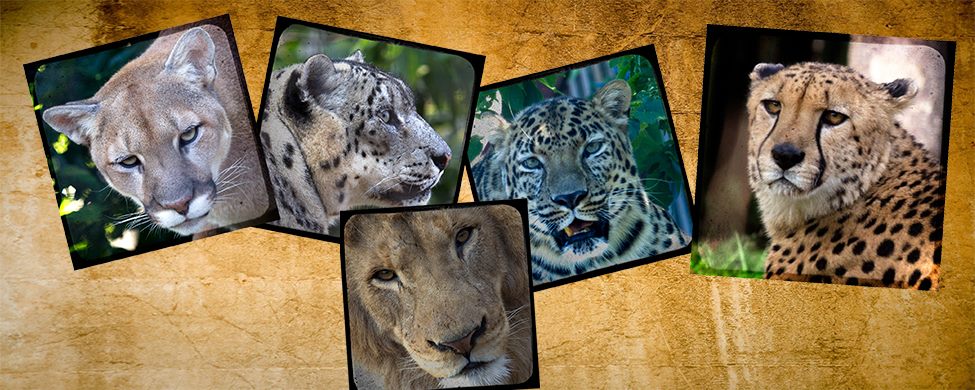 These cat photos were all taken at the St. Louis Zoo then resized and placed on a single background using Adobe’s PhotoShop, one of my favorite tools, along with one or two plug-ins. I enjoy showing the beauty of these animals along with the differences between the various species.
The next photo was taken in my backyard a few years ago. While the backyard was not the “great outdoors”, 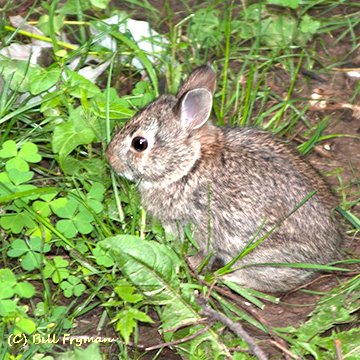 the bunny was definitely wild, and I felt privileged for it to stay long enough for me to take this photo. The year after this image was made, I used it with a top and bottom border to wish every one a “Happy Easter” online.
We are privileged to live near the confluences of the Missouri River and the Illinois River with the Mississippi River. This area is a great place to see bald eagles in the winter, but I selected this image of American White Pelicans flying in formation. 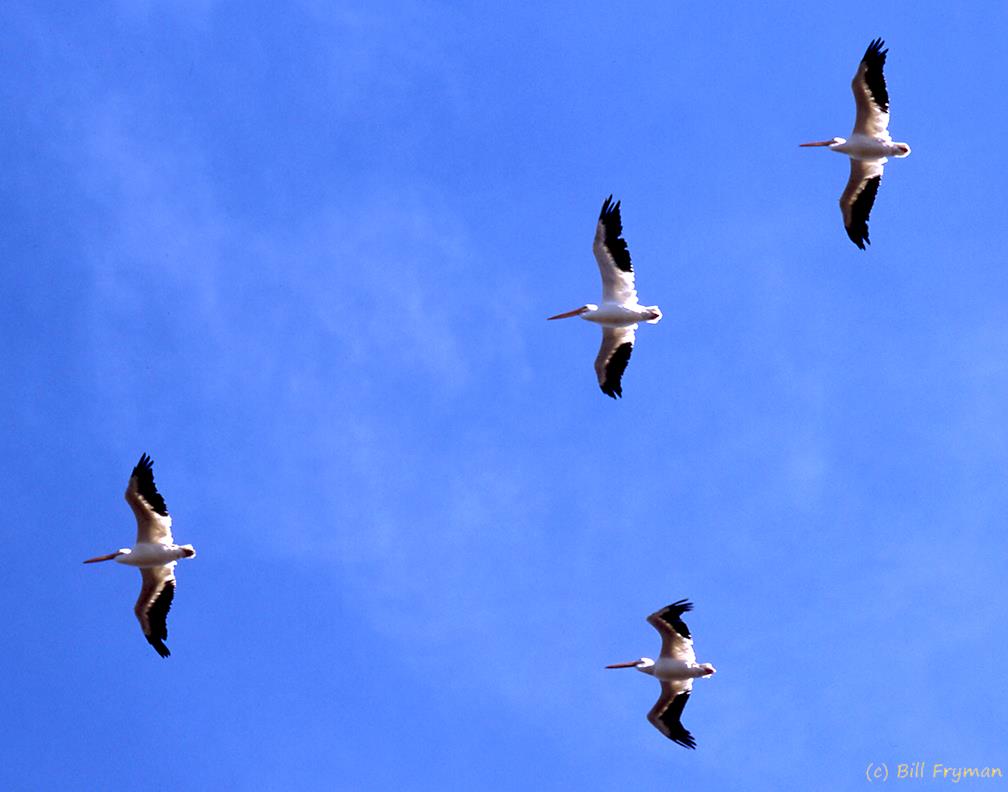 This was a winter photo and later that day I saw a hug number of both Brown and White Pelicans at rest along the Illinois River. I didn’t know that pelicans flew in v-formations, much like geese and ducks, until that day. The clear, blue sky provided a great background for this photo.
It was back to the Zoo for this image of Black Necked Swans.  If you look closely, you may see what I was trying to capture – the heart shaped image created when two swans pass closely to each other going opposite directions. While the timing of my photo was a few seconds off, it was the best of several taken in rapid succession.
The Bufflehead is a small, nesting duck. 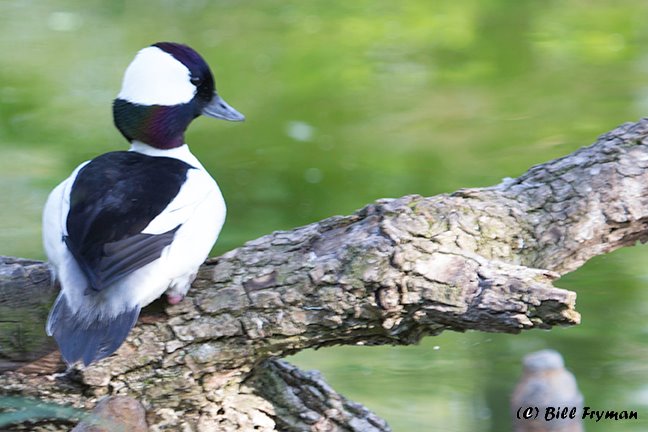 I captured this image near The National Elk Refuge in Jackson, Wyoming during a visit to Yellowstone National Park. There is a visitor’s center there where migrating waterfowl sometimes visit which allowed be to take this photo. Like the pelicans, this is a wild bird, not a bird in a cage or similar environment. It is not something we see in the Central U.S., but it is almost as beautiful as the male Wood duck.
This raccoon had taken over a log near New Orleans.  I was able to capture this image while on a swamp tour several years ago. This was before a major hurricane in the area, so I am almost positive that neither the animal nor the log survived. Even so, the almost hidden raccoon made for a nice shot.
For those who may be interested, I rarely use my phone to take photographs. These were all taken using 35 mm, Canon digital cameras of different vintages. They were taken using zoom lenses up to 400 mm in length. I seldom use flash for any of my outdoor images and try, as much as possible, to use a high shutter speed to freeze my wildlife images. Most were taken using a tripod although the pelicans and the raccoon were taken hand holding the camera. I treat landscape images differently and may share some of those images in the future.
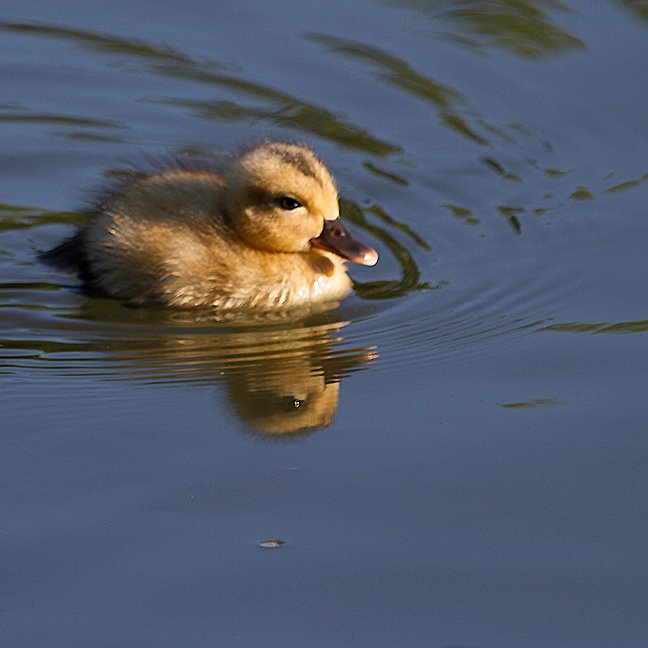 The duckling here is innocent. Quite young, it has not been exposed to the beauty and dangers that may enter its life. Instead, the most important thing now is to simply swim fast enough to catch its mother who is a bit ahead. Living its life in a protected, not natural, environment, it does not need to worry about the source of its next meal, predators from above or below, or even the humans who watch it or take photos. As the duckling ages, it must learn of these dangers and how to keep safe. How does it gain this knowledge? It must be taught by the older ducks, the hen who gave it life or others. But this happens without voice, at least as we humans define it. It must learn when and why migration occurs. It must learn how to avoid predators. When the time comes to breed to ensure the flocks future. Yes, the duckling is innocent now but soon in will be knowledgeable and know how to survive.
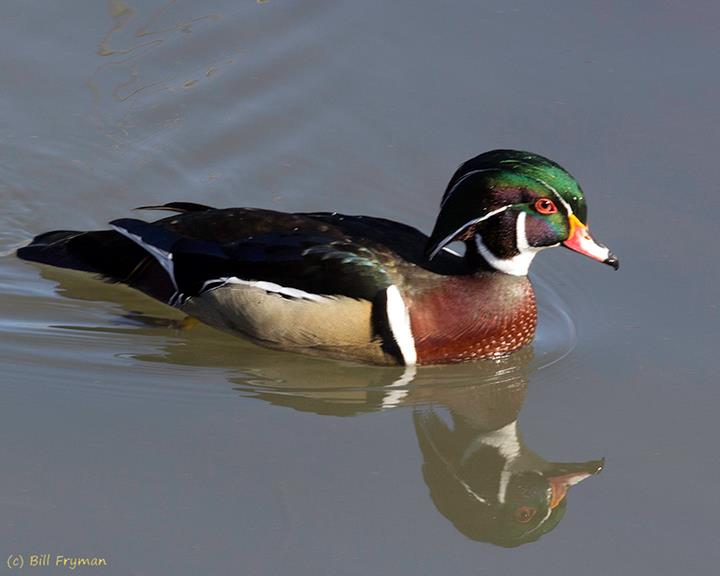 The wood duck drake is often described as one of the most, if not the most, beautiful waterfowl species. The multiple colors stand out bright against the environment. The drake here is also in a controlled environment, not in its natural habitat. How does the drake know that it is safe? Why does it come close enough to be photographed? There are no trees or other places to hide in the face of danger. Yet the wood duck or perhaps its offspring return each year to share their beauty with other waterfowl and even we humans. If it does not survive the winter, how do others know to come in its stead? While scientists may give us answers, are they correct? Or are we simply attempting to fit animal behavior into our human model? Why does the drake sport these beautiful colors while the hen does not? And how do they know where to go in the winter? The beauty is there for all to behold, but it creates so many questions that perhaps the best answer is to simply enjoy.
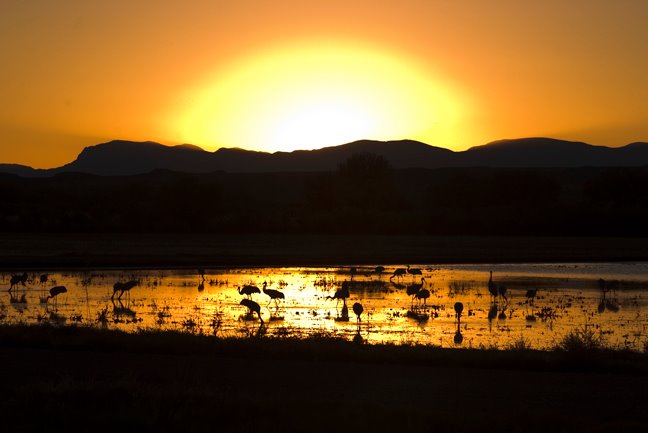 I have always had problems defining why we find sunsets so intriguing. Yes, they are often beautiful, but they can also present danger. But to me, this sunset image from Bosque del Apache to be very peaceful. The sun sets over the mountains, miles to the west. It reflects off the shallow water stirred by a light breeze. The sand hill cranes feed in the flooded fields seemingly without any threat. Later in the evening, the cranes will be joined by others, ducks and geese. And all will rest peacefully through the night. Then early the next morning the peace will be disturbed as the birds take flight, almost as one, to move to their daytime resting places, near and far. Unlike the duckling or the wood duck, these are birds are in their natural environment. Danger and risk are there. But at this time of day, all seem at peace.
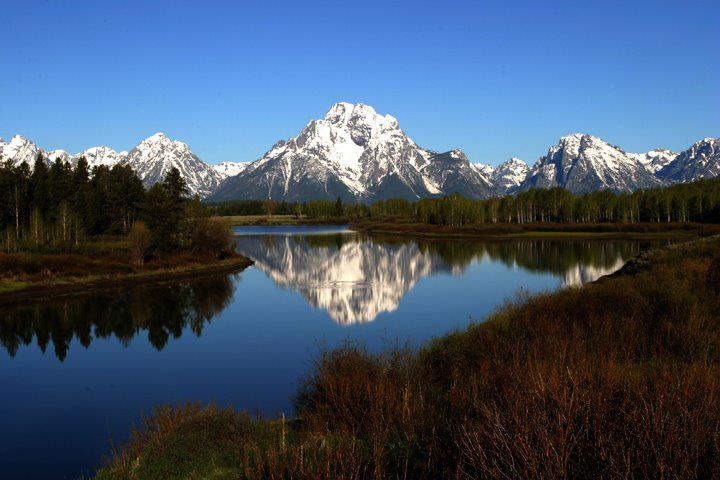 The Grand Tetons offer many different things to those who see them – safety and danger, homes and escapes, beauty, peace, a place to feed, a place to give life, and a place for life to end. To me this photo represents serenity, or calmness. The mountain in the distance is solid. It stands up to storms and rain. It tells us that some things are reliable and dependable. The river and reflection on this day show how things can be calm even as the world is in turmoil around us. Yes, on other days or at other times the water may be rough but after a few moments or days, it will return to the serenity of the moment to be enjoyed by others. Although one cannot see wildlife in this image, we know they are there, hidden away and safe. Perhaps they too are enjoying the pace and serenity of this wonderful place.
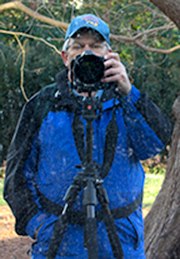 As we reflect on things around us, we are given moment ourselves. Time to look at where we have been, and possibly where we are going. To think about what we have done and what we might do. I don’t really see this photo as a “selfie” or even a goal. I know where it was taken but I don’t know why. When I look at it, I remember the day it was taken, a simple reflection in a window. It highlighted a hobby or maybe a wish. But it has never been shared. It was a time to think, alone in a park. Perhaps it was a simple pause in my photography that day or a memory created for the future. I really don’t know.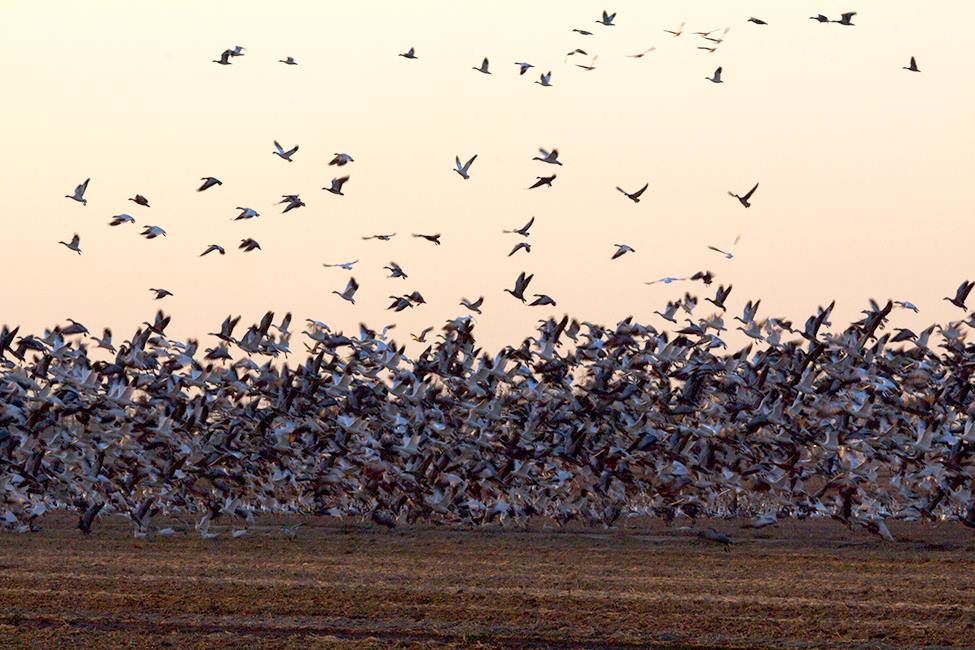
 While geese were sometimes seen, ducks were far more common. This has changed over time as has the number of waterfowl seen passing through each year. If you compare the Claypool photo from 1956 and it to these from 2013, you can still see large numbers of waterfowl on the Flyway, just different types.
 An Old Man's Thoughts, Memories, & Opinions