Bart and the Cabin

This is a work of fiction. Names, characters, places, and incidents are either the product of my imagination or are used fictitiously. Any resemblance to actual persons, living or dead, businesses, companies, events or locales is entirely coincidental.

All rights reserved. No part of this story may be used or reproduced in any manner without written permission except in the case of brief quotations embodied in critical articles and reviews.

Though now in his late sixties, young Bart he is still called. He was named for his great-great-grandfather, Bartholomew. Those who have heard tales or seen photos of both say young Bart is the spitting image of the old man. This is definitely true in their love for the cabin. Bart and his wife now share the cabin with his father Bradford who is now nearing one hundred but still loves the place especially each year as the holidays approach.

In early autumn, the preparations for Christmas begin. All the rooms are made ready with a deep cleaning and new linens all around. Followed by the Christmas lights both indoors and out. Then come the wreaths, small artificial trees in many rooms, and other decorations. Food and drinks are purchased, much more each year. Some will be made soon while more can wait for the arrival of family. His wife enjoys the baking of cookies for family and friends, some delivered ahead of the holidays and others carefully stored for the first to arrive for the family celebration. The main tree selected to go in the main room but left uncut until right before Christmas to ensure it is fresh.

While this may seem too early to some. Bart’s work may keep him on the road for some of the time. But he ensures that his calendar is kept open from Thanksgiving ‘til New Years so all can be done. Bart loves the cabin and wants to be sure that it will be ready for all who will join together at least this one time each year. Bart sends reminders to all family members and asks them when they expect to arrive. That way none will feel they are intruding or staying too long.

Christmas cards are prepared and mailed early so none will be missed. Some contain the formal invitations to stay or to visit. And yet it never fails that some arrive unexpected but even so will be welcome with a place of their own.

Bart asks each family member what their children or grandchildren enjoy. And with the list given he selects and purchases some of these and makes sure there is plenty of space for play. The hope is always for a white Christmas so snow can be seen, especially for those coming from warm places afar.

Then comes the day when the first family arrive. Bart goes out with the adults and older children to harvest the tree and move it to the cabin. Decorating may wait a day or two but all who have arrived can help. The little ones add small ornaments to the lower branches while those older climb ladders to decorate the top. And once the tree is almost ready, Bart holds a drawing to see who gets the honor of placing the angel up on the top. Carefully assisted by all to ensure they are safe.

Once all have arrived, Bart takes a moment to rest and look back hoping all has been done right. While each year seems better in so many ways, Bart always thinks more could be done. Until Dad Bradford congratulates his son.

And though not mentioned earlier in this story, Bart’s son Barry looks forward to the day he and his family can move to the cabin. He, too, knows the cabin is where he should be, to carry on the traditions of his ancestors and family. Barry’s children too know the cabin is special for all who come and so the traditions look to go on.

More About the Cabin

This is a work of fiction. Names, characters, places, and incidents are either the product of my imagination or are used fictitiously. Any resemblance to actual persons, living or dead, businesses, companies, events or locales is entirely coincidental.

All rights reserved. No part of this story may be used or reproduced in any manner without written permission except in the case of brief quotations embodied in critical articles and reviews.

As earlier told, the old cabin had been expanded and improved over its life but by the late 1940’s Benjamin decided that it was time for replacement rather than further improvement. He knew some men who, after returning from the war, had started a business to build homes and cabinets around the lakeshore. His ideas were bit strange but fit the location, a new home from logs rather than bricks or stone. And to retain a connection with the past, he wanted to somehow incorporate the old cabin into the new. This could be done with small parts and pieces, but his biggest hope was to retain the original one room shack as part of the new home.

Much to his surprise, the new large cabin was completed in late 1949. Even the old cabin had a place in the home as an office for Ben attached out back. This meant that a family tradition, Christmas at the Cabin, could be held that year. On that day and the evening before the entire family celebrated with feasting and fun. The children, grandchildren, parents, and more gathered together from far and wide. Although members of the family were welcomed all year, Christmas at the Cabin was not to be missed.

Ben knew that his remaining days were not too long, he wanted this tradition to live on and on. So, he visited his attorney and asked what to do. And the lawyer said, “I have an answer for you.” Let’s take the cabin and the surrounding land, put them in a trust with a few small demands. While some of the demands were not very big, two stood out as ways to ensure the traditions would remain. The first, and most important, was that all of Ben’s heirs were expected to visit on Christmas each year. Failing to do so would mean the loss of any claim to all or a portion of the trust and estate. But Ben also recognized that some things might make this impossible some exceptions were added in exceptions to this rule. If family members were serving the country in times of war, they could be excused from the celebration. Similarly, the birth of a child on or near Christmas was a reason for missing as was the death of a close relative of one or their spouse. Ben and the attorney that these rules could be tested for Ben’s remaining life and changed if needed which ever occurred. And these rules remain in place to this day. As do the traditions of the family gatherings.

Each year as the family gathers, other traditions continue as they had in the past.  The gathering starts on Christmas Eve with food and drink served buffet style and no formal meals. In the evening all go to the local church to celebrate with family and friends old and new. Returning to the cabin there are stories and memories from the days past and the evening concludes with a reading of “the night before Christmas” for all to enjoy. The younger children are all put in bed to await Santa’s visit during the night. The older children are allowed to stay up longer with the adults to ensure Santa’s visit goes smoothly and all is in place for early Christmas morning. As the dawn breaks the next day someone is posted close to the stairs so no child awakens early, and no child is late to see what gifts from Santa for them may await. After presents are opened and there is some time for fun, then off to breakfast for everyone. As the day goes on, some start to drift off to homes of their own. Others may stay for a day or two. But they all begin planning for what next year may offer when all gather at the cabin next year. The cabin has changed from Barthlomew’s day but it still remains in the hearts and lives of all.

“The Cat Who Saved Books” By Sosuke Natsukawa (A Book Review)

I read for enjoyment. Sometimes I start a book and then stop because I am not enjoying the read although this does not happen often. More commonly I tend to take the time to savor what I am reading. This may include reading a short passage, a page or two or even a chapter, then taking a break to ponder what I have read. Occasionally I start a book and read it quickly then return to read selected passages that I found more interesting than others. But rarely do I find a book that it is very difficult to put down.

“The Cat Who Saved Books” was one of those rare treasures. The story was captivating. The translation by Louise Heal Kawai was excellent. The cover artwork by Yuko Shimizu was beautiful. I find it hard to say anything bad about this novel other than it was far too short.

I was visiting our local Barnes & Noble a few days ago browsing for a new book. Something that could be read for pure pleasure. I slowly cruised the “new releases” aisles in this quest. Initially I was having difficulty finding what I desired. During my first pass, I couldn’t seem to find what I wanted although Shimizu’s cover caught my eye. Even during a second trip around this area, there was no strong draw other than the same cover. As a cat lover, my thought was that the draw was the cat on the cover. But as I started a third trip through the “new arrivals,” I decided to pick up the book and read the synopsis. When I did, I found something there that told me I had to read this book. I am so glad that I did.

Back at home, I put the book on my nightstand for later reading. There it sat for a few hours. Then I began reading. Little did I expect that I would not put the book down, except for a few very short breaks, until it was finished.

The book opens with a young man, Rintaro, standing sadly at the funeral of his grandfather. The grandfather owned a used bookstore. A store with only a single aisle where books were shelved floor to ceiling, seemingly in no order at all. Yet his grandfather seemed to have known every book there and where it could be found. He had passed much of this knowledge to his grandson. Now, the grandson was expected to give up the bookstore to live with his aunt until he became an adult.

Little did anyone know that this was not to happen nor why. And they probably would not have believed it had they been told.

After the funeral, the boy returned to the bookstore to contemplate what had happened and what his future would be. As he sat, the bell outside the door rang. When he answered, no one was there, nor had anyone entered. Then he heard a deep voice talking to him. He looked for a person but instead saw only a cat. Could it be? A talking cat? Surely not, yet it was. The cat told the young man that it needed his help. There were books to be saved and only the young man and the cat could do it.

Once the cat convinced the young man to join him, the solid wood wall at the back of the bookstore opened and the adventure began. Through the book, the cat, Rintaro, and at least one other go to four labyrinths to save books. Each labyrinth is more challenging than the previous.

Will Rintaro and the cat succeed? How will this affect Rintaro’s future? Will the bookstore survive? Is this really a prediction of the end of books? To answer all these questions, you must read this book. As you read, be sure to watch for the words of wisdom, sometimes offered by the late grandfather and at others offered by Rintaro as his knowledge grows. I think you, too, will find the story enchanting and hard to put down. And you may find it exceptional as I did.

Wind in My Sails – A Short Story

This is a work of fiction. It reflects my personal thoughts which are reserved and does not in any manner suggest truths about sailing or any other water activity. It is loosely based on my readings of some materials written by Stuart Woods interspersed with my suppositions, experiences working with others, and, possibly, humor. It should not be considered too seriously or used as a basis for any outdoor activities.

———-

Good morning. My name is Joe. And I recently participated in a sailing competition, a trans-Atlantic trip by sailboat. A competition with all types of craft starting at a single point and ending at a common point in the shortest time possible. I did not try for speed but only to see if I could complete the trip. I owned a sailboat, but I really wasn’t an experienced sailor. But I wanted to share some experiences with you.

As I lay in bed last night, listening to a storm, I asked myself if I was insane. Not because I feared the thunder and lightning or even the winds alone. Instead, it was because of the combination of wind, water, and my intent to join others sailing across the Atlantic. I thought of the rocky coastline and how the waves crashed against it. Throwing water twenty, thirty, forty or more feet into the air followed by the water falling is smaller droplets back into the sea. What would these same forces do to the unfortunate human caught in their path?

I could be that human. For an unknown reason, I had taken up the sport of sailing. After a few short years, I now owned a boat and had decided that I was expert enough to join a group in a trans-Atlantic crossing. Did I really have the skills, ability, and knowledge to do this?

A few days later, in a small group of friends gathered in a nearby pub. All were intent on crossing the Atlantic capturing the power of the wind in our sails. Talk centered on those who had done so in the past along with those who were not successful. Some safely returned to port, others were lost at sea and never found, still others lost their lives. The group could not define what motivated them to try.

As I sat, listening to this group, I asked myself the same question. Why was I here? An American in a foreign country. A person who grew up not on a coast, not with a history of sailing, not even dreams of sailing as a child. What enticed me about this adventure? I did not know even half of what these others knew. Perhaps I would know more when the trip started of even decide, sanely, that I should not make the attempt.

The trip was scheduled to start the next morning, but the sea was calm. There was no wind. Nothing to power the ships out of the bay, much less across the ocean. The preparations were not wasted. All simply had to wait for the wind. Those with small boats and those with the large, expensive craft were equal that morning. No wind meant no sailing. Perhaps another day would be spent in the pub. Or better, in last minute double checking of all preparations. The same happened the two following days.

Was God or Karma trying to tell me something? Was there a reason for the delays? I did not have an answer. All I knew was that each passing day was causing me to have more doubts and more anxiety.

The weekend arrived and along with it, light breezes. Enough wind to make sailing possible. The result was a traffic jam that would match any on the freeways of America’s largest cities. The difference was that the traffic was a huge number of sail craft, all trying to escape the bay through limited space with less ability to avoid other craft trying to do the same. The bay was a madhouse. At last, all were at sea and moving toward their selected route to America. Voyages like that of Columbus or the Vikings. Powered not by modern technology but only by the wind.

Common sense seemed to have evaded me. Here I was, amid this confusion and rush to start a dangerous journey from the U.K. to the U.S., not by plane or by cruise ship but alone in my small sailboat.  Would I be successful, or would I be one of the many who did not?

As each intrepid traveler left port they had a choice, they could follow the shorter northern route across the Atlantic. While shorter, this route was the riskiest because of the potential for storms, much like those that kept me awake a few nights earlier. Stormy conditions were not good in any ship but were especially dangerous for sailing craft. Travelers could also choose the southern route which was longer but did not have as great a risk for storms. But there was some risk on both routes and no matter which was chosen there was limited opportunity to turn back.

While I was not averse to risk, I selected the southern route. This seemed to better fit my skills, and it also provided the opportunity to stop at islands along the way should stress or other problems arise.

The days of travel began for all. Unlike land travel, there was little scenery to distract one. Once one had sailed out of sight of land, there was only water until the next port came into sight. Or perhaps one should say there was only water and the boat. Just as in a home, there were daily chores that needed accomplishment. But on a boat, they could not be delayed. These were things like maintenance, navigation, and care for oneself. A sick crew like a sick boat would only cause failure.

As I approached the trip, I spent many hours wondering what would be involved. For a boat the size of mine on a good day (no storms, no equipment failures, no sickness, etc.) I believed daily chores would take more than six hours. Sleep would take about eight hours. So how would I occupy myself for the other ten hours each day? Would part of this time be spent on introspection or perhaps contemplation of things like the meaning of life? Could part of the time be spent reading? And, if so, how much added weight would be added to the boat for books or other reading materials? Could time be spent writing? Would communication with relatives and friends be possible? I really didn’t know the answers to these questions. What supplies, including food and drink, would accompany me? And, again, how much weight would be added and where would it be stored? What would happen if I became sick? Again, no real answers were apparent. So, what did I do? I spent hours talking to those who had made the trip previously. Possibly, no, probably, making a pest of myself but taking their advice and hoping to learn. Now this preparation would be put to the test.

For those following the southern route, the first possible stopping point came several days later. Some arrived at this point quickly, restocked, and went back to sea quickly. Others spent a few days on land resting before continuing. Still others decided that the trip was not important, or maybe not possible, and returned to the U.K. The trip had been safe with gentle breezes and mostly good weather. While here, travelers could share information about those on other routes or in other places. Unfortunately, this was not always good news. The northern route had been hit by many storms and lives had been lost. Some were unaccounted for. In many ways, this was typical of previous voyages.

Although there were only a few of those making the trip who were familiar to me, I did find that some were lost. I could only offer my sympathy to their families. But in their honor, I continued. I also received good news about those who had passed through ahead of me. While I was not the fastest traveler, I felt good that I had be successful to this point and hoped that things would continue to go well. After a short rest stop, I continued my trip.

 The trip continued for many and after days at sea or at islands along the way, the U.S. came into sight. For the fastest it was a great success and a time of reward. For others, success was a more personal thing. They had set out on a voyage that presented a challenge and whether they were among the fastest or amid the “also rans”, they had achieved something done by few others. Some might return the following years to try yet again, perhaps for speed or to follow a different route. Some might look for other challenges, in either sailing or other activities. Others might simply enjoy whatever life presented them.

In my case, I am in the latter group. My boat has been sold. I am now a “land lubber.” I enjoyed my time at sea yet, I’m not sure I could enjoy a similar experience now or in the future. I remain friends with many I met on or through this adventure. And I miss greatly those who were lost because of the trip. But to all, I wish gentle breezes, smooth water, and great sailing.
Travel or Just Moving Around

I’ve often thought about the differences between actually living in a small town and what we often see as small-town life on television or in movies. While I would not trade my small- town years for living in a large city, I wonder if those who spent their lives in larger cities realize how different rural lives are from their own. Over the next few days (or maybe weeks) I plan to share some thoughts on my early life in a small-town as well as what I know from experiences shared by my parents or others. Sometimes this will be the same as what we have seen or heard and at other times it will be far different.

Today I want to share a bit about travel, or moving around, to and from a small-town. In the first few years of my life there were four ways to travel from my hometown to other places – by train, by bus, by auto and walking.

The simplest to discuss are by train and by bus. They offered similar options. Travel by train was offered for the shortest period – if my memory is correct, passenger service was offered until I was about six or seven years old. There were two passenger trains daily, one northbound and one southbound and both trains passed through our town late at night or very early in the morning. While they offered transportation to larger cities with more connections, this was not always convenient and could not always get you to your destination.

Travel by bus was very similar. I remember two buses each day, again one going north and one going south. If your destination was not on their route, you had to make connections in other towns or cities with larger bus depots. And, just like train travel, not all destinations had bus service. Bus service to my town ended when I was in my teens.

Travel by auto was a bit different. There were two options in my hometown. The first was travel on a state highway, the same highway used by buses and paralleling the route of the railroads through most of its length. Most highways were paved or at least had a tar and gravel surface over the roadbed. In some locations shoulders were provided while in others ditches or tree rows came right to the edge of the roadway. Roads like that today would be considered very unsafe. And travel speed on these highways was often limited to about forty to forty-five miles per hour for any of a variety of reasons.

The second method of auto travel was over local graveled roads. These were mainly farm roads maintained by the county. They were occasionally graded, but any smoothness provided by grading was lost after a few days, especially if there was any rain. Speed here was also limited, both by the roughness of the road and for safety. While we only had one state highway passing through our town, we had more options in graveled roads – one going northwest from town, one going west, one going south, and, I believe, one going east. They had many connections allowing travel not only a route to local farms but also to other nearby small towns.

Of course, walking was always an option, along with hitchhiking which was relatively safe then. At the same time, it was also the slowest form of travel and did not provide an easy way to carry things you might need like food and water.

Looking back further into the past, travel was typically by wagon or horse over unimproved roads and trails. Personally, I have trouble even imagining how uncomfortable travel was. Slow speeds, steel or wooden wheels, rough surfaces – it could not get much worse. And a trip to or between towns might take hours or even a full day.

When I look at my hometown today things have changed a bit. Train service, for passengers, has long been gone. Bus travel is also an option that no longer exists. Traveling by auto is mostly the same although the roads are improved, and travel speeds are faster. Other than better shoes and less safety, walking is unchanged.

Even so, things in the small town are far different than the romanticized version that we see on television and in the movies.

Oh, What a Night…

It was one of those nights. I must have gone to bed way too early. It was 1:49 AM and I was wide awake. I cuddled my wife with on one side and petted my cats with the other. I couldn’t go back to sleep. While I wanted to go back to sleep, there was also some good. I had no worries and I was comfortable. Life was basically good. So, my thoughts wandered and I dreamed even though I wasn’t asleep.

I wished I could waste a day in Margaritaville, listening to the Piano Man, as he sang and played about his love, the Uptown Girl. While it might have been a Rainy Night in Georgia, things were good in Missouri. Maybe I could get the Ole Hound Dog and hop aboard the Continental Trailways bus to Winslow, Arizona. Once there I could stand on the corner and hope the girl in the flatbed Ford would stop and give me a ride to the Hotel California. The next day I could sit on the Dock of the Bay with Otis and hope The Little Old Lady From Pasadena could take me to Surf City where we could have fun, fun, fun ’til her daddy took the T-Bird away. And after the fun ended, I caught the Midnight Train to Georgia where I spent many days with Memories of the trip.

This was probably just a waste of time but it did allow me to go back to sleep and when I awoke I thought more about my childhood where things were so much better, or were they really. If my parents were still with us, their views might be different but as a child the memories that linger are mostly good. My big worries seemed to be whether there was air in my bicycle tires and if it was going to rain. I was too young to know anything about the war in Korea and Viet Nam was far in the future. Important things were which friends would be able to play, and with what, later that day or early evening. Before bed time we usually sat on the front porch of my grandparent’s home and listened to baseball on the radio – spring, summer, and fall – or sat near the wood heater and talked about when the weather would be warm again if it was winter.

My family was by no means rich but we also never went hungry. When I was about three or four, my father built a house next door to my grandparents where we lived until I was out of college and they continued to live until their health made it impossible. Not a large house but one that met our needs. Costs were low but so were wages. There were no gangs, at least outside large cities like New York or Los Angeles, no drive by shootings, and minimal crimes. As children, we learned respect, courtesy, sharing, and cooperation. We learned that not everyone was a winner and for each winner there was a loser. But the loser could come back and might be the next day’s winner. Memories of that time are good.

I wish our children could have experienced the same but somewhere along the way we failed them. Perhaps it was when entitlement became the important thing. Maybe it was when toys took the place of reality. Maybe it was something else. One can hope that one day we return to the past but somehow I think that moving back to that world is no longer possible. It is a shame.

“A Walk in the Park” By Kevin Fedarko (A Book Review)

Previously published on Facebook.

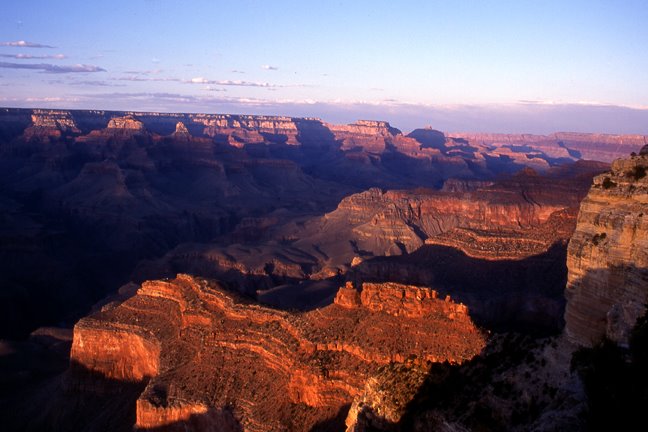
The third of three books my wife bought for me on Father’s Day 2024, Kevin Fedarko’s “A Walk in the Park” is by far the longest and the most complex. Kevin’s friend, Pete McBride, suggests that the pair hike the Grand Canyon. Not the rim-to-rim hike that many find challenging, but instead a hike from one end of the Canyon, Lee’s Ferry, to the other, Grand Wash Cliffs, beginning in 2015. Although the distance between these two places is about 277 miles, the walk is closer to 750 miles because of the need to trek through side canyons and grounds with no trails.  If the hike is taken in sections, the method used by Fedarko and McBride, the distance is closer to 800 miles because of added distance to take-out and drop-in points.
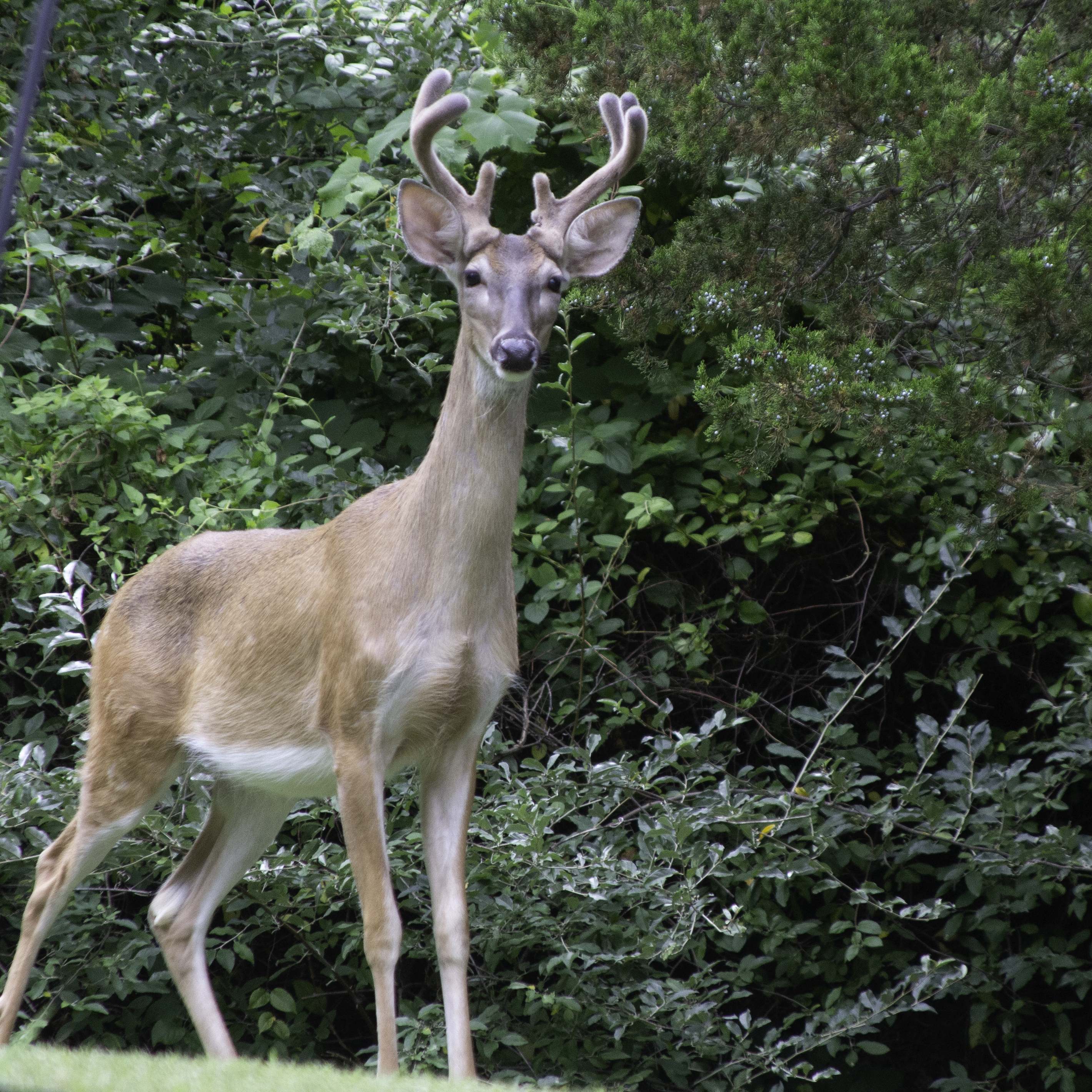
While this hike has been completed by others, they were typically seasoned back country hikers. On the other hand, Kevin was an award winning writer and Pete an award winning photographer. While both had some outdoor experiences, neither was in any way prepared for the challenges and experiences awaiting them. Looking at some of their past experiences – getting caught in an avalanche near Mount Everest, a trip to take photos of the world’s largest caribou herds and seeing no caribou, and others – you have to wonder what would make them believe this trip would go well.

It is difficult to categorize this book. It could be considered an adventure or maybe a history book looking at the Grand Canyon’s past. It could be thought of as a hiking book or a nature book. It also includes portions that reflect love – love of the outdoors, of family, and of geography – or a book on conservation. There are probably many other ways that one can view the book based on personal experiences.

Both Fedarko and McBride have published books based on their experience.  “A Walk in the Park” is Fedarko’s while McBride published a photo book from the trek. They have worked together on a video of the trip. All of these are done from the standpoint of participants, not onlookers. Little is hidden away because it makes the reader or viewer uncomfortable. Instead they want to make others part of the journey. They do not preach to the reader or viewer. Instead they offer thoughts, ideas, and experiences designed to make us all think.

Many thought that the trek was poorly planned – probably so – by unqualified individuals and was followed up with poor execution. One comment I saw was that it was harebrained – also probably true. Had it not been for other, more qualified, hikers and individuals with far more experience who helped them we might have read of two more hikers losing their lives in the Grand Canyon.

It took far longer to read this book than I originally expected. It is so well written that it makes you feel that you were along with Fedarko, McBride, and their friends. You can learn from their experiences and from those they met along the way. And also from those who attempted the same trek without success sometimes leading to their death. In addition to the portion of the book dedicated to the hike, you also learn something about the boat and raft trips down the Colorado River from Lees Ferry and the difficulties involved from those who guide these trips based on Fedarko’s attempts to work in that realm. You also learn about his family from the mining areas of Pennsylvania and his father’s battle with cancer. All of these things bring you into his life.

I highly recommend this book to anyone with interest in the outdoors, our national parks, the Grand Canyon, and the indigenous people who inhabited the land prior to the park’s existence. It also offers a view of the mistakes we have made in our attempt to preserve the land for some, allow others to profit from our mistakes, and often our inability to make things right again.

Again, read the book. I’m sure almost everyone will find things of interest to them and will enjoy those things around them.

“Where the Deer and the Antelope Play, The Pastoral Observations of One Ignorant American Who Loves to Walk Outside” by Nick Offerman (A Book Review)

Previously posted on Facebook.

A rather wordy title for what I found to be a surprisingly interesting read.

Offerman described himself at different points in his book as a writer (with several books in print), a television actor (both in prime time and in movies), a producer and behind the scenes worker in theater, a boat builder (wood canoes), a craft furniture builder (check his website), a husband, and without really saying so, a traveler. A lot of things in, when compared to mine, a relatively short timeframe.

The book is officially divided into three parts:

A weeklong trip with two friends to Glacier National Park where they took several day hikes throughout the Park along with one day of river rafting.

An extended visit with another friend, a sheep farmer in the rural United Kingdom.

And, a road trip across half of the United States with his wife, actress Megan Mullaly in their travel trailer, Nutmeg, visiting friends and family across the country.

Some might also say there is a fourth, unofficial part of the book which focuses on Offerman’s political and environmental viewpoints or observations. While some may find these views a bit overbearing, they are scattered throughout the book and can be skipped over without losing the value of his writings.

Glacier National Park

The book opens in Montana where Nick and his friends are meeting with their guide to enjoy several days of hiking different trails, both in length and difficulty.  I found this part of the book very enjoyable.  While I often read fast, this section of the book made me want to take a break – read a few pages and the take the time to think about what I had read. Then sit back and ask myself why things happened in the way they did along with how things might have been different.

This section was an excellent way to open the book and to welcome the reader into a part of the world that some may never see in person. In addition to some serious thinking one can open their imagination and feel like they are there.

The United Kingdom

The second part of the book is was spread over a much longer period.  It describes how Nick was able to visit a local countryman, a fellow writer and a sheep farmer, while working in the United Kingdom. While not specifically mentioned, it also seemed to open Nick’s eyes to how someone not living and working in the entertainment field lived and spent their daily lives.

Early in this part, Nick participated, probably to his surprise, in the rebuilding of old, possibly ancient stone fences used to manage sheep on the farm. Definitely hard physical work which gives lots of time for thinking and reflecting on life but also a good deal of mental work since these stone walls are not held together by concrete. Instead they are constructed by selecting stones and fitting them together piece by piece, and creating a fence that will last a lifetime or longer.

While Nick was raised in a relatively rural area of Illinois I am fairly certain that he had never done anything like this, or purchasing livestock or participating in every day farm life.

Across the United States

Nick was back in the United States for Part III. He and his wife were planning a trip across the country during the pandemic. After seeing some small recreational vehicles, they began looking at recreational vehicles and ultimately purchasing an Airstream trailer (named Nutmeg – LOL) for their trip.  After the purchase, they experienced many of the same challenges seen by other beginning campers – learning how to connect the trailer to the tow vehicle, finding that parking a trailer was not the same as parking a car, and discovering that not all campgrounds worked in the same way.

But after a few false starts, their travels seemed to go well. Once they reached his childhood home after leaving Nutmeg in Oklahoma Nick found some strained relationships with family members. This ultimately led to something he called “Bubbles”; a recognition that if people live in different environments they may not share views or opinions. This can often lead to disagreements, hurt feelings, and sometimes even separation.

After a short family visit, the trip back to their California home began with additional information on their travels along with the fun, and challenges, of travelling in a recreational vehicle.

All in all, a very enjoyable book.  A book that makes one think. Not everyone will agree with everything in the book nor is that expected. I would highly recommend this book to all readers and strongly encourage to take time for thinking and imagining. And remember that even if there are chapters or parts that you disagree with, the book is still enjoyable.

Castles

When I was a child we did not have castles in the United States, something that is still true today. For most of us, castles were something that was read to us in fairy tales, fables, and, later, in a few books. A castle might be this beautiful building in the clouds or high on a mountain top. Or they might be strong fortresses built for protection or battles. Castles often had evil queens and beautiful princesses. They had a strong king and a handsome prince. There were gorgeous and glamorous ballrooms and dark and dirty dungeons. And every castle had two common features – a large moat surrounding the castle and a huge bridge and door to protect each entrance. We could only use our imaginations to see these castles. A lucky few might have been able to see the “castle” at Disneyland while most of us only saw it on television with Tinkerbelle in the foreground.

When I reached my mid-twenties I was lucky enough to live in West Germany for a few years. There I was able to see several actual castles there along with an opportunity to actually stay in an Austrian castle for a few days. I saw my first castle when a fellow soldier invited me for a day of photography of a castle near Stuttgart. I don’t remember much about the castle other than it was a bit of a disappointment – nothing like the fairy tale castles of the past. In fact, it was only the ruins of an ancient castle. It was perched on a small hill overlooking a German village. I’m not sure why it was in ruins – age, a victim of war, or some other cause. But there were enough ruins that you could tell what it was and get some reasonably good photos.

My next opportunity was far better. I was able to see two of King Ludwig’s castles – Schloss Neuschwanstein and Schloss Linderhof. Neuschwanstein is said to be the model for the Disneyland castle and there are many similarities. It is posed on a wooded mountain in the Bavarian Alps. A beautiful white castle with golden roofs on its towers. It is within sight of Ludwig’s boyhood home, Schloss Hohenschwangau. Linderhof on the other hand, has a more subtle beauty. There are no huge towers and it is not posed on top of a mountain. It has wonderful gardens and fountains but is built lower to the ground. One of the best parts is in Ludwig’s bedroom where the windows open to a fantastic view of a cascading, man-made, waterfall that looks like it could flow directly into the room. There is also a grotto where swan shaped boats rest. Both Neuschwanstein and Linderhof have tours for the public on most days.

In the winter of 1977-1978 I was able to take a ski trip to Austria with the base recreation services department and other soldiers. One of the best parts of this trip was the opportunity to spend a night in Schloss Itter pictured above, near the village of Itter in the Austrian Alps. At that time, the Schloss had been converted into a hotel. It was decorated with artifacts of the past including suits of armor, weapons, and other things which we seldom see today. Given that it was winter, the snow highlighted both the Schloss and the village.

While I was near several other castles during my time in Germany, duty other demands did not allow visits to them all. I was also unable to visit castles in other countries like France and the United Kingdom which I now wish I had done

There were two things missing from all of the castles I visited or even viewed from a distance – there were no moats nor any huge gates and doors. I wonder where they went.