Which Do You Prefer?

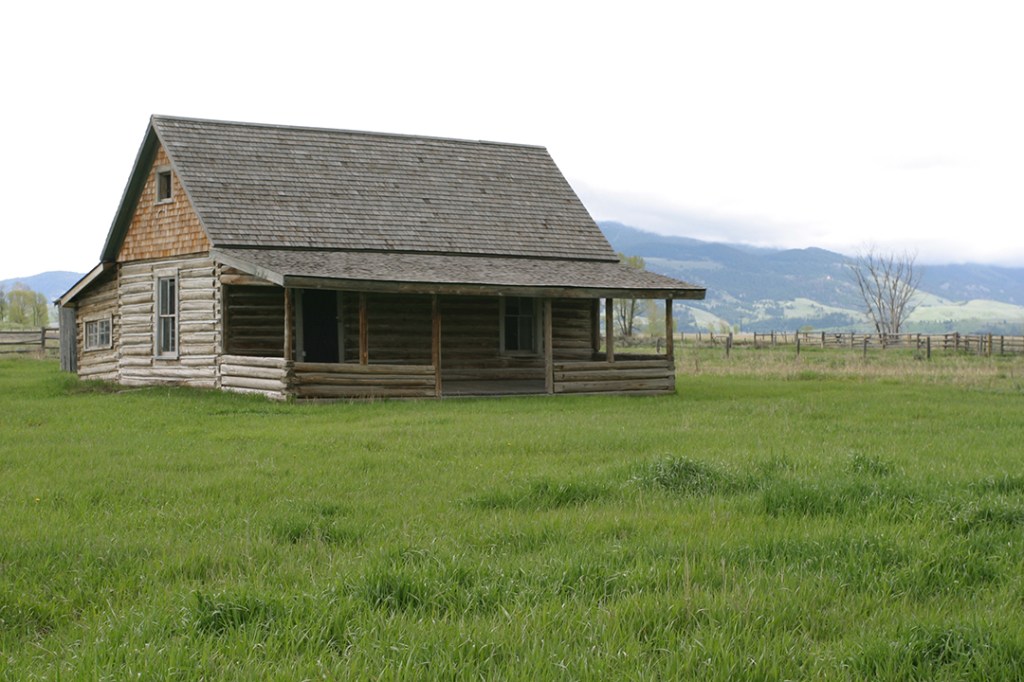
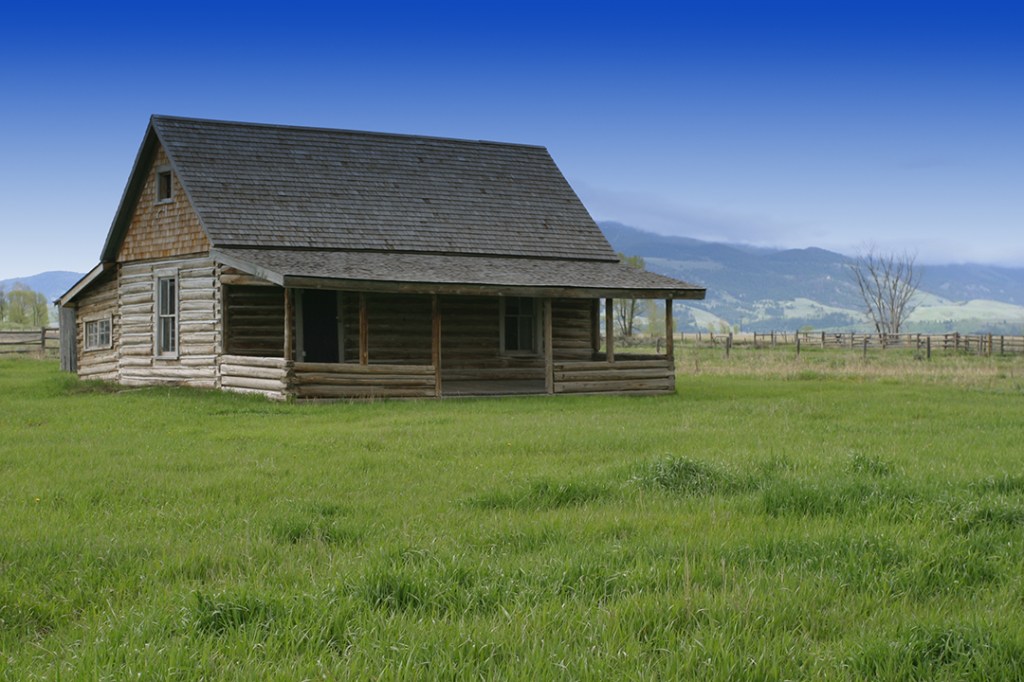
Several years ago I spent a few days visiting Yellowstone and Grand Teton National Parks. Many who have visited these parks have spent some time along the Mormon Row area of Grand Teton where several older homes, barns, and other buildings are located. Most of the days of this visit were cloudy and gray, not ideal conditions for photography but one should never pass on the opportunity. This is the original image of one of the cabins taken during that visit.

I use Adobe’s PhotoShop and LightRoom to process most of my photos but try to go lightly with my editing. Usually this means some cropping, maybe some minor adjustment to saturation, and possibly some adjustment to brightness and contrast. At that time I was also using a plugin called NIK Silver Effects. This photo seemed like a good candidate for some editing. I decided to apply a blue filter along with my normal processing and arrived at this view.

When I asked several friends for their preference the choices were balanced. Some liked the original while others liked the filtered image because of the blue skies and some added clarity of the cabin details. Others preferred the original image.

A few months later I decided to make a tabletop book with some of my photos, focusing on older objects like cabins, barns, steam trains, and other similar things. Rather than using the photos in their original form I decided to use sepia toning along with some borders. My goal was to create something like a stack of old images that you might find hidden away in an attic or closet. Images that were in fairly good shape but with some possible fading and borders or edges that were not neatly cut. I though this image would fit the book well and the result is shown here.

So, you now have three treatments of the same photo. Which do you prefer? And, if you are willing to share, why?

I hope you enjoy looking,

Yellowstone

When I was a child and heard “Yellowstone” I thought of Yellowstone National Park or even more specifically its more famous feature, Old Faithful geyser. I found the idea of a geyser unbelievable and sometimes wondered what it would be like to have a geyser like Old Faithful in our local park. A humorous thought given that our park was less than a city block in size. I read about Yellowstone in books and magazines, sometimes saw television shows featuring it, and even associated it with a Hanna-Barbera cartoon series from the early 1960’s, The Yogi Bear Show with Yogi Bear, Boo-Boo Bear, and Ranger Smith who lived in Jellystone Park. While the cartoons were fun to watch, they are not my focus here. Instead, I want to write about the national park

I remember wishing to visit Yellowstone when I was young but that wasn’t practical for our family. So, I could only learn about it in other ways and imagine what it would be like to be there. I finally had the opportunity to visit Yellowstone when I was in my late thirties. Surprisingly, it was much as I had imagined and even more.

Yellowstone National Park is a huge place, over 3,400 square miles, mostly in Wyoming but also in Montana and Idaho. As one might expect in a park of this size, Yellowstone offers many different things for the visitor. Starting with the simple, it offers rivers, lakes, canyons, meadows, and hydrothermal features like the many geysers. According to scientists, the park sits atop the Yellowstone Caldera or dormant volcano. If you visit, you will see some of the most pristine and colorful water features that can be found anywhere.  You may also see dynamic waterfalls in steep-sided canyons, mud pots in other locations, and a variety of rock formations.

Yellowstone is also the home of a great variety of wildlife, with an emphasis on “wild”. You can see bison, elk, deer, moose, and a variety of waterfowl and other birds. Where you see them and in what numbers can vary by the time of the year and the weather. You can also see, if you are lucky, cougars, wolf packs, and bears, both black bears and their larger relatives, the grizzly bears. But remember to keep your distance and follow any instructions from the park staff for both your safety and that of the wildlife.

The water features are beautiful. Old Faithful still erupts regularly, although maybe not every hour but even if you cannot get to Old Faithful there are many other geysers with roads or trails leading to them. There are also many pools or other water features to see, just remember the water is extremely hot. And you should resist the urge to throw pennies into the water features. Pennies and other foreign objects can destroy these beautiful works of nature and spoil the future for other visitors.

But all this beauty does come at a price. Like other wild locations throughout the world, there is hidden danger in Yellowstone. Some of the danger is courtesy of Mother Nature and some is the fault of man. As I said earlier, there are rules and warnings at various locations in the park and given by rangers and volunteers in person. Probably one of the biggest things to know is that the trails and boardwalks in the park are there to keep you and the environment safe. It can be tempting to just step off a short way, but you don’t know what dangers may be there or what harm you can cause to the environment. Another big thing is to remember you are visiting the wildlife in their home. Keep your distance from the wildlife. They will protect their young. They will protect themselves. They are faster than you believe, and their horns, hooves, and teeth are far more dangerous than you may expect. This is even more true in the breeding season. While a photo with a bison may look cute on your wall, is it worth your life? If a trail is blocked by a herd of elk, choose another trail and come back later. Stay safe and enjoy your visit.

Remember that the water features in Yellowstone are hot. That means you can get burned by touching it in many locations. Even where you least expect it there can be small, yet hot water features. There have been many fires at Yellowstone. These fires are both beneficial allowing for reforestation, but they can also be dangerous. If an area or a road is closed because of fire danger, then don’t go there.

The winter can also present danger. A large portion of the park is closed in the winter or open only to snow vehicles. Again, this is to protect you, the wildlife, and the park itself. Obey the rules and come back to the park again.

I hope that each of you has the opportunity to visit Yellowstone and can enjoy some of the best nature has to offer. If you do, have a good trip and take a photo for me.

Sometimes I’d Like to Write a Book or Maybe Just a Short Story

Several years ago, although it seems like only yesterday, I was travelling along the interstate and saw something that I believed could be the basis for an interesting story or even a new book. In the middle of nowhere there was a small cluster of adobe buildings. Buildings that looked uninhabited. Buildings with no access from the interstate and no other roads leading to them. Adobe walls that looked in good condition but no glass apparent in the windows. Perhaps it was a ghost town or maybe the buildings were used by a ranch. Still, they seemed to just sit there, awaiting erosion or destruction by the hands of man. Even then, it was not the past, present, or future that provided an inspiration. It was simply the small cluster of buildings sitting in the hot sun.

Since that time, I have often thought of how these buildings, or similar buildings elsewhere, could provide the foundation for a book. But for some reason, I don’t know if I could write something, even a short story or a blog post that would do justice to them. I have had some ideas but when trying to move forward with them it always seems like the process becomes so difficult that I give up.

I still believe a story is there. Is it simply bringing an idea to a successful conclusion that is so difficult? Does one start with the buildings or simply incorporate them into a story as it develops? Or is there another approach that eludes me today? I have no answers but will continue to attempt to find a solution. And maybe I will at sometime find the book or short story that is worthy of sharing with others.

Photography

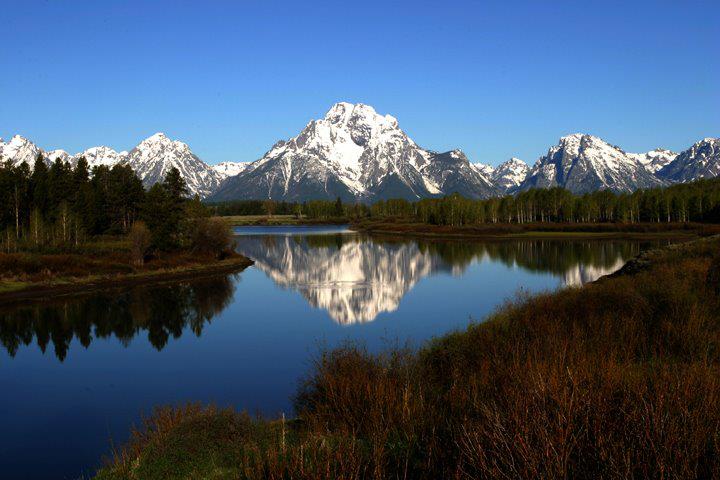
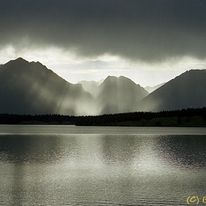
Those who have followed me on my blog, or earlier on my Facebook site, may be aware that one of my favorite hobbies is photography. I don’t consider myself a professional or even a highly advanced photographer, but I enjoy taking photos and occasionally have a photo that I enjoy sharing with others. My two favorite subjects are landscapes and wildlife, whether found in the wild or in a controlled environment.

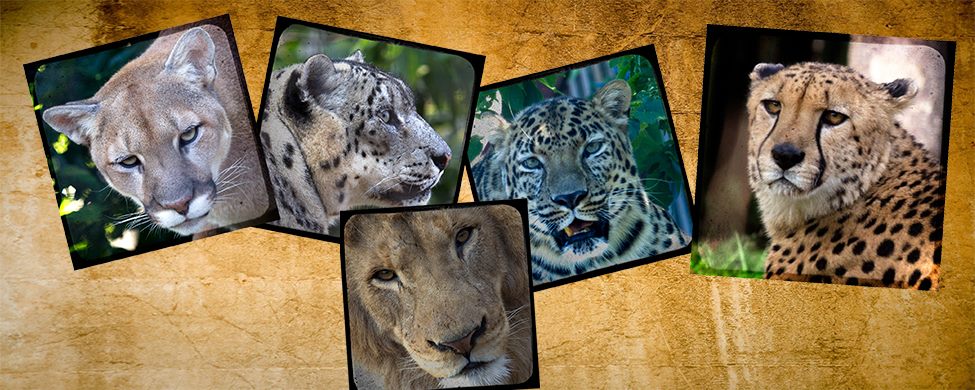
I thought I would take a few moments to share a few images here, along with short descriptions or background information, and hope that you might enjoy them too. The first image is a collage of “big cats”. These cat photos were all taken at the St. Louis Zoo then resized and placed on a single background using Adobe’s PhotoShop, one of my favorite tools, along with one or two plug-ins. I enjoy showing the beauty of these animals along with the differences between the various species.

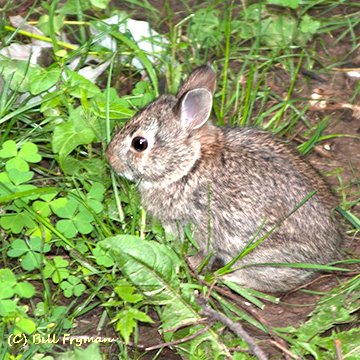
The next photo was taken in my backyard a few years ago. While the backyard was not the “great outdoors”, the bunny was definitely wild, and I felt privileged for it to stay long enough for me to take this photo. The year after this image was made, I used it with a top and bottom border to wish every one a “Happy Easter” online.

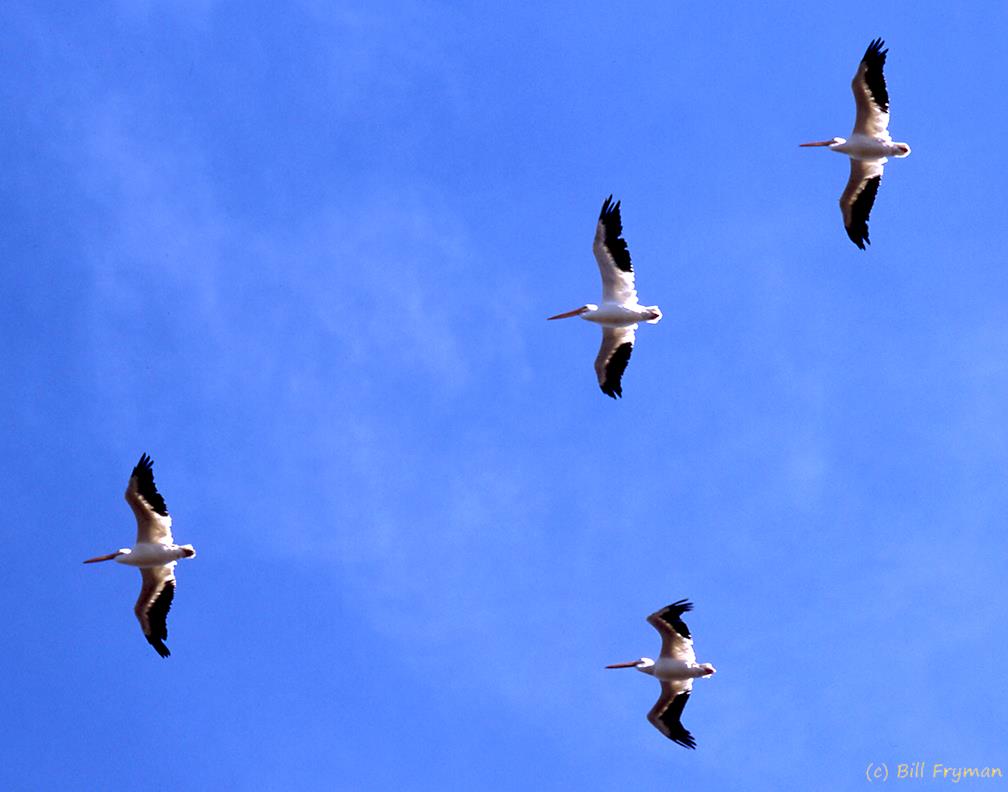
We are privileged to live near the confluences of the Missouri River and the Illinois River with the Mississippi River. This area is a great place to see bald eagles in the winter, but I selected this image of American White Pelicans flying in formation. This was a winter photo and later that day I saw a hug number of both Brown and White Pelicans at rest along the Illinois River. I didn’t know that pelicans flew in v-formations, much like geese and ducks, until that day. The clear, blue sky provided a great background for this photo.

It was back to the Zoo for this image of Black Necked Swans. If you look closely, you may see what I was trying to capture – the heart shaped image created when two swans pass closely to each other going opposite directions. While the timing of my photo was a few seconds off, it was the best of several taken in rapid succession.

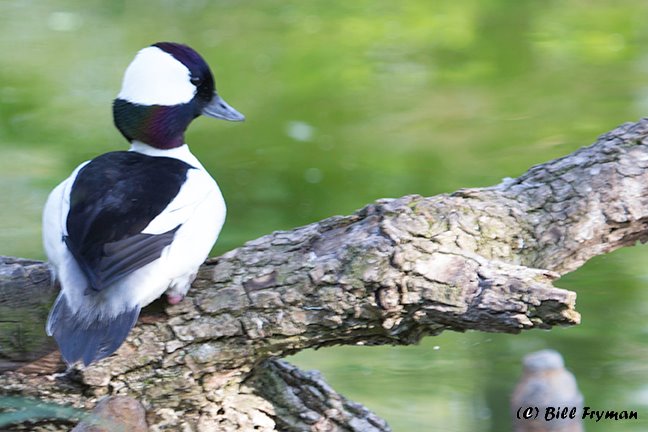
The Bufflehead is a small, nesting duck. I captured this image near The National Elk Refuge in Jackson, Wyoming during a visit to Yellowstone National Park. There is a visitor’s center there where migrating waterfowl sometimes visit which allowed be to take this photo. Like the pelicans, this is a wild bird, not a bird in a cage or similar environment. It is not something we see in the Central U.S., but it is almost as beautiful as the male Wood duck.

This raccoon had taken over a log near New Orleans. I was able to capture this image while on a swamp tour several years ago. This was before a major hurricane in the area, so I am almost positive that neither the animal nor the log survived. Even so, the almost hidden raccoon made for a nice shot.

For those who may be interested, I rarely use my phone to take photographs. These were all taken using 35 mm, Canon digital cameras of different vintages. They were taken using zoom lenses up to 400 mm in length. I seldom use flash for any of my outdoor images and try, as much as possible, to use a high shutter speed to freeze my wildlife images. Most were taken using a tripod although the pelicans and the raccoon were taken hand holding the camera. I treat landscape images differently and may share some of those images in the future.

Travels

I grew up in a small farming community. As a child, travel was limited by both cost and the quality of both cars and roads. While a trip to Memphis was considered a “big” trip, as I grew older the trips became longer yet less frequent. After my sister married, my family, or parts of it, travelled to her home every two or three years. This included one trip to Virginia, near Norfolk, and several trips to Michigan, a short distance north of Detroit. One of these trips also included a daytrip to Canada. Many of my friends had even fewer trips other than to Memphis.

When I was a high school senior, my class took a three- or four-day trip to Houston to visit both the Astrodome and Astroworld. For many this was a first long trip from our hometown or the nearby farms.

After graduating, I entered college, not at the closest university but instead across the state. I think now that this may have been thought of as another trip but one that lasted nearly four years instead of a few days. While there I enrolled in ROTC and was commissioned in the Army. Perhaps the thing that attracted me to the Army instead of a local business was the opportunity for even more travel.

And travel I did, to locations in both the United States and Europe. Some assignments were short and some longer. Some were for training, and some were for regular duty. Some were enjoyable and some a bit less so. But I did get to travel and to bring with me memories of each location and hopes for the next. So here I would like to share a bit about the places, memories, and even some regrets. Many of the places where I was assigned are no longer there, but they are still remembered by those who served there. So, take a trip down memory lane with me and hopefully enjoy a bit about my travels, or maybe travails, as I talk about some of these places.

I will start with college, what was then a small college of about two thousand students. As with any college that small, degree options were limited but they met my needs. While there I was also the manager of the basketball team. This allowed me to travel some more, to places I would not have visited otherwise. I also went to ROTC summer camps at both Fort Knox (no, I didn’t get to see the gold – LOL) and Fort Riley.

After college my first Army assignment was at Fort Benjamin Harrison, Indiana. This was for officer training in 1974. Our training class was about forty-one new Lieutenants, some who would continue on active duty after the training and some who would go back to their communities as members of the reserve forces. You make many friends in a thirteen-week course, many of whom I remain in contact today, over fifty years later. I enjoyed this assignment greatly, along with several others at Fort Ben later in my career. The fort is no longer there for new junior officers to enjoy.

From there I was assigned to Fort Polk, Louisiana. The two locations could be no more different. Fort Ben was small and in a metropolitan area. Fort Polk was large and located in a rural area near the Texas-Louisiana border. Fort Ben had more of an administrative feel, like the soldiers stationed there while Fort Polk was going through a transition from an infantry training post to the home of a new Infantry Division. I was at Fort Polk for about three years and there were things I enjoyed and other things that I did not. I made several friends but not nearly as many as at Fort Ben and none that I am in contact with today.

After leaving Fort Polk, it was back to Fort Ben for another short school and then to Europe for my next assignment. When I arrived in Europe, my first assignment was to a data processing unit (a name no longer used or even relevant) in Nellingen, just outside Stuttgart, Germany. Our unit operated three computer centers supporting the Army’s Seventh Corps. I really enjoyed my first trip to Germany; both the military duties and life with the Germans participating in things like Volksmarching, beer and wine festivals, and shopping, skiing, and wonderful meals at local Gasthauses. This assignment also offered the opportunity to visit Austria, Switzerland, and Belgium. The military post is no longer there and has been replaced by a modern German community.

From Germany, I was reassigned to a new unit located near the Mediterranean Sea. Camp Darby and an associated storage depot were shared by Army and Air Force units. It was just outside Tirrenia, a small seaside resort between Pisa and Livorno. There I was assigned to a newly forming logistics unit with fewer than twenty other individuals, both military and civilian. In this job I also had the opportunity of short visits to Army units in both Greece and Turkey. While I enjoyed my time there, it was also filled with challenges and after almost two years I was ready to move on. My one regret about my time in Italy was that I did not get to enjoy more of the culture that Italy offered. I visited Florence, or Firenza, but did not spend any time in Rome, visit Venice, or the Italian Alps.

After my time at Camp Darby, I returned to Fort Benjamin Harrison for a longer school and was there for about eight months, mostly in the winter. The fort had changed little since my earlier assignments there and the level of enjoyment was much the same. The class size was larger, and more new friends were made before moving to my next long assignment and new role.

My next duty station was at Fort Gillem, Georgia. This was on the southern side of Atlanta, and we provided administrative support for Army Reserve and National Guard units located throughout the southeastern United States and in Puerto Rico. Many others assigned there spent many days travelling although my office did little travel other than regular trips to the Washington, DC area. This is another post that no longer exists as it did. While some military units may still have headquarters there, most of the larger units are gone.

Then it was back to Germany for another tour. Initially I was assigned to another data processing unit at Kilbourne Kaserne near Heidelberg, Germany. My time here was spent much the same as during my first visit to Germany. This was a nice place to be assigned; a small Kaserne yet near all of the conveniences necessary to support the Army’s Headquarters for all of Germany which was located in Heidelberg. The Kilbourne Kaserne, like many other kasernes throughout the country may still exist but are no longer used by the US military.

My final years in Germany were spent in Wurzburg as part of the 3rd Infantry Division. The Division was spread over several locations in that part of Germany, and I visited several new cities and towns as a result. Like all of my tours in Europe, this was an enjoyable one with a few challenges thrown in just to keep things interesting. One memory that stays fresh in my mind is falling in deep snow, late at night, wearing full battle equipment during a field exercise. This is definitely an experience that I would not want to repeat. None of the Army posts remain in the Wurzburg area as a result of changing priorities and new missions.

To wrap up my Army career, I spent several years in St. Louis working in a headquarters supporting Army Reserve soldiers across the country. This unit was composed of a large number of civilian employees along with a smaller number of military personnel. Here too, my travel was largely limited to trips to and from Washington, DC or nearby Alexandria, VA. And, even here, the Army organization where I was assigned is no longer in St. Louis and has been absorbed into another organization elsewhere.

After retiring, I have remained in the St. Louis area and will probably not relocate again. But my travels did not end here. Since arriving I have had the opportunity to visit the Gulf Coast, the lighthouses on and around the Great Lakes, the desert Southwest and Rocky Mountains, and the New England area. All have been fun and all have offered an opportunity for learning and enjoyment.

I hope you have enjoyed this brief description of some of my travels and have the opportunity for travels of your own.
Science-Fiction or Science or Fiction?

A few days ago, I read a short observation about where the future might lead us or how the world might be a few decades or even a few years from now. Unfortunately, I failed to make note of who had written the observation or even where I had read it. But thinking about the writing as I was lying in bed early this morning I thought about how science-fiction or even science itself has changed the world around us.

One of the first things I remember that could be classified as science-fiction was the mythological tale of Icarus. I tried to find a specific date when this was written but was unsuccessful. It was written by Ovid, along with several others, and focused on an escape attempt by Icarus and his father using wings made from metal, feathers, and beeswax to fly away from imprisonment. If one gives this some thought, this was science-fiction of its time. Flying, by man, was not even a dream. Yet Icarus’ father was able to conceive the construction and use of wings which would allow them to fly. Sadly, according to the myth, Icarus flew to close to the sun, the beeswax melted, and he fell to his death in the oceans below.

A person must wonder, could the people in Ovid’s lifetime conceive, or even dream, of our large airplanes today that can easily fly us around the world? Or could they possibly things like space travel? Yet in some form this myth was recorded and passed to later generations and is even known to some people today. So, while the tale of Icarus has passed through generations it is still a part of our lives today. So, were the writings of this myth only fiction or were they science-fiction, simply not defined as such?

Science-Fiction probably became a more well-defined genre in the latter half of the 1800’s with the writings of Jules Verne. Verne seems to have included technology (a term used loosely), or science, that existed in his day but expanded on how it was used. For example, this work “Twenty Thousand Leagues Under the Sea” suggested the use of submersible craft to travel some 40,000 miles or more beneath the ocean. While submersibles existed, they could not travel to that depth, even had such a depth existed. Yet Vernes conceived this as a possibility and while we can search the oceans to great depths today, not anywhere near the depths Verne described. But Verne was able to imagine what might exist there.

Verne also wrote “Around the World in Eighty Days”, a time that, at least in the 1870’s seemed almost unbelievable. One must wonder, what would Verne think of today’s air travel where a trip around the world takes hours rather than many days. Again, the technology that Verne imagined existed. But it has advanced far beyond what he wrote as a novel, not as a prediction of the future. So, how was Verne able to reach out and predict these things that might exist in future times?

While science-fiction, as a genre, continued to grow over the years since Verne, one must also look at the world around us and ask how science has grown. We should mostly ask ourselves are today’s researchers and scientists science-fiction writers or dreamers. Should they have chosen to record their works in novels, would these works have been considered science-fiction? Or were they only science?

An example might be the works of Henry Ford. Ford did not invent the automobile. Instead, he made the automobile affordable. Had Americans who travelled westward on the Santa Fe Trail or the Oregon Trail known of the automobile would they have made those long treks via animal-powered wagons? Would we have the rutted trails that offer historic value today? Or would they have laughed at Ford?

 In other fields one can see both individuals who by imagining possibilities. They looked at problems and tried to find solutions. When they began, there seemed to be no solutions, yet they were willing to stretch the existing limits to create things that were better. People like Pasteur and Salk in the world of medicine who often were chided or punished for their works. People in other fields where advancements were made, or new solutions were found. Many who were successful and many who failed yet challenged others to try.

The differences between these individuals and people like Verne is not in what they imagined or accomplished but in how this was shared with others.

Now, perhaps in a less serious mode, let us move into things into the 1960’s, when I was a child. Many of my generation remember the cartoon series “The Jetsons”. The cartoons were, supposedly, set in the year 2062. This means that we have about thirty-seven more years to see if these cartoons were true or if they were only the imagination of the writers. But we can already see some things become real. For example, the Jetson home was cleaned by Rosie the Robot. While today’s robots take different forms, we can now have our carpets cleaned by robotic devices. Similarly, The Jetsons also had smart watches, video phones, and video chat; all things that are commonplace today. So while Hanna-Barbera were making a cartoon to keep children entertained, were they actually writing science-fiction?

I grew up in the “space age”. We, along with the Soviets, sent man and animal into space. Our exploration allowed us to ultimately development of a craft allowing scientists and others to live for extended time away from earth. They have allowed us to explore other planets and environments. But when we were children each trip to space created tons of junk. Old rockets and other craft that either burned up in the atmosphere, was left in space, or crashed into the oceans. It seems such a waste.

So, what have we done? Today, we have ways to bring much of this junk back to earth, land and capture it safely, and reuse it in the future. Are today’s solutions perfect? Probably not, but they are a step forward and can be improved as we move forward.

When I was in my teens and early twenties I worked on farms, drove tractors and combines, and help farmers tend their crops. When I look at farm equipment of today, I am amazed. Things that we learned to do in the past are now done by automated tools. The farm worker is still there, but for how long?

We have cars and trucks that drive themselves so all we need to do is tell them where to go. Again, something that is yet to be perfected. But something that would have been science-fiction just a few years ago is now emerging reality. Electric vehicles, not the first if one remembers trolleys and electric trains, that also have limitations but may ultimately reduce our dependence on fossil fuels.  All these things started as ideas which could have been discarded as science-fiction but have instead began moving into the world of science.

Who can predict what the future holds? Will it be the scientist, the science-fiction writer, or someone else? And will the future leave us older folks behind or will it be something that makes or lives better? I have no answers, just questions and hope.

Brr….

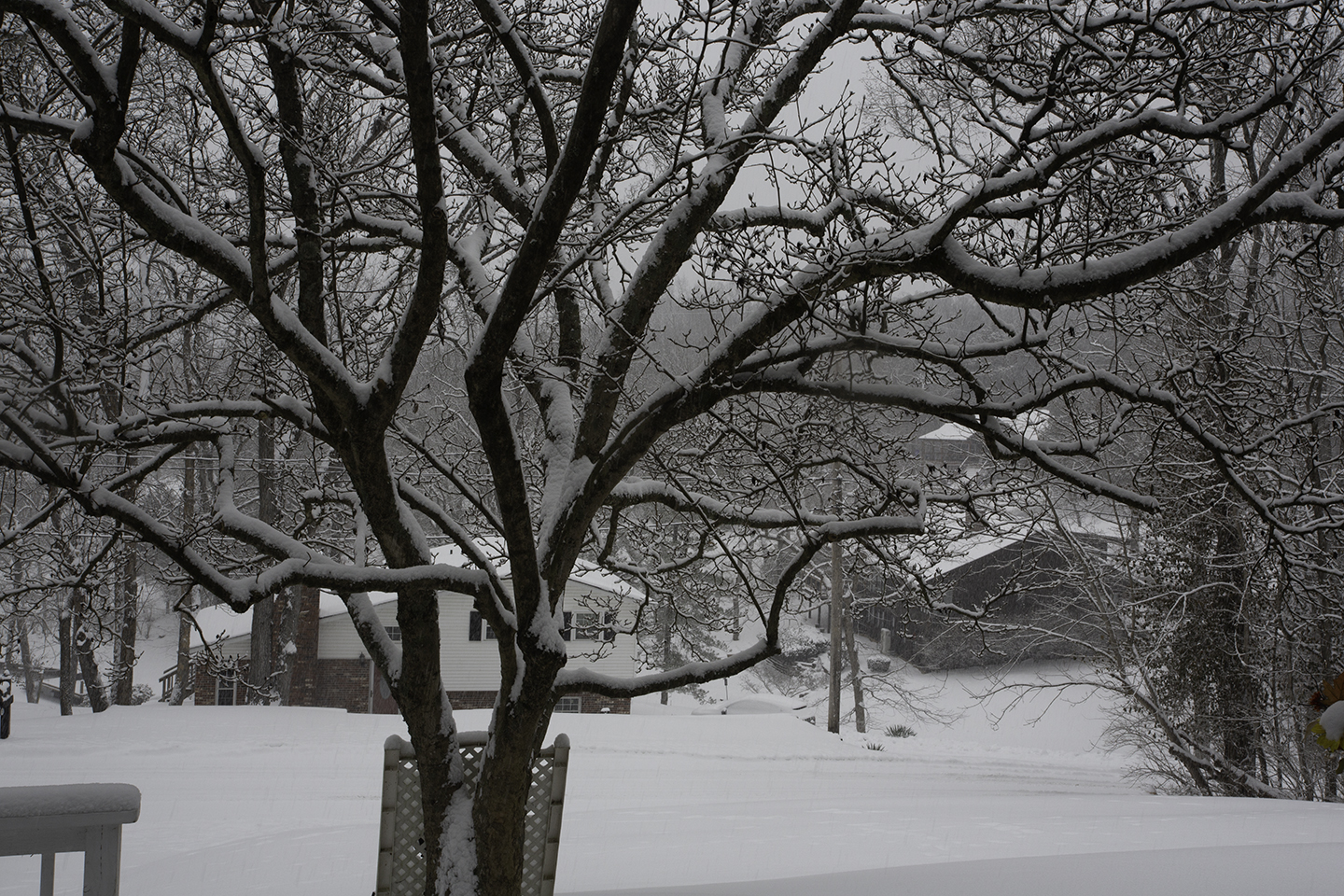
In the last couple of weeks, the St. Louis area has suffered through some strong, at least for here, winter storms. During the first, we were on the border between snow and ice. At our home, southwest of St. Louis, we spent the first two days of the initial storm as a target for freezing rain and sleet. Only the final night gave us some of the snow that had been seen north of us.  As a result, we had a layer of ice on the ground, on streets, and on driveways which was then covered by snow.  A few days later, another blast of winter weather added several additional inches of snow.
While many others, like my nephew who lives a short distance from Grand Traverse Bay and Lake Michigan, have far worse winter weather and far more snow, they are better prepared for what that brings. Still, I wonder if they sometimes laugh about our weather woes or have sympathy for those who rarely have this type of weather.   

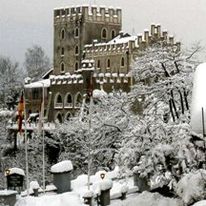
I will admit that I probably have difficulty understanding the reactions to winter weather myself. I grew up in northeast Arkansas. As school aged children, we were usually happy when we had more than one “snow day” in a year. More often, we had none. My second Army assignment was in Germany. There, and like in this photo from Austria, we had much more snow than in Arkansas, but I don’t remember it ever bringing things to a standstill. Instead, communities and drivers there seemed to be prepared for snow and took it in stride. I saw this in multiple assignments in Europe and in the U.S.

But the recent days have made me wonder, why do we not prepare for winter weather and why do react the way we do? Preparation, at least on the surface, seems fairly simple. We should keep enough basic food and other necessities in our homes in case we cannot visit stores for a few days. Instead, it seems that purchasing these basics, particularly food, is never thought about until the last minute. Store shelves are emptied where there should be simple items like bread, eggs, and other everyday items. Little or no thought is given to what will happen if we lose power or if our roads cannot be cleared as rapidly as snow or ice falls.   

Perhaps our businesses should have plans in place to either operate with limited staff or to close for a few days if necessary.  Schools seem to be able to do this, so why not others? Also, our stores should have enough supplies like snow shovels and salt or other ice melting chemicals on hand to meet the needs of the community. This clearly did not occur during our recent bad weather as people needed to call or visit multiple locations, some miles away, to simply get enough salt to clear their sidewalks.

During the first part of our recent bad weather, I had a great deal of sympathy for our HOA president who was receiving email and other complaints in the middle of the storm asking when the streets would be cleared so that someone could go to work or visit a store. He tried to explain that clearing the roads while the snow and ice continued to fall would be of little value. Still the complaints kept coming (along with a variety of reasons for why the roads needed to be cleared immediately). Yet after the main part of the storm had passed and the roads were first plowed, because of the ice the roads rapidly covered over again and driving conditions were no better. Others decided that warnings from area police and highway departments to travel only in emergency did not apply to them so they could travel as usual and create danger for our first responders and others.

All this occurring even after multiple warnings over several days before the storms. I had to wonder, “What would have happened had the winter weather been worse? And how are we teaching our children to be prepared for similar events in the future?”

Christmas at the Cabin

This is a work of fiction. Names, characters, places, and incidents are either the product of my imagination or are used fictitiously. Any resemblance to actual persons, living or dead, businesses, companies, events or locales is entirely coincidental.

All rights reserved. No part of this story may be used or reproduced in any manner without written permission except in the case of brief quotations embodied in critical articles and reviews.

Even as Christmas Eve ran late, Christmas morning started very early. The first three awake that morning were Ben, Bart, and Barry. Their role was quite simple and required little work, yet it played an important role in the day. First up was starting a nice pot or two of coffee along with getting hot ready for tea drinking family. Then they moved to strategic places to protect the gifts and the trees so no early risers could spoil the fun.

Following them soon were several of the ladies for last minute preparations of the buffet food and ensuring things were in place for the younger diners. It was always a difficult decision to know which should come first, breakfast or gifts.

But by around seven, the excitement became too great, and the children started wandering down toward the tree. Ben, Bart, and Barry had their hands full – making all wait for that wonderous moment when surprises and gifts were shared and opened by all. No visions of sugar plums were too be found. Instead, eyes were filled with delight and expectation of what awaited. While parents oft’ wanted the children to have breakfast first seldom could the wonderful aromas compare to the beautiful ribbons and bows.

Once all were awake, they were allowed into the room where the tree could be found. By tradition, the first gift was to Ben. Once it had been opened Bart and Barry had a new role – to distribute the gifts for all to open. This seemed so simple, but it really wasn’t. Care was taken to ensure that everyone received at least one gift before anyone received a second.

When gifts were opened the thoughts of breakfast disappeared. Instead, there was playing with toys and games, comparing new clothes, and many other things. The adults started taking advantage of the buffet and Christmas movies started to play. Friends and neighbors might stop for a visit while others might only share a phone call.

Sometimes the early risers might take a short nap and other family members might visit a neighbor to renew old acquaintances and make new ones. While a white Christmas had been a thing of hope, others wished they could get out in a boat. Adults planned future visits, always welcome. And they worried about who might not be there. While it was always a bit sad, some had to leave early and could not stay.

And at the end of the day, those staying a bit longer helped Bart and his family clean up the house for the next visit. Photos had been taken and soon would be shared. A good time by all so seldom together.

So as these posts about the old cabin may end. They have been shared to say Merry Christmas my friends. May your new year be bright, your wishes come true, and may you have some traditions that you can share, too.