I want to start today’s post with a disclaimer. I am not a Luddite! (Some younger readers may need to look for that word in your online dictionary.) I have worked in the technology field for most of my adult life. I have seen many great things come from technological advances and have also seen times where there were flops or total failures. I do not dislike technology, but I do not love technology that has been created just for the sake of technology or technologists. Having said that, let us move along.
As I have mentioned in previous posts, I grew up in a small farming community. While my family did not own a farm, but like many other teenagers in my hometown, I worked on a farm during summers. I drove tractors, combines, trucks, etc. Some years I worked from planting season until harvest. When equipment broke or failed, I helped do repairs to get things working again.
I am amazed when I read about farming today. Tractors with six or eight drive wheels. Tractors with more onboard computers than we have in our offices. Tractors that drive themselves. Tractors that can’t be repaired without a service call by the dealer in a truck with even more computers but few actual tools and no mechanics. The world has left people like me behind in the dust.
But these advances come at a price. Farmers pay six figure prices for equipment that is used one or two weeks a year and for the other fifty weeks or so sits at the dealer awaiting repairs or sitting in an expensive storage shed on the farm. And then we, those who have no understanding of farming, complain about the high cost of food which we often waste.
You may wonder how this ties into the title of this post. I used abbreviations for the title because that seems to be a trend today. AI is artificial intelligence, the latest and greatest trend in information technology today. A method for us to have all knowledge at our fingertips without any understanding of this knowledge. ACS is a term I coined for the post. It is artificial common sense. It seems to me that intelligence is of little importance without the common sense related to the use of that knowledge and an understanding of the source of this knowledge.
A rather simplistic example of AI versus ACS can be found in these two statements. AI – “Fire is hot. You can get warm near fire.” ACS would add – “While fire is hot and you can get warm near fire, if you get too close you will get burned (or may be consumed by the fire).” Pretty simple, right?
A few days ago, I was rearranging one of my bookshelves and came across a book that I purchased and read in the 1980’s. It was a collection of some humorous articles by an outdoor writer, Patrick F. McManus, between 1968 and 1978. I decided to browse these articles to compare them to what we might see today. One especially stood out and I wanted to quote a short selection here.
McManus wrote, “One of these days they’ll probably come out with a mechanical bird dog that locates pheasants with a special scent detector and radar. A small on-dog computer will record and analyze all available information and give the hunter a report: two roosters and five hens in stubble field – 253 feet. A pointer on the dog’s back would indicate the exact direction…Since no self-respecting hunter would want to be seen carrying his dog around by a handle, all but the cheapest models would be designed to look like nifty attaché cases…”
While this was humorous when originally written, it almost seems like a credible concept today. The question is, “Do we really need something like this?” I suspect that if you ask a pheasant hunter, initially they would laugh but after thinking more they might ask, “Why would you want something like that? Some days when you find no pheasants provide as much enjoyment as the days when they are plentiful.”
When I consider all the AI tools that have burst onto the scene in the recent past, I wonder if having a tool that does all our research (or other work) for us doesn’t present the same dilemma. For example, when doing research in person, “Do I always stay on a single subject? Or do I see something that appears only slightly related that leads me in a new direction?”
Have we, in our haste to make and market a new tool failed by omitting the more difficult, common sense, component? I see articles about how AI tools are being used improperly. I also see articles about how AI tools present security problems or concerns. I wonder if AI tools are really needed or are they like the self-driving tractor that, while a neat (dating myself here) idea has only the benefit of driving up costs?
I have no answers to these questions. I only pose them as food for thought. If we don’t use CS (common sense) or ACS (artificial common sense), is AI (artificial intelligence) really beneficial?
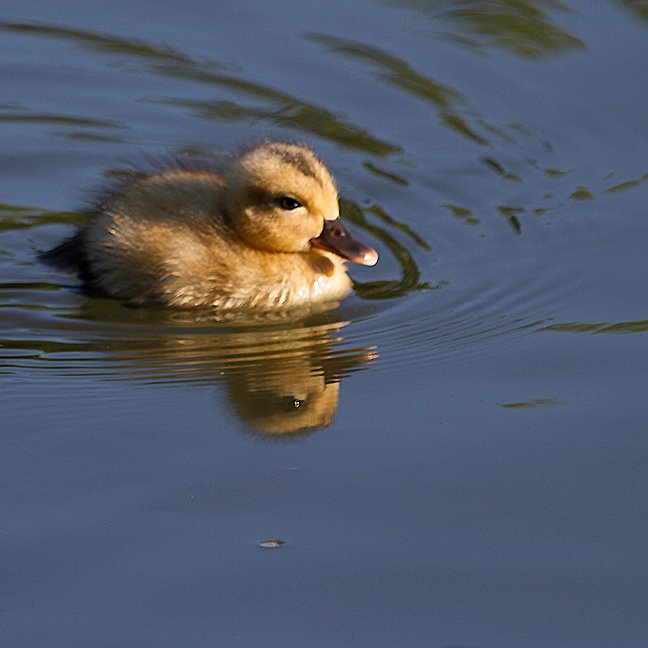 The duckling here is innocent. Quite young, it has not been exposed to the beauty and dangers that may enter its life. Instead, the most important thing now is to simply swim fast enough to catch its mother who is a bit ahead. Living its life in a protected, not natural, environment, it does not need to worry about the source of its next meal, predators from above or below, or even the humans who watch it or take photos. As the duckling ages, it must learn of these dangers and how to keep safe. How does it gain this knowledge? It must be taught by the older ducks, the hen who gave it life or others. But this happens without voice, at least as we humans define it. It must learn when and why migration occurs. It must learn how to avoid predators. When the time comes to breed to ensure the flocks future. Yes, the duckling is innocent now but soon in will be knowledgeable and know how to survive.
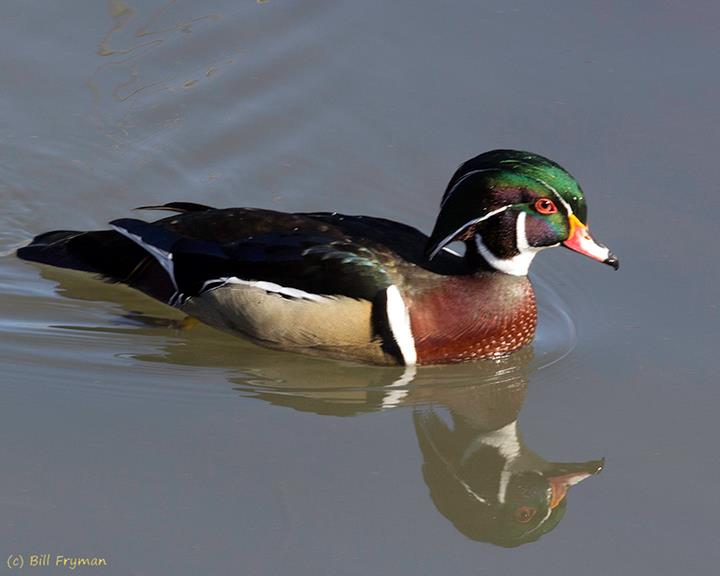 The wood duck drake is often described as one of the most, if not the most, beautiful waterfowl species. The multiple colors stand out bright against the environment. The drake here is also in a controlled environment, not in its natural habitat. How does the drake know that it is safe? Why does it come close enough to be photographed? There are no trees or other places to hide in the face of danger. Yet the wood duck or perhaps its offspring return each year to share their beauty with other waterfowl and even we humans. If it does not survive the winter, how do others know to come in its stead? While scientists may give us answers, are they correct? Or are we simply attempting to fit animal behavior into our human model? Why does the drake sport these beautiful colors while the hen does not? And how do they know where to go in the winter? The beauty is there for all to behold, but it creates so many questions that perhaps the best answer is to simply enjoy.
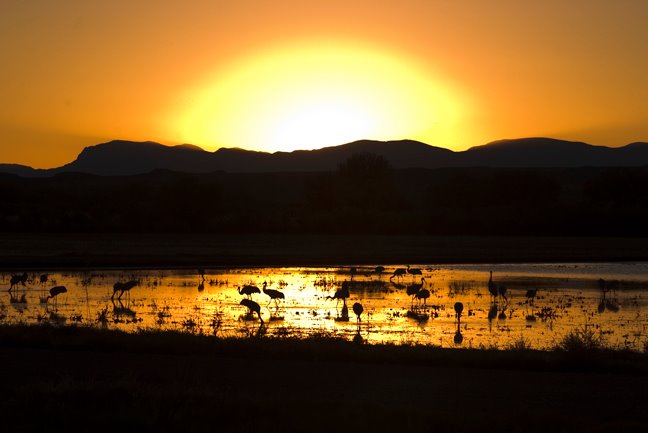 I have always had problems defining why we find sunsets so intriguing. Yes, they are often beautiful, but they can also present danger. But to me, this sunset image from Bosque del Apache to be very peaceful. The sun sets over the mountains, miles to the west. It reflects off the shallow water stirred by a light breeze. The sand hill cranes feed in the flooded fields seemingly without any threat. Later in the evening, the cranes will be joined by others, ducks and geese. And all will rest peacefully through the night. Then early the next morning the peace will be disturbed as the birds take flight, almost as one, to move to their daytime resting places, near and far. Unlike the duckling or the wood duck, these are birds are in their natural environment. Danger and risk are there. But at this time of day, all seem at peace.
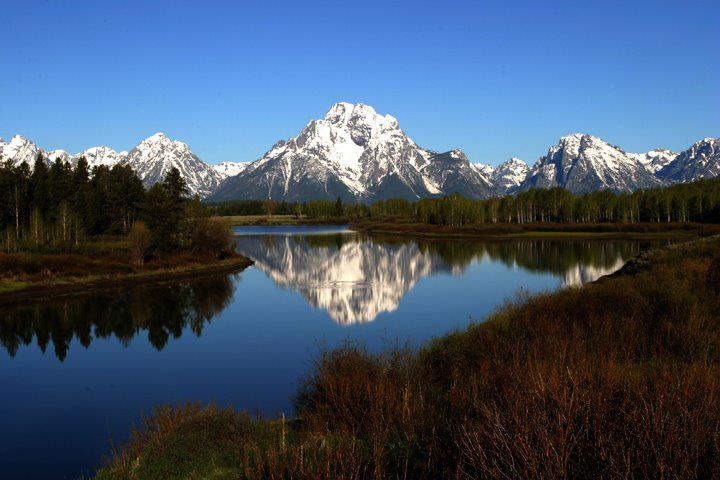 The Grand Tetons offer many different things to those who see them – safety and danger, homes and escapes, beauty, peace, a place to feed, a place to give life, and a place for life to end. To me this photo represents serenity, or calmness. The mountain in the distance is solid. It stands up to storms and rain. It tells us that some things are reliable and dependable. The river and reflection on this day show how things can be calm even as the world is in turmoil around us. Yes, on other days or at other times the water may be rough but after a few moments or days, it will return to the serenity of the moment to be enjoyed by others. Although one cannot see wildlife in this image, we know they are there, hidden away and safe. Perhaps they too are enjoying the pace and serenity of this wonderful place.
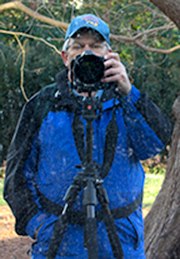 As we reflect on things around us, we are given moment ourselves. Time to look at where we have been, and possibly where we are going. To think about what we have done and what we might do. I don’t really see this photo as a “selfie” or even a goal. I know where it was taken but I don’t know why. When I look at it, I remember the day it was taken, a simple reflection in a window. It highlighted a hobby or maybe a wish. But it has never been shared. It was a time to think, alone in a park. Perhaps it was a simple pause in my photography that day or a memory created for the future. I really don’t know.
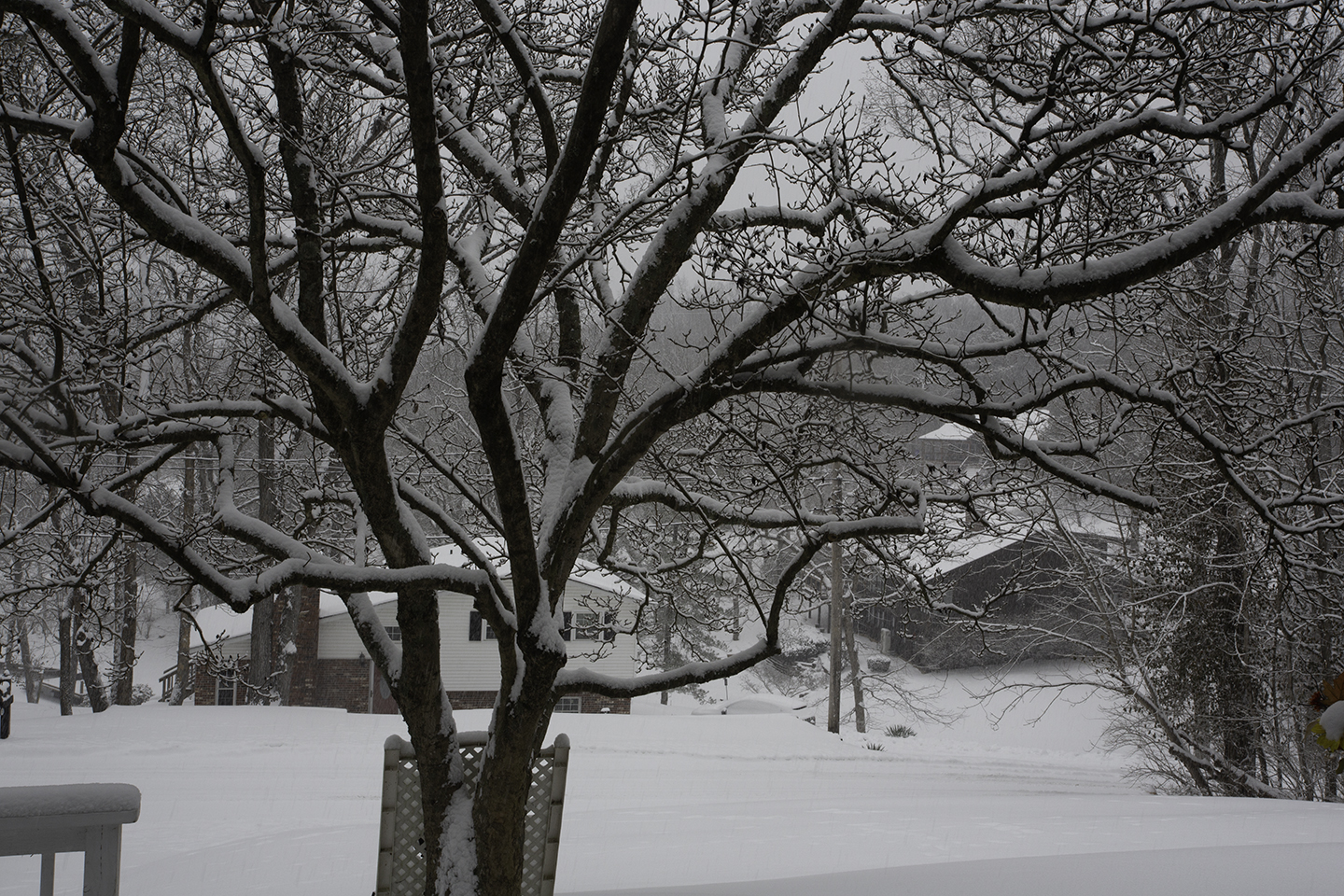 During the first, we were on the border between snow and ice. At our home, southwest of St. Louis, we spent the first two days of the initial storm as a target for freezing rain and sleet. Only the final night gave us some of the snow that had been seen north of us. As a result, we had a layer of ice on the ground, on streets, and on driveways which was then covered by snow. A few days later, another blast of winter weather added several additional inches of snow.
 There, and like in this photo from Austria, we had much more snow than in Arkansas, but I don’t remember it ever bringing things to a standstill. Instead, communities and drivers there seemed to be prepared for snow and took it in stride. I saw this in multiple assignments in Europe and in the U.S.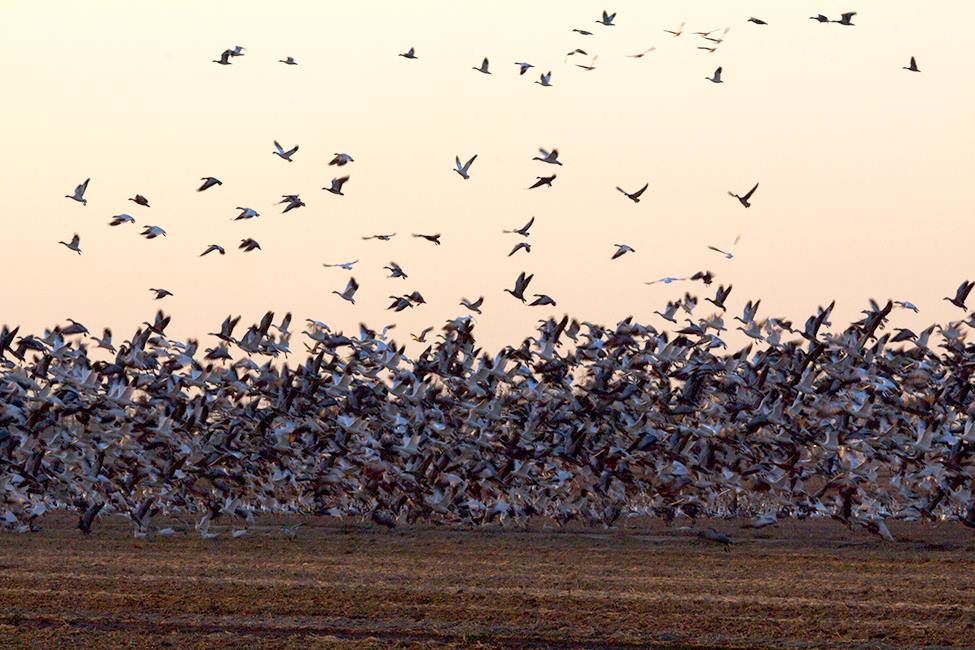
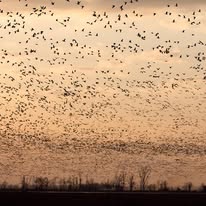 While geese were sometimes seen, ducks were far more common. This has changed over time as has the number of waterfowl seen passing through each year. If you compare the Claypool photo from 1956 and it to these from 2013, you can still see large numbers of waterfowl on the Flyway, just different types.
 An Old Man's Thoughts, Memories, & Opinions