In the last couple of weeks, the St. Louis area has suffered through some strong, at least for here, winter storms. 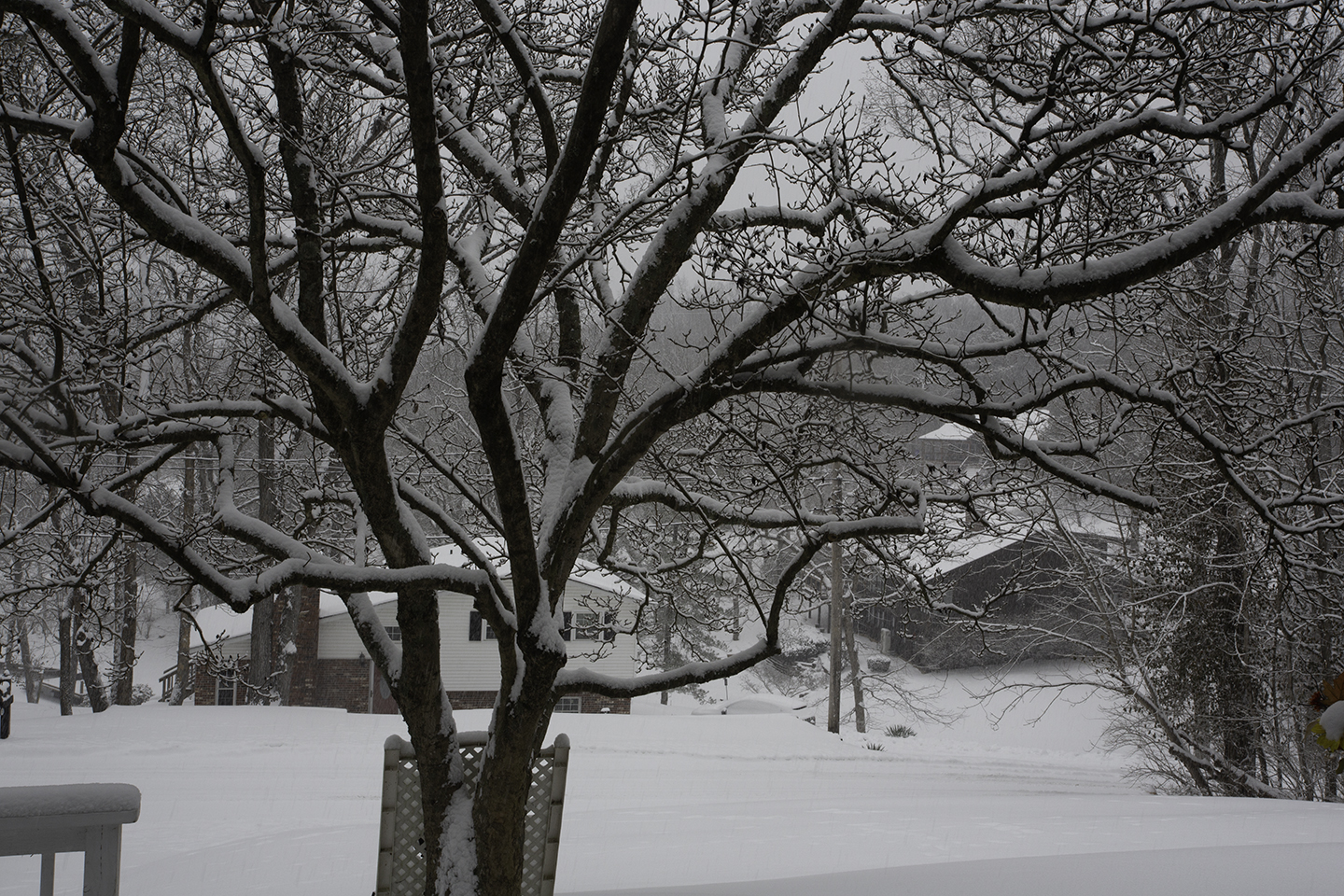 During the first, we were on the border between snow and ice. At our home, southwest of St. Louis, we spent the first two days of the initial storm as a target for freezing rain and sleet. Only the final night gave us some of the snow that had been seen north of us. As a result, we had a layer of ice on the ground, on streets, and on driveways which was then covered by snow. A few days later, another blast of winter weather added several additional inches of snow.
While many others, like my nephew who lives a short distance from Grand Traverse Bay and Lake Michigan, have far worse winter weather and far more snow, they are better prepared for what that brings. Still, I wonder if they sometimes laugh about our weather woes or have sympathy for those who rarely have this type of weather.
I will admit that I probably have difficulty understanding the reactions to winter weather myself. I grew up in northeast Arkansas. As school aged children, we were usually happy when we had more than one “snow day” in a year. More often, we had none. My second Army assignment was in Germany. 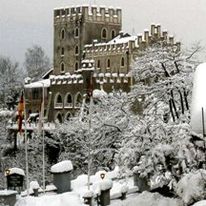 There, and like in this photo from Austria, we had much more snow than in Arkansas, but I don’t remember it ever bringing things to a standstill. Instead, communities and drivers there seemed to be prepared for snow and took it in stride. I saw this in multiple assignments in Europe and in the U.S.
But the recent days have made me wonder, why do we not prepare for winter weather and why do react the way we do? Preparation, at least on the surface, seems fairly simple. We should keep enough basic food and other necessities in our homes in case we cannot visit stores for a few days. Instead, it seems that purchasing these basics, particularly food, is never thought about until the last minute. Store shelves are emptied where there should be simple items like bread, eggs, and other everyday items. Little or no thought is given to what will happen if we lose power or if our roads cannot be cleared as rapidly as snow or ice falls.
Perhaps our businesses should have plans in place to either operate with limited staff or to close for a few days if necessary. Schools seem to be able to do this, so why not others? Also, our stores should have enough supplies like snow shovels and salt or other ice melting chemicals on hand to meet the needs of the community. This clearly did not occur during our recent bad weather as people needed to call or visit multiple locations, some miles away, to simply get enough salt to clear their sidewalks.
During the first part of our recent bad weather, I had a great deal of sympathy for our HOA president who was receiving email and other complaints in the middle of the storm asking when the streets would be cleared so that someone could go to work or visit a store. He tried to explain that clearing the roads while the snow and ice continued to fall would be of little value. Still the complaints kept coming (along with a variety of reasons for why the roads needed to be cleared immediately). Yet after the main part of the storm had passed and the roads were first plowed, because of the ice the roads rapidly covered over again and driving conditions were no better. Others decided that warnings from area police and highway departments to travel only in emergency did not apply to them so they could travel as usual and create danger for our first responders and others.
All this occurring even after multiple warnings over several days before the storms. I had to wonder, “What would have happened had the winter weather been worse? And how are we teaching our children to be prepared for similar events in the future?”
 An Old Man's Thoughts, Memories, & Opinions