I grew up in a small farming community. As a child, travel was limited by both cost and the quality of both cars and roads. While a trip to Memphis was considered a “big” trip, as I grew older the trips became longer yet less frequent. After my sister married, my family, or parts of it, travelled to her home every two or three years. This included one trip to Virginia, near Norfolk, and several trips to Michigan, a short distance north of Detroit. One of these trips also included a daytrip to Canada. Many of my friends had even fewer trips other than to Memphis.
When I was a high school senior, my class took a three- or four-day trip to Houston to visit both the Astrodome and Astroworld. For many this was a first long trip from our hometown or the nearby farms.
After graduating, I entered college, not at the closest university but instead across the state. I think now that this may have been thought of as another trip but one that lasted nearly four years instead of a few days. While there I enrolled in ROTC and was commissioned in the Army. Perhaps the thing that attracted me to the Army instead of a local business was the opportunity for even more travel.
And travel I did, to locations in both the United States and Europe. Some assignments were short and some longer. Some were for training, and some were for regular duty. Some were enjoyable and some a bit less so. But I did get to travel and to bring with me memories of each location and hopes for the next. So here I would like to share a bit about the places, memories, and even some regrets. Many of the places where I was assigned are no longer there, but they are still remembered by those who served there. So, take a trip down memory lane with me and hopefully enjoy a bit about my travels, or maybe travails, as I talk about some of these places.
I will start with college, what was then a small college of about two thousand students. As with any college that small, degree options were limited but they met my needs. While there I was also the manager of the basketball team. This allowed me to travel some more, to places I would not have visited otherwise. I also went to ROTC summer camps at both Fort Knox (no, I didn’t get to see the gold – LOL) and Fort Riley.
After college my first Army assignment was at Fort Benjamin Harrison, Indiana. This was for officer training in 1974. Our training class was about forty-one new Lieutenants, some who would continue on active duty after the training and some who would go back to their communities as members of the reserve forces. You make many friends in a thirteen-week course, many of whom I remain in contact today, over fifty years later. I enjoyed this assignment greatly, along with several others at Fort Ben later in my career. The fort is no longer there for new junior officers to enjoy.
From there I was assigned to Fort Polk, Louisiana. The two locations could be no more different. Fort Ben was small and in a metropolitan area. Fort Polk was large and located in a rural area near the Texas-Louisiana border. Fort Ben had more of an administrative feel, like the soldiers stationed there while Fort Polk was going through a transition from an infantry training post to the home of a new Infantry Division. I was at Fort Polk for about three years and there were things I enjoyed and other things that I did not. I made several friends but not nearly as many as at Fort Ben and none that I am in contact with today.
After leaving Fort Polk, it was back to Fort Ben for another short school and then to Europe for my next assignment. When I arrived in Europe, my first assignment was to a data processing unit (a name no longer used or even relevant) in Nellingen, just outside Stuttgart, Germany. Our unit operated three computer centers supporting the Army’s Seventh Corps. I really enjoyed my first trip to Germany; both the military duties and life with the Germans participating in things like Volksmarching, beer and wine festivals, and shopping, skiing, and wonderful meals at local Gasthauses. This assignment also offered the opportunity to visit Austria, Switzerland, and Belgium. The military post is no longer there and has been replaced by a modern German community.
From Germany, I was reassigned to a new unit located near the Mediterranean Sea. Camp Darby and an associated storage depot were shared by Army and Air Force units. It was just outside Tirrenia, a small seaside resort between Pisa and Livorno. There I was assigned to a newly forming logistics unit with fewer than twenty other individuals, both military and civilian. In this job I also had the opportunity of short visits to Army units in both Greece and Turkey. While I enjoyed my time there, it was also filled with challenges and after almost two years I was ready to move on. My one regret about my time in Italy was that I did not get to enjoy more of the culture that Italy offered. I visited Florence, or Firenza, but did not spend any time in Rome, visit Venice, or the Italian Alps.
After my time at Camp Darby, I returned to Fort Benjamin Harrison for a longer school and was there for about eight months, mostly in the winter. The fort had changed little since my earlier assignments there and the level of enjoyment was much the same. The class size was larger, and more new friends were made before moving to my next long assignment and new role.
My next duty station was at Fort Gillem, Georgia. This was on the southern side of Atlanta, and we provided administrative support for Army Reserve and National Guard units located throughout the southeastern United States and in Puerto Rico. Many others assigned there spent many days travelling although my office did little travel other than regular trips to the Washington, DC area. This is another post that no longer exists as it did. While some military units may still have headquarters there, most of the larger units are gone.
Then it was back to Germany for another tour. Initially I was assigned to another data processing unit at Kilbourne Kaserne near Heidelberg, Germany. My time here was spent much the same as during my first visit to Germany. This was a nice place to be assigned; a small Kaserne yet near all of the conveniences necessary to support the Army’s Headquarters for all of Germany which was located in Heidelberg. The Kilbourne Kaserne, like many other kasernes throughout the country may still exist but are no longer used by the US military.
My final years in Germany were spent in Wurzburg as part of the 3rd Infantry Division. The Division was spread over several locations in that part of Germany, and I visited several new cities and towns as a result. Like all of my tours in Europe, this was an enjoyable one with a few challenges thrown in just to keep things interesting. One memory that stays fresh in my mind is falling in deep snow, late at night, wearing full battle equipment during a field exercise. This is definitely an experience that I would not want to repeat. None of the Army posts remain in the Wurzburg area as a result of changing priorities and new missions.
To wrap up my Army career, I spent several years in St. Louis working in a headquarters supporting Army Reserve soldiers across the country. This unit was composed of a large number of civilian employees along with a smaller number of military personnel. Here too, my travel was largely limited to trips to and from Washington, DC or nearby Alexandria, VA. And, even here, the Army organization where I was assigned is no longer in St. Louis and has been absorbed into another organization elsewhere.
After retiring, I have remained in the St. Louis area and will probably not relocate again. But my travels did not end here. Since arriving I have had the opportunity to visit the Gulf Coast, the lighthouses on and around the Great Lakes, the desert Southwest and Rocky Mountains, and the New England area. All have been fun and all have offered an opportunity for learning and enjoyment.
I hope you have enjoyed this brief description of some of my travels and have the opportunity for travels of your own.
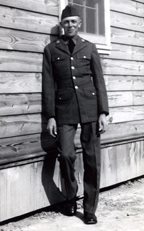 provided housing for soldiers during their initial training and before they were deployed throughout Europe and the Pacific. Later they would serve the same purpose during the Korean and Viet Nam conflicts and even in peacetime.
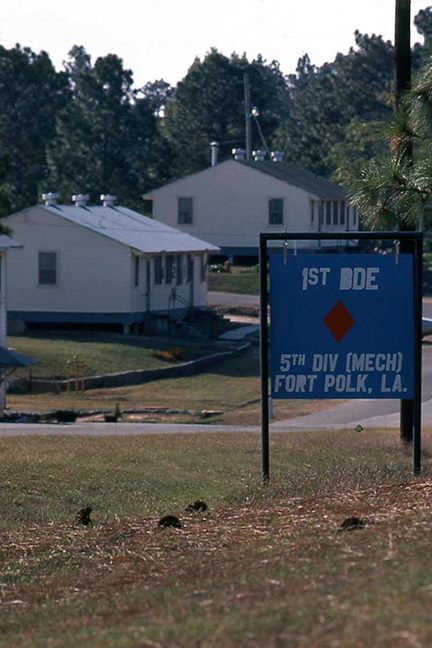 Many of these buildings and barracks on South Post were torn down and replaced with new, “permanent” buildings in the mid-1970’s as the 5th Infantry Division (Mechanized) was activated. At the same time, many of “temporary” buildings on North Post were retained for training of new soldiers. Similar things occurred at forts and bases across the country.
 An Old Man's Thoughts, Memories, & Opinions