Lighthouses and Other Things

Before writing this, I had a long discussion with my wife, a woman who I have loved deeply for the last 10+ years. She asked why I had never written anything about our lives together but had written a great deal about my past. I really didn’t have a good answer for this. After much introspection, I think it may because I was doing what was simple rather than what was important. She has had some recent health issues which creates a lot of stress for both of us and she seems to believe that she is burden for me which could not be further from the truth. So here is something that shares both the good times and a little about how life can change.

Early in our relationship we took a trip to Florida. Part of the trip was a visit to Pensacola Naval Air Station. While there we visited a lighthouse on the base. It was a traditional lighthouse, a tower with a spiral stairway leading to the top and a walkway around the outside at the same level as the light. If I remember right, the lighthouse was white with black stripes. It was fun although walking around the outside at the top was a bit scary. Little did I know that lighthouses would come back into our lives later.

A few years down the road, we travelled to the north where our first stop was in Door County along Green Bay. There are several lighthouses of different sizes and shapes there. Most are at least accessible to tourists although you may or may not be able to actually go inside. It was fun looking at them and, at least for landlubbers like me, to see the differences between the buildings. I would not have enjoyed this trip as much had it not been for my travelling companion who is now a big part of my life and my true love.

From there we travelled along the shore of Lake Superior where we were able to actually stay in a lighthouse for several days. Yes, actually stay there. The lighthouse had been converted to a bed and breakfast. My wife and I loved the place and hoped that we would get to visit again. The light was still working although it was controlled automatically meaning we didn’t get to meet an actual lighthouse keeper. I, and I hope she as well, will always cherish those days and can only wish they had lasted longer.

A few years later, we faced a major challenge when she was diagnosed with atrial fibrillation, or AFIB. While she did receive treatment for the problem, there have been lasting effects which she fights daily. Most of this has to do with strength. We cannot do all the things we enjoyed or spend time out and about. She tries to fight this daily but has largely been limited to time in bed. This has not been easy for either of us to deal with but it has not diminished my love for my wife. I try to do everything I can for her to let her know my love remains but I often feel my efforts are not enough. Still, I will continue to care for her and do all that is possible.

There is nothing more important to me than my wife and her love. No one will ever replace her and if something were to take us apart I would not even try. I hope she feels the same about me.

While I have enjoyed writing my blog posts, I think they have missed the most important things. So, I’m going to back away from this for a while. Please do not comment or respond to this post. It is really a private thing. I wish each of you the best but please allow us to share our time and stories together. For those of you who may also be experiencing rough times, know that our thoughts will be with you.

Again, please, no comments or likes. Thank you.
Summer

Summer seems to be rapidly approaching. While one expects showers in April, it seems that this year they are interspersed with days nearing the 90’s. This seems a bit unusual to me but maybe that is only because of childhood memories.

Growing up in a small grain-farming community, I remember summer always beginning in mid-May. This wasn’t because of a date on the calendar or because of a meteorological event but instead because it was the end of the school year. For a few weeks, we no longer needed to worry about lessons or exams but could instead spend our days playing with friends and neighbors. Important things were whether our bicycles had flat tires, or which sandbox we would use, or who we would visit.

In the evenings we might sit on the porch with our parents or grandparents listening to a baseball game on the radio or play in the yard while the “old folks” did that. We also helped in the garden since fresh produce was a part of life. On really special evenings we might have a treat like homemade ice cream over a fresh baked pie. Because our town was so small we didn’t have some of the things that “city kids” could enjoy, like swimming pools or large parks and playgrounds, but summer was still a fun time.

That changed a bit when I was about eleven or twelve and started mowing yards to earn a bit of “spending” money. The time for “kids” play was a bit less but it was still summer, and school was still not important, at least for those few weeks between the school years.

Things changed even more by my mid-teens when summers meant getting a job. In a small town like my home there were few opportunities and most summer work was on the local farms. The two busiest times were right after the school year ended and, unfortunately, a few weeks after the next school year began. Like others, I spent parts of many summers working on the farms – preparing fields for planting, helping plant crops, and other tasks. There were many long days in the hot sun (no air-conditioned tractors in those days) or doing other work. This even continued through my college years.

Even though the summer days seem much hotter now, summer is still a nice season, but I enjoy spring and fall, or autumn, much more. I hope you have good memories of the summers of your youth and enjoy them now and in the future.

Do You Haiku?

At work a few days ago a manager challenged staff members to write and share a haiku. These would be shared in a common space used as a lunch/break room. Submissions could be left in the room or could be shared online. They could be submitted anonymously. I have only seen those submitted online and, while limited in number, have been interesting and are fun to read.

What is a haiku, you may ask? I will admit that I would have needed to ask the same question had I not been introduced to haiku in a college English class. While I did not remember the details, after seeing the first haiku shared online, I remembered some of the details.

A haiku is a short poem. In English, a haiku usually has just three lines and only seventeen syllables. There is no need for the three lines to rhyme. This form of poetry originated in Japan but is now common in many countries and languages. The structure may vary slightly but typically consists of five syllables in line 1, seven syllables in line 2, and a final five syllables in line 3. Haiku usually focus on a subject in nature.

An example of a haiku from Wikipedia is:

the first cold shower
even the monkey seems to want
a little coat of straw

There are also some rules that apply to haiku such as words you should not use and other things. Some haiku groups have even suggested that rhyming must occur although this seems rare.

My personal response to our office collection was:

look up to the sky
bright blue, white clouds, golden sun
comes soon summer’s heat

Haiku is not that difficult so if you have some free time perhaps you should try. Or if you have family maybe you could do it together. Even the children could try it. If you do, have fun.

The Comet

No, not the bright light in the sky with a tail; instead, my first car.

I turned sixteen that year. I had my new driver’s license. I no longer needed to mow yards in the summer to earn money. I had a job working on a local farm.

My father decided it was not safe for me to ride my motorcycle the seven or eight miles from my home to the farm. So, the motorcycle was sold. But the money was put into the bank along with left over money from several years of mowing yards in the spring, summer, and fall. It was to be used to buy a car.

Mowing yards in those days paid from two dollars to eight dollars per yard depending on their size. There was not much money in the bank even with the money from the motorcycle. This was not going to be a new car. Nor was it going to be a hot rod or even a sporty car, not even a pickup with a gun rack in the back window like some of my farm friends had. Think instead of a reliable, greatly used four door sedan. Still, it was going to be my car.

Shopping for the car took several weeks which seemed like years. First, my father talked to auto dealers he had purchased from previously. No luck there – they either had nothing suitable or the price was too high. Then came trips to other dealers, only on Saturdays when Dad was not working.

Finally, as a last result, we went to a nearby Mercury dealer and found the car that met Dad’s standards. A used Mercury Comet. I think it was four or five years old. It was not my first choice, but it was a car. There were at least three models of the Comet. The top of the line was the Caliente – not mine. Then there was the Cyclone, the sports car version – again, not mine. And, at last, there was the basic Comet – yes, mine.

Nothing fancy, no deluxe features, it had four doors, an AM radio, cloth bench seats, and an automatic transmission with the shifter on the column. It also had a six-cylinder inline engine, or a straight six. I probably could not have gotten in trouble with that car even if I tried.

The paint job was good, but describing the color is a bit difficult. It wasn’t blue nor was it green. Nor was it turquoise. Looking back, I suppose it could be best described as a dark aqua with some sort of frosted look.

The car did, however, get me back and forth to the farm where I worked and the six or seven blocks to school during the school year. The car was reliable with one exception. At times, unexpectedly and with no prior warning, the engine would simply quit. The poor thing must have simply been tired. After sitting for an hour or two, the engine could be restarted and would run like there had been no problem. I was lucky. When it did this, I was usually near home and could pull off the road to avoid accidents.

My cousin was not quite as lucky. He was about fourteen years older than me and came for a visit one winter. He borrowed my car to visit another relative for the day. As he was returning the engine decided it needed a rest about five miles from home. He managed to get the car out of the road but could not get it to restart. He also could not get a ride, so he had to walk the last few miles. After my mother arrived home from work, we drove to the Comet and, as expected, it started without problem and drove home with no other issues. He did not ask to borrow the Comet again.

 Even with the occasional engine problems and the strange color, the Comet served me well until I graduated from high school. It was traded for a new car for me to attend college on the other side of the state and held its value, bringing a trade value almost equal to its cost to me. It was not a show car nor a sports car but I will always remember it as my first car – The Comet.

Which Do You Prefer?

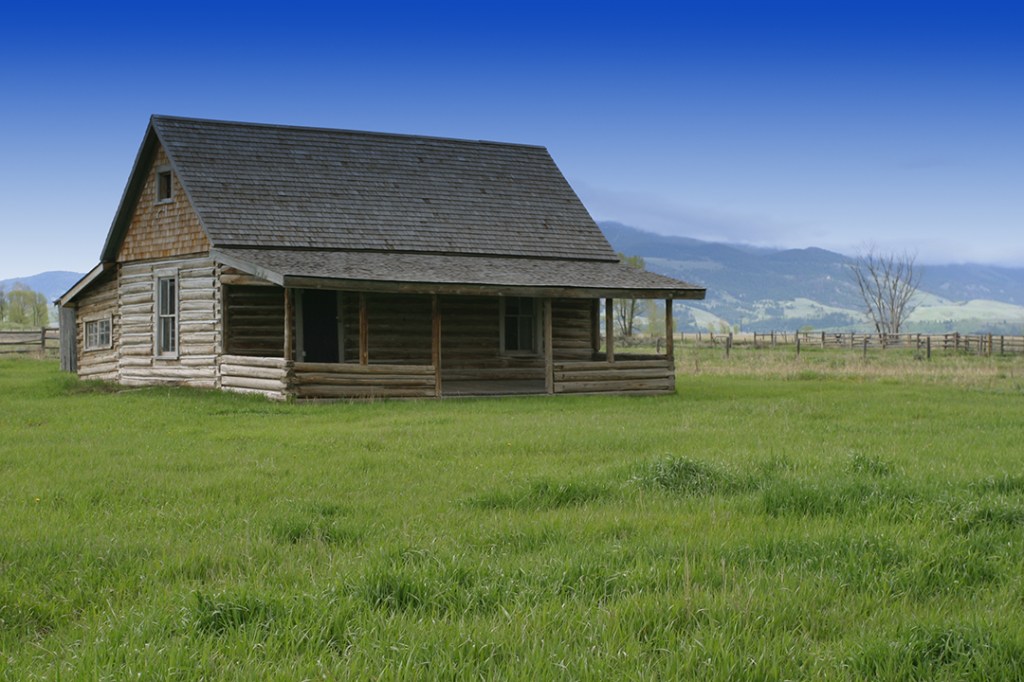
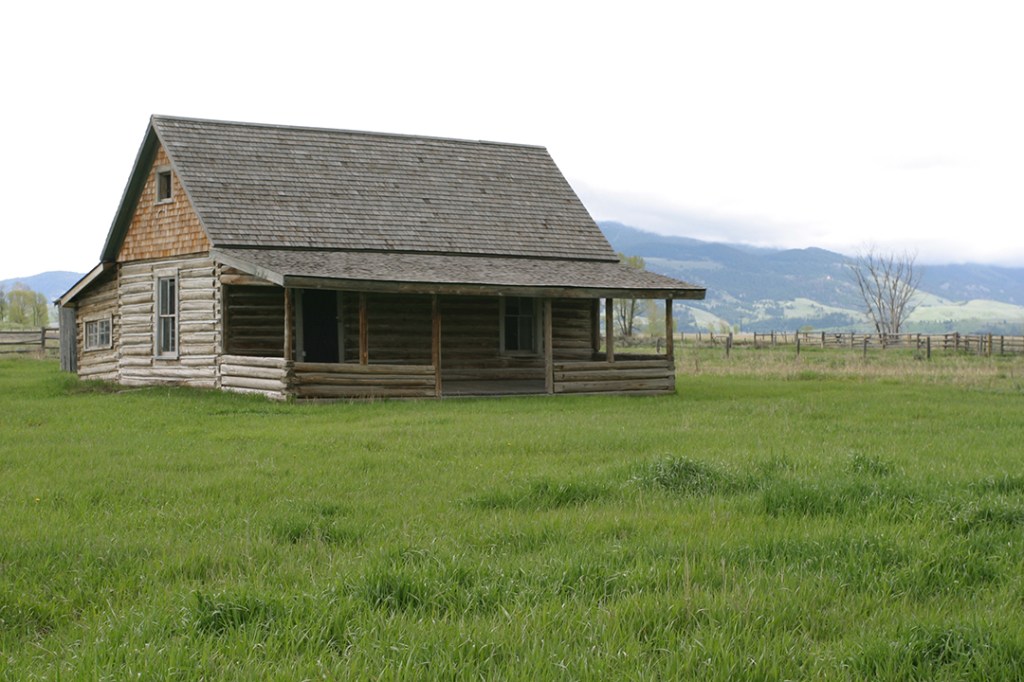
Several years ago I spent a few days visiting Yellowstone and Grand Teton National Parks. Many who have visited these parks have spent some time along the Mormon Row area of Grand Teton where several older homes, barns, and other buildings are located. Most of the days of this visit were cloudy and gray, not ideal conditions for photography but one should never pass on the opportunity. This is the original image of one of the cabins taken during that visit.

I use Adobe’s PhotoShop and LightRoom to process most of my photos but try to go lightly with my editing. Usually this means some cropping, maybe some minor adjustment to saturation, and possibly some adjustment to brightness and contrast. At that time I was also using a plugin called NIK Silver Effects. This photo seemed like a good candidate for some editing. I decided to apply a blue filter along with my normal processing and arrived at this view.

When I asked several friends for their preference the choices were balanced. Some liked the original while others liked the filtered image because of the blue skies and some added clarity of the cabin details. Others preferred the original image.

A few months later I decided to make a tabletop book with some of my photos, focusing on older objects like cabins, barns, steam trains, and other similar things. Rather than using the photos in their original form I decided to use sepia toning along with some borders. My goal was to create something like a stack of old images that you might find hidden away in an attic or closet. Images that were in fairly good shape but with some possible fading and borders or edges that were not neatly cut. I though this image would fit the book well and the result is shown here.

So, you now have three treatments of the same photo. Which do you prefer? And, if you are willing to share, why?

I hope you enjoy looking,

Yellowstone

When I was a child and heard “Yellowstone” I thought of Yellowstone National Park or even more specifically its more famous feature, Old Faithful geyser. I found the idea of a geyser unbelievable and sometimes wondered what it would be like to have a geyser like Old Faithful in our local park. A humorous thought given that our park was less than a city block in size. I read about Yellowstone in books and magazines, sometimes saw television shows featuring it, and even associated it with a Hanna-Barbera cartoon series from the early 1960’s, The Yogi Bear Show with Yogi Bear, Boo-Boo Bear, and Ranger Smith who lived in Jellystone Park. While the cartoons were fun to watch, they are not my focus here. Instead, I want to write about the national park

I remember wishing to visit Yellowstone when I was young but that wasn’t practical for our family. So, I could only learn about it in other ways and imagine what it would be like to be there. I finally had the opportunity to visit Yellowstone when I was in my late thirties. Surprisingly, it was much as I had imagined and even more.

Yellowstone National Park is a huge place, over 3,400 square miles, mostly in Wyoming but also in Montana and Idaho. As one might expect in a park of this size, Yellowstone offers many different things for the visitor. Starting with the simple, it offers rivers, lakes, canyons, meadows, and hydrothermal features like the many geysers. According to scientists, the park sits atop the Yellowstone Caldera or dormant volcano. If you visit, you will see some of the most pristine and colorful water features that can be found anywhere.  You may also see dynamic waterfalls in steep-sided canyons, mud pots in other locations, and a variety of rock formations.

Yellowstone is also the home of a great variety of wildlife, with an emphasis on “wild”. You can see bison, elk, deer, moose, and a variety of waterfowl and other birds. Where you see them and in what numbers can vary by the time of the year and the weather. You can also see, if you are lucky, cougars, wolf packs, and bears, both black bears and their larger relatives, the grizzly bears. But remember to keep your distance and follow any instructions from the park staff for both your safety and that of the wildlife.

The water features are beautiful. Old Faithful still erupts regularly, although maybe not every hour but even if you cannot get to Old Faithful there are many other geysers with roads or trails leading to them. There are also many pools or other water features to see, just remember the water is extremely hot. And you should resist the urge to throw pennies into the water features. Pennies and other foreign objects can destroy these beautiful works of nature and spoil the future for other visitors.

But all this beauty does come at a price. Like other wild locations throughout the world, there is hidden danger in Yellowstone. Some of the danger is courtesy of Mother Nature and some is the fault of man. As I said earlier, there are rules and warnings at various locations in the park and given by rangers and volunteers in person. Probably one of the biggest things to know is that the trails and boardwalks in the park are there to keep you and the environment safe. It can be tempting to just step off a short way, but you don’t know what dangers may be there or what harm you can cause to the environment. Another big thing is to remember you are visiting the wildlife in their home. Keep your distance from the wildlife. They will protect their young. They will protect themselves. They are faster than you believe, and their horns, hooves, and teeth are far more dangerous than you may expect. This is even more true in the breeding season. While a photo with a bison may look cute on your wall, is it worth your life? If a trail is blocked by a herd of elk, choose another trail and come back later. Stay safe and enjoy your visit.

Remember that the water features in Yellowstone are hot. That means you can get burned by touching it in many locations. Even where you least expect it there can be small, yet hot water features. There have been many fires at Yellowstone. These fires are both beneficial allowing for reforestation, but they can also be dangerous. If an area or a road is closed because of fire danger, then don’t go there.

The winter can also present danger. A large portion of the park is closed in the winter or open only to snow vehicles. Again, this is to protect you, the wildlife, and the park itself. Obey the rules and come back to the park again.

I hope that each of you has the opportunity to visit Yellowstone and can enjoy some of the best nature has to offer. If you do, have a good trip and take a photo for me.

Sometimes I’d Like to Write a Book or Maybe Just a Short Story

Several years ago, although it seems like only yesterday, I was travelling along the interstate and saw something that I believed could be the basis for an interesting story or even a new book. In the middle of nowhere there was a small cluster of adobe buildings. Buildings that looked uninhabited. Buildings with no access from the interstate and no other roads leading to them. Adobe walls that looked in good condition but no glass apparent in the windows. Perhaps it was a ghost town or maybe the buildings were used by a ranch. Still, they seemed to just sit there, awaiting erosion or destruction by the hands of man. Even then, it was not the past, present, or future that provided an inspiration. It was simply the small cluster of buildings sitting in the hot sun.

Since that time, I have often thought of how these buildings, or similar buildings elsewhere, could provide the foundation for a book. But for some reason, I don’t know if I could write something, even a short story or a blog post that would do justice to them. I have had some ideas but when trying to move forward with them it always seems like the process becomes so difficult that I give up.

I still believe a story is there. Is it simply bringing an idea to a successful conclusion that is so difficult? Does one start with the buildings or simply incorporate them into a story as it develops? Or is there another approach that eludes me today? I have no answers but will continue to attempt to find a solution. And maybe I will at sometime find the book or short story that is worthy of sharing with others.

Photography

Those who have followed me on my blog, or earlier on my Facebook site, may be aware that one of my favorite hobbies is photography. I don’t consider myself a professional or even a highly advanced photographer, but I enjoy taking photos and occasionally have a photo that I enjoy sharing with others. My two favorite subjects are landscapes and wildlife, whether found in the wild or in a controlled environment.

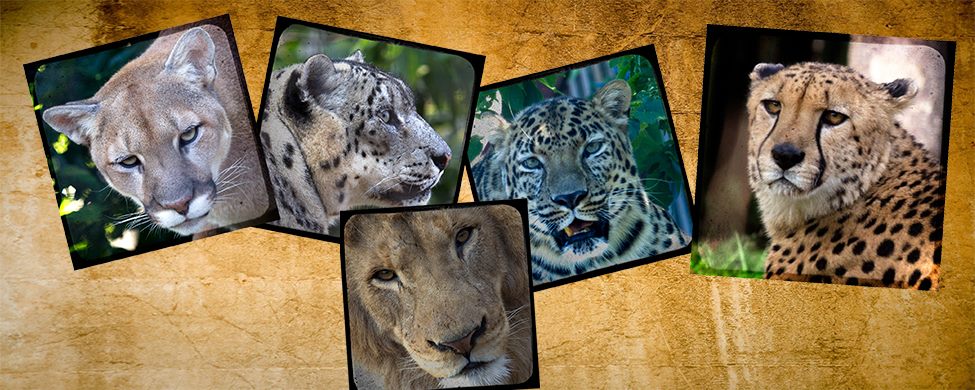
I thought I would take a few moments to share a few images here, along with short descriptions or background information, and hope that you might enjoy them too. The first image is a collage of “big cats”. These cat photos were all taken at the St. Louis Zoo then resized and placed on a single background using Adobe’s PhotoShop, one of my favorite tools, along with one or two plug-ins. I enjoy showing the beauty of these animals along with the differences between the various species.
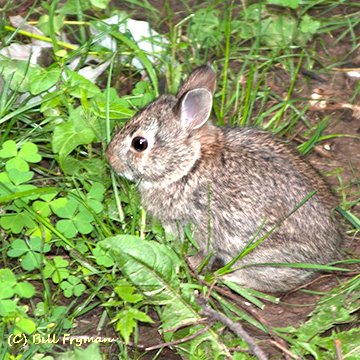
The next photo was taken in my backyard a few years ago. While the backyard was not the “great outdoors”, the bunny was definitely wild, and I felt privileged for it to stay long enough for me to take this photo. The year after this image was made, I used it with a top and bottom border to wish every one a “Happy Easter” online.
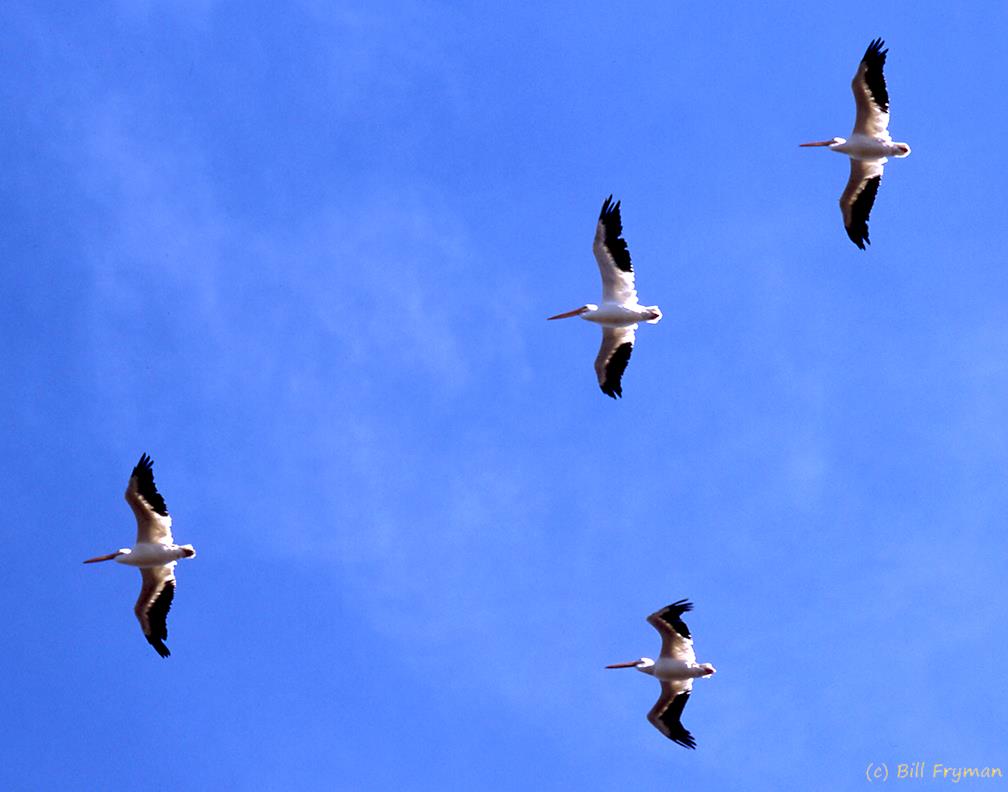
We are privileged to live near the confluences of the Missouri River and the Illinois River with the Mississippi River. This area is a great place to see bald eagles in the winter, but I selected this image of American White Pelicans flying in formation. This was a winter photo and later that day I saw a hug number of both Brown and White Pelicans at rest along the Illinois River. I didn’t know that pelicans flew in v-formations, much like geese and ducks, until that day. The clear, blue sky provided a great background for this photo.

It was back to the Zoo for this image of Black Necked Swans. If you look closely, you may see what I was trying to capture – the heart shaped image created when two swans pass closely to each other going opposite directions. While the timing of my photo was a few seconds off, it was the best of several taken in rapid succession.
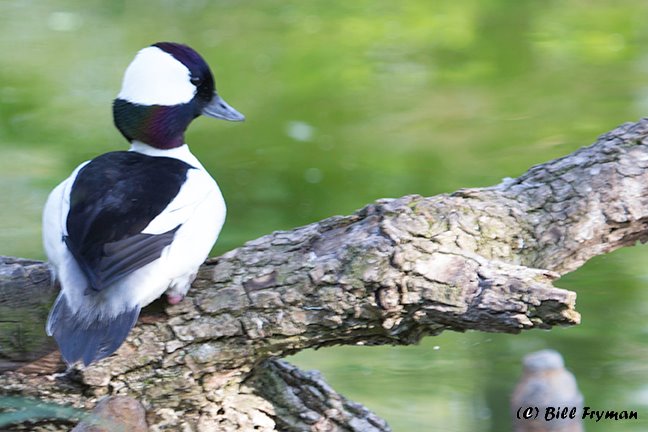
The Bufflehead is a small, nesting duck. I captured this image near The National Elk Refuge in Jackson, Wyoming during a visit to Yellowstone National Park. There is a visitor’s center there where migrating waterfowl sometimes visit which allowed be to take this photo. Like the pelicans, this is a wild bird, not a bird in a cage or similar environment. It is not something we see in the Central U.S., but it is almost as beautiful as the male Wood duck.

This raccoon had taken over a log near New Orleans. I was able to capture this image while on a swamp tour several years ago. This was before a major hurricane in the area, so I am almost positive that neither the animal nor the log survived. Even so, the almost hidden raccoon made for a nice shot.

For those who may be interested, I rarely use my phone to take photographs. These were all taken using 35 mm, Canon digital cameras of different vintages. They were taken using zoom lenses up to 400 mm in length. I seldom use flash for any of my outdoor images and try, as much as possible, to use a high shutter speed to freeze my wildlife images. Most were taken using a tripod although the pelicans and the raccoon were taken hand holding the camera. I treat landscape images differently and may share some of those images in the future.