Views of Christmas Present

This is the second of three posts regarding the Christmas season. As stated in yesterday’s post, “Thoughts of Christmas Past”, these posts were inspired by the visits of ghosts in Charles Dickens’ “A Christmas Carol’ which was originally published in1843. In his novella, Dickens told of Christmas Past, Christmas Present, and Christmas Yet to Come. My titles vary slightly as do the thoughts, memories, and opinions. Perhaps yesterday’s post could have been titled “Memories of …” instead of “Thoughts of …” because it was based on memories of my childhood.

Whether right or wrong, I decided to title today’s post “Views of …” to reflect that these are not memories nor opinions but are more at how I look at the world outside my door today. It is a bit harder to write because yesterday’s blog was based on my youth in a very small town – a place where I have not lived since the 1970’s. Instead, this is what I see daily in the large city, not my home but near enough that it affects my daily life. I hope you can forgive this and will think about the differences as they might affect both you and others. I have attempted to retain the same sub-themes for consistency may not always be successful.

Family – The family, as a unit, has undergone many changes since my childhood. Perhaps, these changes began before my birth as soldiers returned from WW II and found the country different from what they had left only a short time before. While this may be true in large cities as well, it became more apparent in rural America. Mechanization and other advances led to the demise of many small farms and the businesses that supported them. Many were forced to flee to cities for jobs. This all in the face of the “baby boom” – larger families, a need for better economic opportunity, and the ability to provide housing for families.

The result could have been predicted. As physical separation of families grew more common, the ability for large family gatherings on Christmas and other holidays decreased. At the same time, views of the world around us became more diverse.

These changes are continuing today. Demands for time have become greater. While it was simple to have a weekend gathering of family in the past, it is much more difficult today.  Family activities, work, friends, and other things all challenge us to balance where we can be, when, and for how long.

Recently, a new challenge has faced families – political realm. This can involve things like political correctness where things that were taken for granted in the past now have become a basis for judgement. This seems most prevalent when comparing the views of progressives, or the so-called “woke”, with those of the more conservative. Even more significant is the hatred or mistrust, instilled by or encouraged by the media, based on voting for or against a candidate or an issue. Things have deteriorated to the point where some families have cancelled holiday gatherings because they believe political arguments may degrade the gathering into fights, either intellectual or physical. These views have been encouraged by the media through such proposals as “cancelling Thanksgiving” which will probably happen to Christmas as well and refusing to “break bread” with anyone who votes differently. I have yet to see any media suggestion that the Christmas season should be a time to come together rather than time to pull apart.

So where does this leave the family? Today, it is far from anything I saw as a child. Can the family unit even survive? Survival is dependent on recognizing that these things are not as important as those around us, our families and our friends. Perhaps it is time to take a break and step back, yet the media and its self-proclaimed experts on life cannot or will not allow this to happen.

Santa and His Helpers – I seldom see “Santa” today. He sometimes appears in a parade or possibly in a store, but he really seems to have disappeared or has at least elected to be elsewhere. This, too, I blame on our seemingly endless more toward political correctness. Never should anything exist or occur which might hurt someone’s feelings, whether justified or not.

I wonder if today’s children have heard the simple poem that we know as “The Night Before Christmas.” Although the poem was first published over 200 years ago, it is suddenly something bad. Why? It must be evil because it tells a story of an imaginary person or event. Or maybe it is because it tells of an event that could only have occurred in the home of a wealthy family. Or, hopefully, I am worrying too much and our children still get to hear or read this quaint poem written in a far different time with little or no editing for “correctness”. The same could be said for many of the works of Charles Dickens. After all, “A Christmas Carol” focuses on a man who was an evil miser and only changed his ways after visits from three ghosts.

Trees – Trees seem to be one of the few things that have changed very little. There are still those who love a live tree, or even a tree that can be replanted after Christmas. And there are those who enjoy having a green or white artificial tree, often with lights that do not need to be removed each year. There are apparently still a few who like the older “aluminum” trees, at least enough to justify advertising these trees online. At the same time, there are also those who want your tree to go away. People who say the trees contribute to the decline of our environment, or that the trees add to pollution because of electrical demand, or even that the trees discriminate because they are not fair to those who do not celebrate Christmas.

Gifts or Presents – I wonder if the entire concept of gifts at Christmas has lost its meaning. When I was young, gifts were given not of obligation, but instead as a way of showing love or friendship to another. Gifts were often small, but they still had meaning to both the giver and the recipient. Today gifts are given more from obligation. If we give gifts to two family peers, for example a son and a daughter, then we carefully take steps to ensure that the cost is the same. We worry when we do not provide a costly gift as opposed to a family heirloom. And, when asked for a gift suggestion or when we ask someone, “What might you like?”, we are often told of an item that is far outside what we are able to provide. Yet we will do everything we can to offer this gift even if we really feel it is not appropriate.  

Trains – I don’t believe that trains mean as much to our children today as they did in the past. This may be because trains today are far different from those of the past. Their role, other than in places like the northeast corridor have moved from a mixture of freight and passenger service to a role of freight only. In may places, passenger service has been gone for many years, replaced by better roads and automobiles. Even the romanticized little red caboose is rarely, if ever, seen other than in a museum. As a result, there is little to draw the attention of children. Electronics have also played a role; cell phones and games have become an integral part of day-to-day life for today’s children. So, what is there to draw them to trains.

Parades – Parades, much like trees, remain a part of traditional Christmas events. Yet these too have changed. While small town parades may have seen little of this change, the larger parades have become even more complex. I sometimes watch these larger parades and wonder how much more they will change. It seems that those in large cities have become more entertainment “events” catering to the broadcast media rather than parades catering to attendees? Also, since the parades are often held in downtown areas, has safety for attendees been considered?

Snow – Even today I suspect that children hope for a white Christmas. At the same time, I suspect that the adults often wish for the opposite.

So, as I close this post on Christmas present, I wish anyone who reads a happy holiday season no matter how you celebrate and for those of us who celebrate Christmas, a very merry one.
Thoughts of Christmas Past

Perhaps I am not being politically correct, or woke, by using the words “Christmas Past” as opposed to saying, “Holidays Past.” If this is correct, I apologize to those who may be offended. No, I don’t offer apologies. My past is full of celebrations of Christmas. We recognized that some religions celebrate in different ways and respect that. But, for me and my family, we celebrated Christmas. Holidays had many meanings with Christmas, birthdays, and several other days being recognized as holidays for most Americans.

My thoughts here focus mainly on days, events, activities, and more which mostly occurred when I was a young child although some also occurred in my teen years. Things then were different than today. Life seems as though it may have been much simpler, but when I say this, it may be because it was viewed through a child’s eyes. Your memories may be different because each of us had unique lives. I was raised in a small town in rural Arkansas where the focus was agriculture. Many events that we enjoyed were in a small city a few miles away. I suspect the lives of children in large cities were vastly different from mine. The memories here may change over time but reflect what is important to me today.

Family – Family was important at Christmas. Early on Christmas morning, we arose and opened presents in our living room where the Christmas tree was located. This was followed by a trip to my maternal grandmother’s home. While some of my uncles lived far away and could not be there each year, those who lived locally were always there. We typically had a large, pot-luck dinner and then opened presents near the Christmas tree. We returned home late in the afternoon. I don’t remember visiting my paternal grandparent’s the same way. Perhaps this was because they lived next door. Or maybe it was because my paternal grandmother passed away when I was ten years old followed by my grandfather when was fourteen. Still, we tried to see them and my uncle’s family who lived just down the street on either Christmas Eve or Christmas Day.

Christmas was one of the few holidays that we could be sure my father would be with the family. He never had work on Christmas Day. Other holidays, which might fall during the busy agriculture season might require him to work but never Christmas. This made it even more special.

Santa’s Helpers – Like almost every child of my age, I was taught about Santa Claus from my earliest years. He was this nice gentleman with a white beard, a red suit, who came down your chimney each year to leave presents for good little girls and boys. He had innumerable elves who worked for him creating the presents and he travelled by a flying sleigh pulled by eight tiny reindeer. It never occurred to us that many of these things were illogical. How could he visit everyone on a single night? What would happen if your home did not have a chimney? And, if his sleigh could fly, why did he need those reindeer?

Each year, our town had a community Christmas gathering that was held in the high school gymnasium. Adults had the opportunity for social interaction and the children went home with gifts from Santa. Yes, Santa was there each year – red suit, white beard, and all. But we never saw the sleigh.

This event made me realize that to do all the things he was credited with Santa must have needed helpers. Helpers who dressed like him and brought presents to good boys and girls. I was only about four or five at the time. What caused this realization? My parents were driving us to the celebration and running a few minutes late. As we entered the parking lot, we saw a neighbor’s pickup truck just ahead of us. And who should get out of the truck? No less that Santa. And I recognized the truck and told my parents that it could not be Santa driving that truck. How could that be? I give my mother credit for quick thinking since she explained to me that Santa could not be everywhere at one time so he had helpers that took his place delivering gifts and they borrowed trucks or cars from older families with grown children so they would not need sleighs. This didn’t answer the many other questions about Santa but for a young child it was enough. I was simply happy enough to go inside, meet Santa’s helper, and get my gift. But even today, I wonder how Santa, or one of his helpers could get into a house with no chimney.

Trees – The first Christmas trees I remember were live trees. I don’t remember if they were purchased at a local store or farmer’s market or if they were cut from a local forest.  While my memory is not clear about this, they were small, probably no more than four or five feet tall. The number of ornaments was probably not large but there were many lights and lots of tinsel. The first artificial tree was quite different. It was about the same height but had branches made from wood and thin pieces of something like aluminum foil very similar to tinsel although a bit larger. There was no green to be seen. While the ornaments were still used but the electric lights were now a fire hazard and stayed in their boxes. For light, a spinning wheel of four colors was used with a spotlight behind it. This was placed on the floor near the tree and shined up into the tree. When I looked today, I still saw trees like this available online. I don’t remember ever having another live tree although the first artificial tree was replaced with an artificial green tree and lights were purchased that could be used.

Gifts or Presents – Presents were never large but were selected and given with love and with care. When I was very young, they were often toys but as I aged the toys were commonly replaced by clothes or things more useful. Some of my favorite toys were tractors and attachments from the local John Deere dealer where my father worked. These toys were sturdy, or maybe a better word is rugged, and spent many hours being played with both indoors and in the outdoor sandbox. Similar toys can still be purchased today in almost any large department store, but the quality is not the same. Oh, how I wish I had kept those toy tractors given the prices that toys of that vintage command today.

Trains – Like many young boys, and maybe some young girls, I loved trains. A railroad ran through our town, and I was always happy to watch the trains as they passed by. Just like real trains, toy trains were always fun whether pull toys, wind-up toys, or electric trains. Even trains in books. Do you remember “The Little Engine That Could”? In the nearby city, the Firestone tire dealership sold Lionel trains (yes, Lionel has been around that long). Each year for a few weeks before Christmas they installed a Lionel layout at the front of the store. It was simple, just a loop of track, or maybe two, on a table. In the center of the loop, there were a few shelves for displaying individual train cars or accessories. But the exciting part were the trains that ran around the circle. After what seems to be years of wishing, I got my first train set. It was simple – an “diesel locomotive, a couple of cars, and a caboose along with a loop of track. Rather than an actual railroad name, the cars were labelled as “Lionel Lines”. I played with it for years until it finally wore out from use.

Parades – Our town was so small that we did not have a Christmas parade. Instead, we went to the nearby city to see their parade. It probably wasn’t a huge parade although it seemed that way to a small child. A few high school bands marched in the parade along with the band from the local college. There were also a few floats and some other marching units. While all was enjoyable, the thing I remember most is the ROTC Drill Team from the college. They had brightly polished helmets and carried military rifles. They twirled their rifles and did other drill moves that fascinated those watching them.

Snow – I can only remember once or twice in my childhood when we had a white Christmas. It really wasn’t expected but always wished for. There was nothing unique about this. It was true across much of the south. If we had snow, it usually came late in January or even later. I can, however, remember one Christmas that was white. It was not necessarily because of the snow itself but because of a family visiting some friends. Their kids were about the same age as I was, and they had never seen snow. Of course, that should have been expected because they had lived in Florida their entire lives.

A Clean Slate

On Saturday, November 30, we had our first snowfall of the season. While it was originally forecast as only a dusting, we had about three inches at our home. Looking out our window it made me think of having a clean slate. It covered things in our yard that were not how we might like them. Leaves gone unraked, bare spots with no grass, cleaning that had gone undone. This was an opportunity for a new beginning, wiping the slate clean and starting anew. Others may have viewed it as no more than hiding the bad things that were soon to resurface. While I may not agree, I can respect their views. That is one of the great things about our past, the right to disagree yet move forward. I wonder if our country, and its current political climate, and have a clean slate and move forward.

The holiday season has begun. The elections have come and gone. There are some who are happy with the results and those who are dissatisfied with the results. For whatever reason, this year seems to be filled with more hatred than any election year I have lived through. There have been those who suggested cancelling Thanksgiving (I hope jokingly, but I’m not sure) and those who have cancelled family gatherings to avoid political discussions.

The blame game is continuous. People who voted one way blame those who voted another. The minority blames the majority. One group blames another. Even within a party, everyone seems to be looking for someone else to blame for something. Candidates are still asking for money although the election has been over for nearly a month. The name calling continues without end, especially by many media stars. It all seems mindless.

The only time I can remember something even close to this is elementary school name calling, like we see today, shared in print, broadcast, and social media, is when we were children on the playground. But there, the hatred was missing. We could be mad and call someone a “bad name” one minute yet be playing with them a few minutes later as though the words were never spoken.

Perhaps, it is time for us to put aside the hatred, the discontent, the constant blathering, and live together as Americans. Maybe we can respect the differing views of our fellow Americans and stop trying to force everyone into a common mold. Something the Communists have tried for years and still seem unable to make work. I wonder if we, particularly the press and the Hollywood celebrities, can put aside our differences and respect each other for even a few days and enjoy the holiday season. Or should we cancel Christmas or whatever holiday you may celebrate at this time of year? I haven’t seen this promoted by the opinion writers, or movie stars at celebrations in a country other than the U.S. but I can see it coming.

My view of all of this is, “Get real. There are more important things in life than an election. Your parents and your teachers knew this and taught you this when you were young. Have we forgotten everything we learned?”

The Old White House in the Country (A Short Story of My Past)

This is not a work of fiction. Instead, it is written by a seventy-two-year-old man based on memories of his childhood. As a result, some things may be off regarding time, size, and other details. All rights to these materials are reserved although readers may share them provided they are appropriately attributed to the author.

After my wife and I had our Thanksgiving dinner last evening I thought about how much things had changed since I was young. A time when the holidays meant for families to gather and have conversation, played together, maybe even enjoyed a football game on either the radio or on television. When political events were not the subject on conversation, or at least, were no reason to end friendships or enjoy time together. Yes, things have changed, but not always for the better.

The old white house was located about four miles from the nearest town, in the center of fields and farmland used primarily for cotton but not anything even close to Tara or the other plantations so romantically described in literature and movies. It was a four-room house with attached porches on both the front and the back. I know little about the old house other than it, at some point, may have been inhabited by the landowner. I say this because the outbuildings around the house included sheds for storing seed and for smoking meat, a large building for chickens, and a mid-sized barn.

The white house was in a big yard with several really large white oak trees along with a few cedar trees. There were flowers of all types, from the tall, multi-colored hollyhocks to small daffodils, some in beds and some just scattered through out the yard. There were peach trees between the house and the large vegetable garden which was shared by the family each summer. From my earliest memories until the late nineteen-sixties, the house was inhabited only by my grandmother.

While there was electrical service to the house, there was no running water and, as a result, no indoor plumbing facilities. Heat, in the winter, was provided by a single, wood burning stove located in the living room. I also remember cooking being done on a wood burning kitchen stove in my early years although that stove was replaced by an electric range sometime in my childhood. The house was of simple design. It was basically a square, or perhaps a rectangle, divided into four smaller squares, the rooms. Each room was connected to the two adjacent rooms and the two front rooms opened onto the front porch while the two backrooms opened to the back porch. Each exterior wall had two windows, one in each room on that side of the house.

The house sat atop several concrete peers thus offering an open space about eighteen inches high under the house. Like I said earlier, there was no running water in the house. Instead, there was a hand pump a few feet outside the back door and water was pumped and carried into the house in buckets. Similarly, wood for the stoves was carried in a few pieces at a time from wood stored on the front porch or from wood stacks a bit farther away.

My grandmother’s family would be considered large today but at that time was probably common. She had four daughters, one who died early in her life, and four sons. All of her children were born in Tennessee, but the family moved to Arkansas when my mother was young. I never knew the reason but suspect it was because they could find work there. On holidays, it was common for the majority of my grandmother’s children to visit for at least one meal and often for the entire day. As the family grew older some were not able to visit every holiday because they had moved away but they were always welcomed when they could visit.

On these holidays not everyone could fit into the kitchen for eating so the children were often relegated to eat in another room or to eat later than the adults. One cousin and I were close to the same age, so we tended to play together. Most other cousins were several years older, so they also tended to visit together.

Near the white house, beside or amid the cotton fields were a large pecan tree and another large nut tree (I can’t remember the variety) where the men often collected nuts during the harvest season.

I will always remember the holidays as a great time for visiting with family. While we all had different lives, lived in different places, and had different friends, we were also family and could share things with each other. I remember times that were not so great and times that were truly celebrations. And from these things, we became closer as a family. I even remember some funny events, like the time when an in-law brought an apple pie for the holidays. When she arrived, she asked who had brought the ice cream to go with it. When no one answered, she said, “Well, I’ll just put my pie back into the car since you can’t eat pie without ice cream!” Of course, this led to many jokes as the story was repeated for many years after.

The old white house is no longer there. Nor are the fields where cotton, and later soybeans, grew. If fact, the area is no longer in the country. The city has grown, and all of this space has been absorbed. The old gravel roads have been paved and now have now have street names. But the memories remain, at least for the few of us who were around then and are still around now. But our numbers dwindle, just as do the memories. Hopefully, today’s children are building there own memories to share with those who follow and not all memories will be left forever on machines and in social media.

I hope that readers and their families had a chance to get together on Thanksgiving. If not, I hope you still had a happy holiday. And, with some luck, you had ice cream to go with your pie. Enjoy the holiday season and many more.

Travel or Just Moving Around

I’ve often thought about the differences between actually living in a small town and what we often see as small-town life on television or in movies. While I would not trade my small- town years for living in a large city, I wonder if those who spent their lives in larger cities realize how different rural lives are from their own. Over the next few days (or maybe weeks) I plan to share some thoughts on my early life in a small-town as well as what I know from experiences shared by my parents or others. Sometimes this will be the same as what we have seen or heard and at other times it will be far different.

Today I want to share a bit about travel, or moving around, to and from a small-town. In the first few years of my life there were four ways to travel from my hometown to other places – by train, by bus, by auto and walking.

The simplest to discuss are by train and by bus. They offered similar options. Travel by train was offered for the shortest period – if my memory is correct, passenger service was offered until I was about six or seven years old. There were two passenger trains daily, one northbound and one southbound and both trains passed through our town late at night or very early in the morning. While they offered transportation to larger cities with more connections, this was not always convenient and could not always get you to your destination.

Travel by bus was very similar. I remember two buses each day, again one going north and one going south. If your destination was not on their route, you had to make connections in other towns or cities with larger bus depots. And, just like train travel, not all destinations had bus service. Bus service to my town ended when I was in my teens.

Travel by auto was a bit different. There were two options in my hometown. The first was travel on a state highway, the same highway used by buses and paralleling the route of the railroads through most of its length. Most highways were paved or at least had a tar and gravel surface over the roadbed. In some locations shoulders were provided while in others ditches or tree rows came right to the edge of the roadway. Roads like that today would be considered very unsafe. And travel speed on these highways was often limited to about forty to forty-five miles per hour for any of a variety of reasons.

The second method of auto travel was over local graveled roads. These were mainly farm roads maintained by the county. They were occasionally graded, but any smoothness provided by grading was lost after a few days, especially if there was any rain. Speed here was also limited, both by the roughness of the road and for safety. While we only had one state highway passing through our town, we had more options in graveled roads – one going northwest from town, one going west, one going south, and, I believe, one going east. They had many connections allowing travel not only a route to local farms but also to other nearby small towns.

Of course, walking was always an option, along with hitchhiking which was relatively safe then. At the same time, it was also the slowest form of travel and did not provide an easy way to carry things you might need like food and water.

Looking back further into the past, travel was typically by wagon or horse over unimproved roads and trails. Personally, I have trouble even imagining how uncomfortable travel was. Slow speeds, steel or wooden wheels, rough surfaces – it could not get much worse. And a trip to or between towns might take hours or even a full day.

When I look at my hometown today things have changed a bit. Train service, for passengers, has long been gone. Bus travel is also an option that no longer exists. Traveling by auto is mostly the same although the roads are improved, and travel speeds are faster. Other than better shoes and less safety, walking is unchanged.

Even so, things in the small town are far different than the romanticized version that we see on television and in the movies.

Oh, What a Night…

It was one of those nights. I must have gone to bed way too early. It was 1:49 AM and I was wide awake. I cuddled my wife with on one side and petted my cats with the other. I couldn’t go back to sleep. While I wanted to go back to sleep, there was also some good. I had no worries and I was comfortable. Life was basically good. So, my thoughts wandered and I dreamed even though I wasn’t asleep.

I wished I could waste a day in Margaritaville, listening to the Piano Man, as he sang and played about his love, the Uptown Girl. While it might have been a Rainy Night in Georgia, things were good in Missouri. Maybe I could get the Ole Hound Dog and hop aboard the Continental Trailways bus to Winslow, Arizona. Once there I could stand on the corner and hope the girl in the flatbed Ford would stop and give me a ride to the Hotel California. The next day I could sit on the Dock of the Bay with Otis and hope The Little Old Lady From Pasadena could take me to Surf City where we could have fun, fun, fun ’til her daddy took the T-Bird away. And after the fun ended, I caught the Midnight Train to Georgia where I spent many days with Memories of the trip.

This was probably just a waste of time but it did allow me to go back to sleep and when I awoke I thought more about my childhood where things were so much better, or were they really. If my parents were still with us, their views might be different but as a child the memories that linger are mostly good. My big worries seemed to be whether there was air in my bicycle tires and if it was going to rain. I was too young to know anything about the war in Korea and Viet Nam was far in the future. Important things were which friends would be able to play, and with what, later that day or early evening. Before bed time we usually sat on the front porch of my grandparent’s home and listened to baseball on the radio – spring, summer, and fall – or sat near the wood heater and talked about when the weather would be warm again if it was winter.

My family was by no means rich but we also never went hungry. When I was about three or four, my father built a house next door to my grandparents where we lived until I was out of college and they continued to live until their health made it impossible. Not a large house but one that met our needs. Costs were low but so were wages. There were no gangs, at least outside large cities like New York or Los Angeles, no drive by shootings, and minimal crimes. As children, we learned respect, courtesy, sharing, and cooperation. We learned that not everyone was a winner and for each winner there was a loser. But the loser could come back and might be the next day’s winner. Memories of that time are good.

I wish our children could have experienced the same but somewhere along the way we failed them. Perhaps it was when entitlement became the important thing. Maybe it was when toys took the place of reality. Maybe it was something else. One can hope that one day we return to the past but somehow I think that moving back to that world is no longer possible. It is a shame.

“The Economy, Stupid”

Sometimes the irony in politics is often overlooked but seems to always be present. The past election is proof of this. According to “Wikipedia,” James Carville was credited with coining the term “The Economy, Stupid” as one of three points that were important in keeping then democratic candidate Bill Clinton’s campaign on course. These points were posted at the campaign headquarters. Another of the points was “Change vs. more of the same.” In various forms since that time, these phrases have been used by others who have often added “It’s” to the first term.

Ironically, the Democrats failed to take these two of Carville’s three points into consideration during the recent election. Throughout the campaign, most polls pointed to the economy as the major issue facing voters today. High prices, high interest rates, and inaction by the ruling party affected almost all working-class American’s. This was more important to voters than illegal immigration, which was also important, the rights of selected groups, or other issues. Yet the Democrats failed to address this issue or even offer a plan for addressing it in the future.  On the other hand, Republicans were quick to point out problems in the economy at every opportunity.

Given this, ignoring Carville’s first point left the door open for emphasizing the second. Do you, the voter, want to have more of the same or is change preferable? I don’t believe that Republicans have the magic wand that will automatically solve all problems in the nation’s economy, but I must look at what has been done in the last four years to make things better. What I see is little change has occurred and the Democratic candidates offered little other than to say they would change nothing. So, while the Democrats would have us believe that Carville’s words were correct in 1992, they want us to ignore these words in 2024.

I don’t understand this. If it was true then, why is it not true today? I believe Carville was correct in 1992 and he is still correct. Most of the other issues, while important, do not affect most of us directly. But when we go to the grocery store and walk out the door carrying $100 of groceries in two small plastic bags, see interest rates on loans climbing three, four, or more percent over the last four years, and seeing gas prices almost double in the same timeframe then the economy become exceedingly important to us. And even though celebrities like Whoopi Goldberg claim to be part of working America, it is difficult to accept that someone who can afford a car valued at over $1,000,000 is in any way part of the same group as a person who earns $800.00 a week.

Why not take the chance, or the risk, that something different might work? Maybe things won’t be better but maybe the reward may be great. We already know that staying the same would not work so let’s try something new.

Quilting

I saw a post on another social media site this morning titled “Murphy’s Laws of Quilting.” This post reminded me of my late grandmother and how things were in her home.

My grandmother passed away in 1970, just a few weeks after I started college. Unfortunately I was unable to attend her funeral services because I could not make the trip home. But I remember much about her. One of the earliest pictures that I have of me as a child is one standing in her yard with her. She lived in a small, four room home on a cotton farm a few miles outside the nearest town until just a few months before her death. The home did not have running water and was heated by a wood stove. She had an electric stove for cooking her last few years there but I can remember when she also had a wood stove for cooking. On most days she lived alone although she was visited almost every evening by one or more of her children and most of the family visited on one, or both, days each weekend.

While she had an old pedal driven Singer sewing machine, most of her sewing was on quilts and done by hand. The majority of her living room space was covered by a quilting frame below the single light hanging on an electric wire providing light for the entire room. The frame was suspended from the ceiling by ropes at each corner. She would start her quilting on one side of the quilt and as she proceeded across the quilt the frame could be adjusted so that she worked close to her chair. The final step was for her to sew hems on each side of the quilt. When visitors came, the frame could be raised to make more space in the living room and to protect the quilt from damage.

As far as I know, she did not make the tops of the quilts. Other members of the family made these and took them to her to be quilted which could be a lengthy process depending on how many were waiting to be completed.

I still have one or two of the quilts made on this frame today although age is beginning to take its toll. These quilts were used, not put away for posterity. I think back on spending nights with my grandmother, sometimes alone and other times with cousins. We knew not to disturb the quilts while they were being completed.

I always remember visiting my grandmother as an enjoyable time although I’m sure there were at least some visits that may have been less so. The biggest challenges I remember were pumping water by hand and having to use the “outhouse”, especially in the winter.

I hope you have similar memories of times with your grandparents.

The Headline Read, “Whoopi Goldberg Cannot Afford To Leave “The View” – ‘Having a hard time like many Americans’”

I always find news articles related to our so-called celebrities interesting. I saw the headline above on an article in News Break this morning. When reading the article, I found that the headline wasn’t completely accurate although it could be implied from what was quoted in a cited article (https://www.yahoo.com/entertainment/whoopi-goldberg-admits-shed-leave-170857679.html ).

There, the A-List celebrity was quoted as saying. “If I had all the money in the world, I would not be here, okay?” I decided to do a bit more research and found that, depending on the source you select, her net worth is somewhere between $20 million and $85 million. Her annual salary on “The View” is estimated to be around $10 million.

If even one of these estimates are correct, I find it hard to accept another statement attribute to Goldberg – “I appreciate that people are having a hard time, me, too — I work for a living!” she said. “If I had all the money in the world, I would not be here, OK? So, I’m a working person, you know?” I am insulted by this statement. With Americans struggling to make ends meet, to afford a home, and to feed their families for a person with an annual income in the millions to say they are a working person is laughable. The vast majority of Americans are never going to come close to this level of net worth or annual salary. The mere thought of having ‘all the money in the world” is at best a fantasy.

 Another article suggested that the co-host said on Tuesday’s live show, November 12, 2024, that if she were the richest person alive, she wouldn’t show up to moderate the long-running ABC talk show anymore. Again, not a totally accurate quote, but one which shows the disconnect between Hollywood celebrities and the average American.

The same could be said of other celebrities like Dick Van Dyke and others who have openly criticized the American voter. They seem quite happy to take our money for providing some level of “entertainment” while at the same time saying they are superior to us. Meanwhile, the media seems to have fallen into line by publicizing and promoting these views again and again.

With many of these celebrities now criticizing voters still today and suggesting that they might move from our country my feelings are, “Goodbye, Good Riddance, and Don’t Come Back! You have made too much money from those voters who are too uninformed to make a choice without your help.”

“A Walk in the Park” By Kevin Fedarko (A Book Review)

Previously published on Facebook.

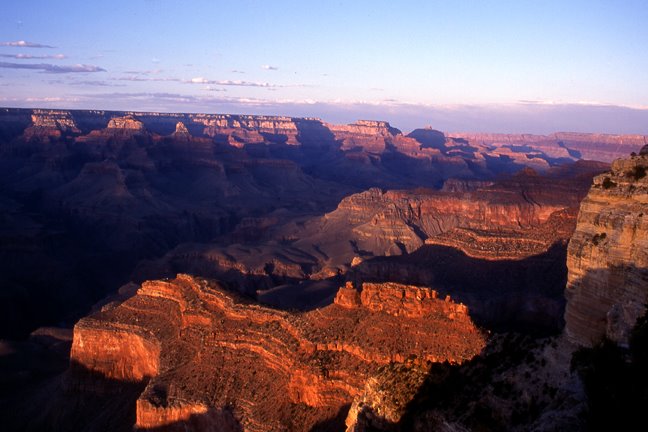
The third of three books my wife bought for me on Father’s Day 2024, Kevin Fedarko’s “A Walk in the Park” is by far the longest and the most complex. Kevin’s friend, Pete McBride, suggests that the pair hike the Grand Canyon. Not the rim-to-rim hike that many find challenging, but instead a hike from one end of the Canyon, Lee’s Ferry, to the other, Grand Wash Cliffs, beginning in 2015. Although the distance between these two places is about 277 miles, the walk is closer to 750 miles because of the need to trek through side canyons and grounds with no trails.  If the hike is taken in sections, the method used by Fedarko and McBride, the distance is closer to 800 miles because of added distance to take-out and drop-in points.

While this hike has been completed by others, they were typically seasoned back country hikers. On the other hand, Kevin was an award winning writer and Pete an award winning photographer. While both had some outdoor experiences, neither was in any way prepared for the challenges and experiences awaiting them. Looking at some of their past experiences – getting caught in an avalanche near Mount Everest, a trip to take photos of the world’s largest caribou herds and seeing no caribou, and others – you have to wonder what would make them believe this trip would go well.

It is difficult to categorize this book. It could be considered an adventure or maybe a history book looking at the Grand Canyon’s past. It could be thought of as a hiking book or a nature book. It also includes portions that reflect love – love of the outdoors, of family, and of geography – or a book on conservation. There are probably many other ways that one can view the book based on personal experiences.

Both Fedarko and McBride have published books based on their experience.  “A Walk in the Park” is Fedarko’s while McBride published a photo book from the trek. They have worked together on a video of the trip. All of these are done from the standpoint of participants, not onlookers. Little is hidden away because it makes the reader or viewer uncomfortable. Instead they want to make others part of the journey. They do not preach to the reader or viewer. Instead they offer thoughts, ideas, and experiences designed to make us all think.

Many thought that the trek was poorly planned – probably so – by unqualified individuals and was followed up with poor execution. One comment I saw was that it was harebrained – also probably true. Had it not been for other, more qualified, hikers and individuals with far more experience who helped them we might have read of two more hikers losing their lives in the Grand Canyon.

It took far longer to read this book than I originally expected. It is so well written that it makes you feel that you were along with Fedarko, McBride, and their friends. You can learn from their experiences and from those they met along the way. And also from those who attempted the same trek without success sometimes leading to their death. In addition to the portion of the book dedicated to the hike, you also learn something about the boat and raft trips down the Colorado River from Lees Ferry and the difficulties involved from those who guide these trips based on Fedarko’s attempts to work in that realm. You also learn about his family from the mining areas of Pennsylvania and his father’s battle with cancer. All of these things bring you into his life.

I highly recommend this book to anyone with interest in the outdoors, our national parks, the Grand Canyon, and the indigenous people who inhabited the land prior to the park’s existence. It also offers a view of the mistakes we have made in our attempt to preserve the land for some, allow others to profit from our mistakes, and often our inability to make things right again.

Again, read the book. I’m sure almost everyone will find things of interest to them and will enjoy those things around them.