Have We Lost Our Way?

I try to avoid political discussion in any of my posts, whether blog posts, email, or even responses to things on Facebook or elsewhere. Why? Because our country was founded on freedom. We all have a right to make choices, to have positions that may sometimes be in conflict, to express views with only reasonable limitation. Yet, things seem to have changed. And maybe there is a need to sometimes look at how politics affect our daily lives. I can still be friends with those who hold opposing views. When I look at our country today, I ask myself if, as a country, “Have we lost our way?”

As a baby boomer, I suspect my parents, and their generation, asked the same question in the late 60’s and early 70’s. Things were certainly in were far different at that time than they were in the 40’s when all healthy adults were willing to make great sacrifices in the safety and security of our country and the world. As the baby boomers grew into adulthood, dodging the draft became acceptable, the use of drugs became common, and the hippie fashion became the trend. It was far different from what was acceptable as our parents moved into the world of adults.

The questions today are, in large part, not the result of young people rebelling against the past but instead seem centered around so-called adults who have not grown up. People who seem to believe that the things we have learned as a country over the past two hundred years plus are no longer important.

Differences are no longer acceptable. The ability to work and live together no longer have value. Instead of focusing on why our country has been viewed as a model for much of the world, little is of no value other than wealth or riches. Opposing views are not respected and systems which have served us well only exist to be destroyed.

While the downward spin has been slowly creeping into our lives for many years, possibly beginning in the 60’s, the beginning of the media named pandemic. During those years, much information was spread with limited research or analysis. We saw jobs lost, families broken apart, friendships destroyed, and nameless other things that were the result of individual choices – get a test or don’t get a test, take an injection, rushed to the market, or trust your personal resistance to disease, wear a mask or don’t wear a mask. These things and many more drove wedges between individuals, families, even medical professionals. Yes, there were deaths during the pandemic but the simple was to classify any death was to say it was the result of the disease in question.

Today things have spiraled even further. During our last presidential election, we had one candidate who refused, and still refuses, to accept the results of any election where he is not the winner. The opponent was a candidate who had never received a single vote in a primary election. Many chose not to vote or voted on the lesser of two evils rather than a candidate’s qualifications.

The result – much the same as the end of the pandemic. No one seems to accept that there is nothing wrong with differing opinions; that negotiation can provide better results than permanent lines drawn in the sand can never be crossed; that loyalty to a political party is far more important than representing the average person in our country. We have leadership, and I use the term very loosely here, that believes the only way to lead is through dictation, not working with others to achieve success. Leaders who are willing, and have voiced, that disagreement with them should result in censorship, loss of rights, and even banishment or jailing in foreign countries. Leaders who search for ways to ignore our Constitution, our laws, and the courts which were created to resolve differences in interpretation and enforcement of these laws.

So, we now have a leader who uses things like executive orders, bullying, and even threats to achieve his desires and ignore the legislative branch of our government. A billionaire who has been given largely uncontrolled power as a so-called advisor even though there are clearly conflicts of interest in the advice he gives (and someone who was neither elected nor did his role receive any review). All the members of one party have decided they will line up and accept this leader’s actions and decisions regardless of how stupid they may look or how their constituents feel. The other party does just the opposite opposing everything with no real justification.

When I step back and look at things today, it seems that we do not have leaders. Instead, we have people in high positions who are acting like three-year-old children playing in an expensive sandbox who will pick up their toys and run home if they don’t get their way. So, I return to my original question, “Have we lost our way?”
The Comet

No, not the bright light in the sky with a tail; instead, my first car.

I turned sixteen that year. I had my new driver’s license. I no longer needed to mow yards in the summer to earn money. I had a job working on a local farm.

My father decided it was not safe for me to ride my motorcycle the seven or eight miles from my home to the farm. So, the motorcycle was sold. But the money was put into the bank along with left over money from several years of mowing yards in the spring, summer, and fall. It was to be used to buy a car.

Mowing yards in those days paid from two dollars to eight dollars per yard depending on their size. There was not much money in the bank even with the money from the motorcycle. This was not going to be a new car. Nor was it going to be a hot rod or even a sporty car, not even a pickup with a gun rack in the back window like some of my farm friends had. Think instead of a reliable, greatly used four door sedan. Still, it was going to be my car.

Shopping for the car took several weeks which seemed like years. First, my father talked to auto dealers he had purchased from previously. No luck there – they either had nothing suitable or the price was too high. Then came trips to other dealers, only on Saturdays when Dad was not working.

Finally, as a last result, we went to a nearby Mercury dealer and found the car that met Dad’s standards. A used Mercury Comet. I think it was four or five years old. It was not my first choice, but it was a car. There were at least three models of the Comet. The top of the line was the Caliente – not mine. Then there was the Cyclone, the sports car version – again, not mine. And, at last, there was the basic Comet – yes, mine.

Nothing fancy, no deluxe features, it had four doors, an AM radio, cloth bench seats, and an automatic transmission with the shifter on the column. It also had a six-cylinder inline engine, or a straight six. I probably could not have gotten in trouble with that car even if I tried.

The paint job was good, but describing the color is a bit difficult. It wasn’t blue nor was it green. Nor was it turquoise. Looking back, I suppose it could be best described as a dark aqua with some sort of frosted look.

The car did, however, get me back and forth to the farm where I worked and the six or seven blocks to school during the school year. The car was reliable with one exception. At times, unexpectedly and with no prior warning, the engine would simply quit. The poor thing must have simply been tired. After sitting for an hour or two, the engine could be restarted and would run like there had been no problem. I was lucky. When it did this, I was usually near home and could pull off the road to avoid accidents.

My cousin was not quite as lucky. He was about fourteen years older than me and came for a visit one winter. He borrowed my car to visit another relative for the day. As he was returning the engine decided it needed a rest about five miles from home. He managed to get the car out of the road but could not get it to restart. He also could not get a ride, so he had to walk the last few miles. After my mother arrived home from work, we drove to the Comet and, as expected, it started without problem and drove home with no other issues. He did not ask to borrow the Comet again.

 Even with the occasional engine problems and the strange color, the Comet served me well until I graduated from high school. It was traded for a new car for me to attend college on the other side of the state and held its value, bringing a trade value almost equal to its cost to me. It was not a show car nor a sports car but I will always remember it as my first car – The Comet.

Pursue the Impossible

I recently saw a tee-shirt with the organization name on the front and an organizational goal printed on the back. The goal was, “Pursue what’s possible”. On first reading I thought this was a good goal for any organization. But as I reflected on it, the more uncomfortable I became with the goal. Why? Because by pursuing only “what’s possible” today we are accepting that the status quo cannot be improved.

Jules Verne’s writing is often associated with science-fiction, but some sources say that it was based on carefully researched material which existed at the time. If we accept this, then a trip around the world in eighty days was not possible at the time. Similarly, travel from the earth to the moon was not considered. Verne’s works were considered fictional in nature. Comparatively, Hanna-Barbera’s cartoon series “The Jetsons” which aired in the early 1960’ s seemed to be purely fictional and written for entertainment with little relation to things that were available in that era.

So, looking at these two different views of the world, approximately one hundred years apart, if we accepted “pursue what’s possible”, we would not consider either worth pursuit because they presented the impossible, not the possible.

Yet when we look around us today, we see many of the concepts presented as not just possible but common in day-to-day life. We have had airplanes that could travel around the world at the Equator in about eleven hours. We have robots that can clean our homes with minimal human intervention. We have not only travelled to the moon and back safely but are now considering travel to Mars. We have all of this because some have pursued the impossible and not limited themselves to pursuing only what’s possible.

We could apply the same to many other advances we have had over time, not just recently but since Verne’s time and even earlier. If Henry Ford had accepted that making an automobile available to the masses was impossible, would we still be travelling by horse and buggy? Or, if communicating via wire or wirelessly had been accepted as impossible, how would our lives today be without our cell phones? Even something as seemingly simple as cooling food without the physical presence of ice would make today’s food choices impossible.

So, as I look at that shirt today with its simple goal statement, I wonder who would consider it a worth goal. Are they saying that today’s world is acceptable and there is no room for improvement? Or are they saying that pursuing the impossible is of little value?

While my views may not be shared by others, I think the organization which shared this goal is lucky. Those who wrote or approved the goal are no longer there. Perhaps the new leaders view the world and valuable pursuits differently. And perhaps the organization is now trying to make things better, not just accept things as they are.

Which Do You Prefer?

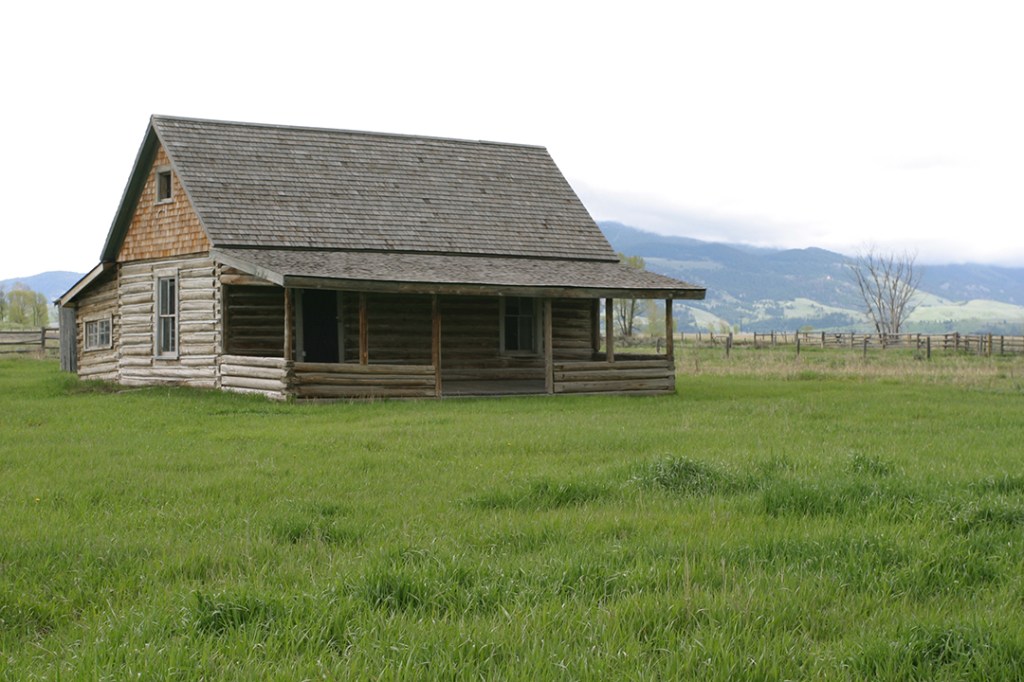
Several years ago I spent a few days visiting Yellowstone and Grand Teton National Parks. Many who have visited these parks have spent some time along the Mormon Row area of Grand Teton where several older homes, barns, and other buildings are located. Most of the days of this visit were cloudy and gray, not ideal conditions for photography but one should never pass on the opportunity. This is the original image of one of the cabins taken during that visit.

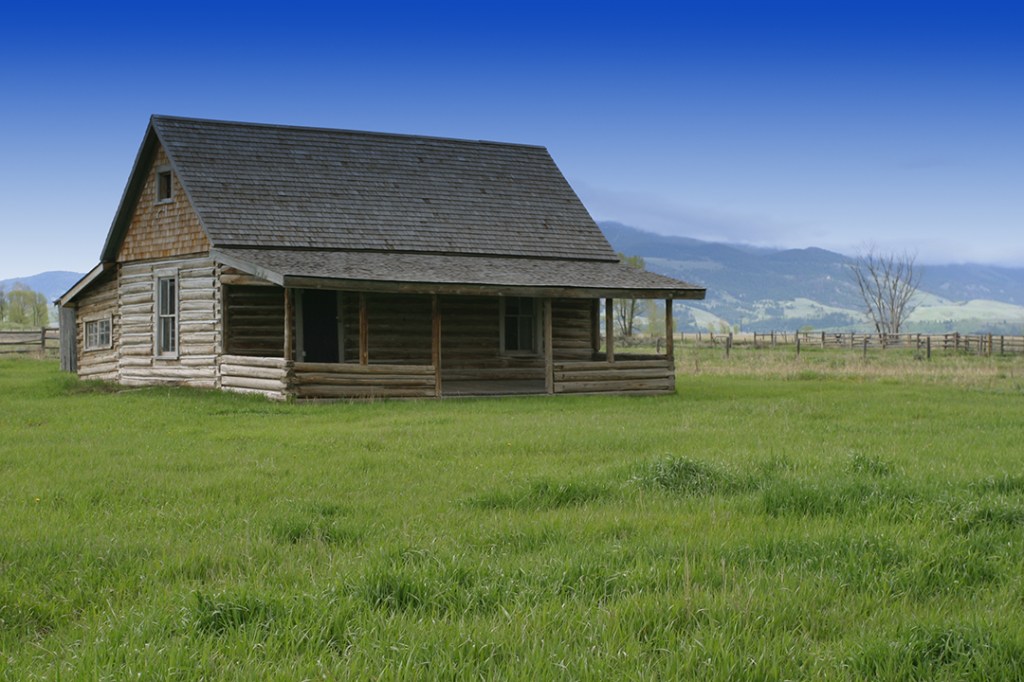
I use Adobe’s PhotoShop and LightRoom to process most of my photos but try to go lightly with my editing. Usually this means some cropping, maybe some minor adjustment to saturation, and possibly some adjustment to brightness and contrast. At that time I was also using a plugin called NIK Silver Effects. This photo seemed like a good candidate for some editing. I decided to apply a blue filter along with my normal processing and arrived at this view.

When I asked several friends for their preference the choices were balanced. Some liked the original while others liked the filtered image because of the blue skies and some added clarity of the cabin details. Others preferred the original image.

A few months later I decided to make a tabletop book with some of my photos, focusing on older objects like cabins, barns, steam trains, and other similar things. Rather than using the photos in their original form I decided to use sepia toning along with some borders. My goal was to create something like a stack of old images that you might find hidden away in an attic or closet. Images that were in fairly good shape but with some possible fading and borders or edges that were not neatly cut. I though this image would fit the book well and the result is shown here.

So, you now have three treatments of the same photo. Which do you prefer? And, if you are willing to share, why?

I hope you enjoy looking,

No Such Thing as Illegal Protest

Last week I had the opportunity to read a short article by a legal professor whose area of expertise is Constitutional Law. It was titled, “There is no such thing as ‘illegal protest’”. I would note that this was presented as “News” and not an “Op-Ed”. While I have no legal expertise, especially in the Constitution, this article raised more questions in my mind than answers. The article was focused on some statements by our current President and was clearly written from the point of view that these statements should not have been made. My questions, however, were more related to how bad things might become were the ideas presented taken to the extreme.

The article started with the definition of a protest and of an agitator and how any limitation on these was a violation of the First Amendments protection of peaceable assembly. A protest was defined as a public assembly, presumably presenting a point of view. Although not specifically included was what constitutes an assembly but one could assume it consists of more than one individual. It was stated that an agitator was not a legal term but was colloquially defined as one who makes noise, disrupts the status quo, and calls attention to a cause. The writer stated that this is also a form of free speech.

Following the article title, then just as there are no illegal protests, there is also no illegal agitation. On the surface, this seems to be reasonable.

In my mind, the questions about this view start with the term “peaceable assembly”. What was not defined is the word “peaceable”. For example, is the brandishing of weapons peaceable? Is occupying a building or the property of another, without permission, peaceable? Is destruction of or damage to property, for example, public vehicles or buildings, peaceable?

Another question that arises is, if we assume that all protests, or assembly are legal, does the same apply to all agitation? Things become more difficult to define here. Looking at recent events, is driving a vehicle through a roadblock because one is unhappy because o inconvenience caused by the closed road the work of an agitator?  If so, are the agitators actions a form of free speech and therefore legal? Does this then excuse the agitator for any subsequent damage or death that may occur? If not, then what actions of an agitator, and one must assume a protest, not legal. But by taking the article and its title as absolute protests and agitation cannot be illegal.

Put more simply, with no clear definition of “peaceable” is anything resulting from a protest or the actions of an agitator excused? Given that the Constitution is the ultimate authority on legality, then one might use this as a defense.

Again, I do not claim expertise in the law or the Constitution. I am simply asking what I consider common sense questions. I believe that we have the right to enact laws and to enforce them. We have systems for challenging these laws and determining when they are not Constitutional. But I do not believe that we should take short articles like the one I read last week as an absolute. They are generally the opinion of someone named as an expert, or a limited group of experts, that are published by or in the media as factual. And, that we are expected to accept them without question.

What happens when a different expert or different media source offers a different opinion? Who should we accept and why?  Just more food for thought, especially in a more and more divided country.

Photography

Those who have followed me on my blog, or earlier on my Facebook site, may be aware that one of my favorite hobbies is photography. I don’t consider myself a professional or even a highly advanced photographer, but I enjoy taking photos and occasionally have a photo that I enjoy sharing with others. My two favorite subjects are landscapes and wildlife, whether found in the wild or in a controlled environment.

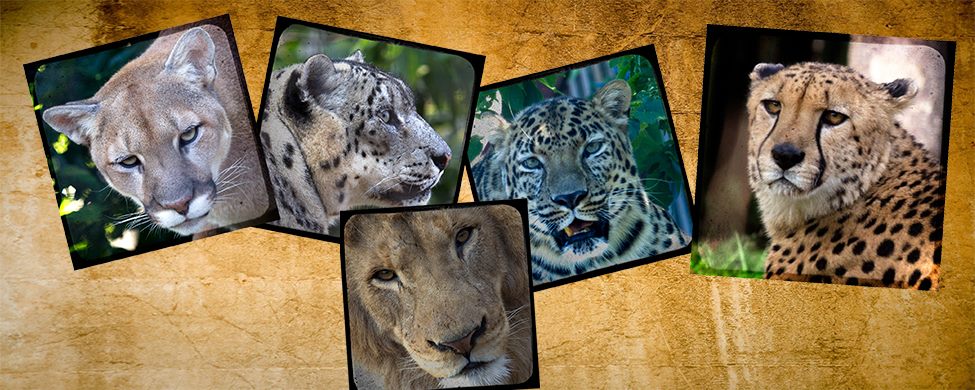
I thought I would take a few moments to share a few images here, along with short descriptions or background information, and hope that you might enjoy them too. The first image is a collage of “big cats”. These cat photos were all taken at the St. Louis Zoo then resized and placed on a single background using Adobe’s PhotoShop, one of my favorite tools, along with one or two plug-ins. I enjoy showing the beauty of these animals along with the differences between the various species.

The next photo was taken in my backyard a few years ago. While the backyard was not the “great outdoors”, the bunny was definitely wild, and I felt privileged for it to stay long enough for me to take this photo. The year after this image was made, I used it with a top and bottom border to wish every one a “Happy Easter” online.

We are privileged to live near the confluences of the Missouri River and the Illinois River with the Mississippi River. This area is a great place to see bald eagles in the winter, but I selected this image of American White Pelicans flying in formation. This was a winter photo and later that day I saw a hug number of both Brown and White Pelicans at rest along the Illinois River. I didn’t know that pelicans flew in v-formations, much like geese and ducks, until that day. The clear, blue sky provided a great background for this photo.

It was back to the Zoo for this image of Black Necked Swans. If you look closely, you may see what I was trying to capture – the heart shaped image created when two swans pass closely to each other going opposite directions. While the timing of my photo was a few seconds off, it was the best of several taken in rapid succession.

The Bufflehead is a small, nesting duck. I captured this image near The National Elk Refuge in Jackson, Wyoming during a visit to Yellowstone National Park. There is a visitor’s center there where migrating waterfowl sometimes visit which allowed be to take this photo. Like the pelicans, this is a wild bird, not a bird in a cage or similar environment. It is not something we see in the Central U.S., but it is almost as beautiful as the male Wood duck.

This raccoon had taken over a log near New Orleans. I was able to capture this image while on a swamp tour several years ago. This was before a major hurricane in the area, so I am almost positive that neither the animal nor the log survived. Even so, the almost hidden raccoon made for a nice shot.

For those who may be interested, I rarely use my phone to take photographs. These were all taken using 35 mm, Canon digital cameras of different vintages. They were taken using zoom lenses up to 400 mm in length. I seldom use flash for any of my outdoor images and try, as much as possible, to use a high shutter speed to freeze my wildlife images. Most were taken using a tripod although the pelicans and the raccoon were taken hand holding the camera. I treat landscape images differently and may share some of those images in the future.

Travels

I grew up in a small farming community. As a child, travel was limited by both cost and the quality of both cars and roads. While a trip to Memphis was considered a “big” trip, as I grew older the trips became longer yet less frequent. After my sister married, my family, or parts of it, travelled to her home every two or three years. This included one trip to Virginia, near Norfolk, and several trips to Michigan, a short distance north of Detroit. One of these trips also included a daytrip to Canada. Many of my friends had even fewer trips other than to Memphis.

When I was a high school senior, my class took a three- or four-day trip to Houston to visit both the Astrodome and Astroworld. For many this was a first long trip from our hometown or the nearby farms.

After graduating, I entered college, not at the closest university but instead across the state. I think now that this may have been thought of as another trip but one that lasted nearly four years instead of a few days. While there I enrolled in ROTC and was commissioned in the Army. Perhaps the thing that attracted me to the Army instead of a local business was the opportunity for even more travel.

And travel I did, to locations in both the United States and Europe. Some assignments were short and some longer. Some were for training, and some were for regular duty. Some were enjoyable and some a bit less so. But I did get to travel and to bring with me memories of each location and hopes for the next. So here I would like to share a bit about the places, memories, and even some regrets. Many of the places where I was assigned are no longer there, but they are still remembered by those who served there. So, take a trip down memory lane with me and hopefully enjoy a bit about my travels, or maybe travails, as I talk about some of these places.

I will start with college, what was then a small college of about two thousand students. As with any college that small, degree options were limited but they met my needs. While there I was also the manager of the basketball team. This allowed me to travel some more, to places I would not have visited otherwise. I also went to ROTC summer camps at both Fort Knox (no, I didn’t get to see the gold – LOL) and Fort Riley.

After college my first Army assignment was at Fort Benjamin Harrison, Indiana. This was for officer training in 1974. Our training class was about forty-one new Lieutenants, some who would continue on active duty after the training and some who would go back to their communities as members of the reserve forces. You make many friends in a thirteen-week course, many of whom I remain in contact today, over fifty years later. I enjoyed this assignment greatly, along with several others at Fort Ben later in my career. The fort is no longer there for new junior officers to enjoy.

From there I was assigned to Fort Polk, Louisiana. The two locations could be no more different. Fort Ben was small and in a metropolitan area. Fort Polk was large and located in a rural area near the Texas-Louisiana border. Fort Ben had more of an administrative feel, like the soldiers stationed there while Fort Polk was going through a transition from an infantry training post to the home of a new Infantry Division. I was at Fort Polk for about three years and there were things I enjoyed and other things that I did not. I made several friends but not nearly as many as at Fort Ben and none that I am in contact with today.

After leaving Fort Polk, it was back to Fort Ben for another short school and then to Europe for my next assignment. When I arrived in Europe, my first assignment was to a data processing unit (a name no longer used or even relevant) in Nellingen, just outside Stuttgart, Germany. Our unit operated three computer centers supporting the Army’s Seventh Corps. I really enjoyed my first trip to Germany; both the military duties and life with the Germans participating in things like Volksmarching, beer and wine festivals, and shopping, skiing, and wonderful meals at local Gasthauses. This assignment also offered the opportunity to visit Austria, Switzerland, and Belgium. The military post is no longer there and has been replaced by a modern German community.

From Germany, I was reassigned to a new unit located near the Mediterranean Sea. Camp Darby and an associated storage depot were shared by Army and Air Force units. It was just outside Tirrenia, a small seaside resort between Pisa and Livorno. There I was assigned to a newly forming logistics unit with fewer than twenty other individuals, both military and civilian. In this job I also had the opportunity of short visits to Army units in both Greece and Turkey. While I enjoyed my time there, it was also filled with challenges and after almost two years I was ready to move on. My one regret about my time in Italy was that I did not get to enjoy more of the culture that Italy offered. I visited Florence, or Firenza, but did not spend any time in Rome, visit Venice, or the Italian Alps.

After my time at Camp Darby, I returned to Fort Benjamin Harrison for a longer school and was there for about eight months, mostly in the winter. The fort had changed little since my earlier assignments there and the level of enjoyment was much the same. The class size was larger, and more new friends were made before moving to my next long assignment and new role.

My next duty station was at Fort Gillem, Georgia. This was on the southern side of Atlanta, and we provided administrative support for Army Reserve and National Guard units located throughout the southeastern United States and in Puerto Rico. Many others assigned there spent many days travelling although my office did little travel other than regular trips to the Washington, DC area. This is another post that no longer exists as it did. While some military units may still have headquarters there, most of the larger units are gone.

Then it was back to Germany for another tour. Initially I was assigned to another data processing unit at Kilbourne Kaserne near Heidelberg, Germany. My time here was spent much the same as during my first visit to Germany. This was a nice place to be assigned; a small Kaserne yet near all of the conveniences necessary to support the Army’s Headquarters for all of Germany which was located in Heidelberg. The Kilbourne Kaserne, like many other kasernes throughout the country may still exist but are no longer used by the US military.

My final years in Germany were spent in Wurzburg as part of the 3rd Infantry Division. The Division was spread over several locations in that part of Germany, and I visited several new cities and towns as a result. Like all of my tours in Europe, this was an enjoyable one with a few challenges thrown in just to keep things interesting. One memory that stays fresh in my mind is falling in deep snow, late at night, wearing full battle equipment during a field exercise. This is definitely an experience that I would not want to repeat. None of the Army posts remain in the Wurzburg area as a result of changing priorities and new missions.

To wrap up my Army career, I spent several years in St. Louis working in a headquarters supporting Army Reserve soldiers across the country. This unit was composed of a large number of civilian employees along with a smaller number of military personnel. Here too, my travel was largely limited to trips to and from Washington, DC or nearby Alexandria, VA. And, even here, the Army organization where I was assigned is no longer in St. Louis and has been absorbed into another organization elsewhere.

After retiring, I have remained in the St. Louis area and will probably not relocate again. But my travels did not end here. Since arriving I have had the opportunity to visit the Gulf Coast, the lighthouses on and around the Great Lakes, the desert Southwest and Rocky Mountains, and the New England area. All have been fun and all have offered an opportunity for learning and enjoyment.

I hope you have enjoyed this brief description of some of my travels and have the opportunity for travels of your own.

Science-Fiction or Science or Fiction?

A few days ago, I read a short observation about where the future might lead us or how the world might be a few decades or even a few years from now. Unfortunately, I failed to make note of who had written the observation or even where I had read it. But thinking about the writing as I was lying in bed early this morning I thought about how science-fiction or even science itself has changed the world around us.

One of the first things I remember that could be classified as science-fiction was the mythological tale of Icarus. I tried to find a specific date when this was written but was unsuccessful. It was written by Ovid, along with several others, and focused on an escape attempt by Icarus and his father using wings made from metal, feathers, and beeswax to fly away from imprisonment. If one gives this some thought, this was science-fiction of its time. Flying, by man, was not even a dream. Yet Icarus’ father was able to conceive the construction and use of wings which would allow them to fly. Sadly, according to the myth, Icarus flew to close to the sun, the beeswax melted, and he fell to his death in the oceans below.

A person must wonder, could the people in Ovid’s lifetime conceive, or even dream, of our large airplanes today that can easily fly us around the world? Or could they possibly things like space travel? Yet in some form this myth was recorded and passed to later generations and is even known to some people today. So, while the tale of Icarus has passed through generations it is still a part of our lives today. So, were the writings of this myth only fiction or were they science-fiction, simply not defined as such?

Science-Fiction probably became a more well-defined genre in the latter half of the 1800’s with the writings of Jules Verne. Verne seems to have included technology (a term used loosely), or science, that existed in his day but expanded on how it was used. For example, this work “Twenty Thousand Leagues Under the Sea” suggested the use of submersible craft to travel some 40,000 miles or more beneath the ocean. While submersibles existed, they could not travel to that depth, even had such a depth existed. Yet Vernes conceived this as a possibility and while we can search the oceans to great depths today, not anywhere near the depths Verne described. But Verne was able to imagine what might exist there.

Verne also wrote “Around the World in Eighty Days”, a time that, at least in the 1870’s seemed almost unbelievable. One must wonder, what would Verne think of today’s air travel where a trip around the world takes hours rather than many days. Again, the technology that Verne imagined existed. But it has advanced far beyond what he wrote as a novel, not as a prediction of the future. So, how was Verne able to reach out and predict these things that might exist in future times?

While science-fiction, as a genre, continued to grow over the years since Verne, one must also look at the world around us and ask how science has grown. We should mostly ask ourselves are today’s researchers and scientists science-fiction writers or dreamers. Should they have chosen to record their works in novels, would these works have been considered science-fiction? Or were they only science?

An example might be the works of Henry Ford. Ford did not invent the automobile. Instead, he made the automobile affordable. Had Americans who travelled westward on the Santa Fe Trail or the Oregon Trail known of the automobile would they have made those long treks via animal-powered wagons? Would we have the rutted trails that offer historic value today? Or would they have laughed at Ford?

 In other fields one can see both individuals who by imagining possibilities. They looked at problems and tried to find solutions. When they began, there seemed to be no solutions, yet they were willing to stretch the existing limits to create things that were better. People like Pasteur and Salk in the world of medicine who often were chided or punished for their works. People in other fields where advancements were made, or new solutions were found. Many who were successful and many who failed yet challenged others to try.

The differences between these individuals and people like Verne is not in what they imagined or accomplished but in how this was shared with others.

Now, perhaps in a less serious mode, let us move into things into the 1960’s, when I was a child. Many of my generation remember the cartoon series “The Jetsons”. The cartoons were, supposedly, set in the year 2062. This means that we have about thirty-seven more years to see if these cartoons were true or if they were only the imagination of the writers. But we can already see some things become real. For example, the Jetson home was cleaned by Rosie the Robot. While today’s robots take different forms, we can now have our carpets cleaned by robotic devices. Similarly, The Jetsons also had smart watches, video phones, and video chat; all things that are commonplace today. So while Hanna-Barbera were making a cartoon to keep children entertained, were they actually writing science-fiction?

I grew up in the “space age”. We, along with the Soviets, sent man and animal into space. Our exploration allowed us to ultimately development of a craft allowing scientists and others to live for extended time away from earth. They have allowed us to explore other planets and environments. But when we were children each trip to space created tons of junk. Old rockets and other craft that either burned up in the atmosphere, was left in space, or crashed into the oceans. It seems such a waste.

So, what have we done? Today, we have ways to bring much of this junk back to earth, land and capture it safely, and reuse it in the future. Are today’s solutions perfect? Probably not, but they are a step forward and can be improved as we move forward.

When I was in my teens and early twenties I worked on farms, drove tractors and combines, and help farmers tend their crops. When I look at farm equipment of today, I am amazed. Things that we learned to do in the past are now done by automated tools. The farm worker is still there, but for how long?

We have cars and trucks that drive themselves so all we need to do is tell them where to go. Again, something that is yet to be perfected. But something that would have been science-fiction just a few years ago is now emerging reality. Electric vehicles, not the first if one remembers trolleys and electric trains, that also have limitations but may ultimately reduce our dependence on fossil fuels.  All these things started as ideas which could have been discarded as science-fiction but have instead began moving into the world of science.

Who can predict what the future holds? Will it be the scientist, the science-fiction writer, or someone else? And will the future leave us older folks behind or will it be something that makes or lives better? I have no answers, just questions and hope.

The Lionel Lines

For many of us old-timers, at least the men, who were around in the 1950’s, Lionel meant trains, or what we call model railroads today. Lionel, American Flyer, and Marx were the trains of the time in the United States. Although HO scale trains, much smaller than these three, had been introduced by German company Marklin in the 1930’s they had not yet become a large part of the train market in the United States. Lionel trains, sometimes using the logo Lionel Lines, remained both popular and profitable through sometime around 1956 when the smaller scale gained in popularity.

Lionel trains were some of the first things youngsters looked for in the Sears Christmas catalog or at local stores. Larger stores often had train displays in their windows and children could look at them for hours even though these were only trains running in circles.

In my small hometown we had no toy stores of other stores that sold Lionel trains. To see Lionel trains, we had to travel to nearby Jonesboro.  There we could visit the small Firestone store located in the heart of the business district.

Yes, as strange as it may seem, Firestone, a tire dealer, also sold Lionel trains. Each year at the beginning of the holiday season, the store brought their train display. To most children, the display seemed wonderful. Looking back today I suspect it was no more than about five feet wide and ten feet long. It had two loops of track close to the edges of the table where trains ran constantly, one in each direction.

Train sets and individual cars that were for sale were stored under the table. In the center of the two loops were some short sidings where some cars and accessories were on display. And directly down the center was a set of shelves extending upward. These shelves were used to display train sets for sale that year.

Although Lionel trains started to lose popularity around 1956, when I was only four years old, the Firestone store continued to display and sell them for several more years. And I enjoyed watching these trains run around in circles much as my Lionel train at home did.

While Lionel trains are still around today, they do not seem early as popular as the trains of the 50’s. Nor are they as easy to find. Model railroading has moved to the smaller sizes known as HO or N scale. And the trend seems to be highly detailed layouts with buildings, scenery, and other things to make them seem more realistic. Costs have risen greatly both for the trains and the space to use them.

I wonder if our children today have something that replaces the enjoyment provided by these simple Lionel displays. While they have their cell phones, video games, and other electronics, “Has imagination disappeared?” Have we as adults taken away the need to dream or to imagine or even to play? Has cost driven the children, or their parents, from the market?

Before I am criticized for being outdated or living in the past, I am a supporter of most new technology. At the same time, I believe that imagination is important to new ideas for the future. Had there not been those who could think of things outside the box, we would not have many of today’s advances.

So, let’s not push our children to become adults before their time. Encourage them to imagine and to work and play with others. Let them be children, not young adults, and to balance their new technologies with playing and enjoying the outdoors and the world around them. Push them to read and learn and to accept mistakes as part of life. In other words, let them be kids. They have a limited time to do this while they will have many years to be adults.