Yellowstone

When I was a child and heard “Yellowstone” I thought of Yellowstone National Park or even more specifically its more famous feature, Old Faithful geyser. I found the idea of a geyser unbelievable and sometimes wondered what it would be like to have a geyser like Old Faithful in our local park. A humorous thought given that our park was less than a city block in size. I read about Yellowstone in books and magazines, sometimes saw television shows featuring it, and even associated it with a Hanna-Barbera cartoon series from the early 1960’s, The Yogi Bear Show with Yogi Bear, Boo-Boo Bear, and Ranger Smith who lived in Jellystone Park. While the cartoons were fun to watch, they are not my focus here. Instead, I want to write about the national park

I remember wishing to visit Yellowstone when I was young but that wasn’t practical for our family. So, I could only learn about it in other ways and imagine what it would be like to be there. I finally had the opportunity to visit Yellowstone when I was in my late thirties. Surprisingly, it was much as I had imagined and even more.

Yellowstone National Park is a huge place, over 3,400 square miles, mostly in Wyoming but also in Montana and Idaho. As one might expect in a park of this size, Yellowstone offers many different things for the visitor. Starting with the simple, it offers rivers, lakes, canyons, meadows, and hydrothermal features like the many geysers. According to scientists, the park sits atop the Yellowstone Caldera or dormant volcano. If you visit, you will see some of the most pristine and colorful water features that can be found anywhere.  You may also see dynamic waterfalls in steep-sided canyons, mud pots in other locations, and a variety of rock formations.

Yellowstone is also the home of a great variety of wildlife, with an emphasis on “wild”. You can see bison, elk, deer, moose, and a variety of waterfowl and other birds. Where you see them and in what numbers can vary by the time of the year and the weather. You can also see, if you are lucky, cougars, wolf packs, and bears, both black bears and their larger relatives, the grizzly bears. But remember to keep your distance and follow any instructions from the park staff for both your safety and that of the wildlife.

The water features are beautiful. Old Faithful still erupts regularly, although maybe not every hour but even if you cannot get to Old Faithful there are many other geysers with roads or trails leading to them. There are also many pools or other water features to see, just remember the water is extremely hot. And you should resist the urge to throw pennies into the water features. Pennies and other foreign objects can destroy these beautiful works of nature and spoil the future for other visitors.

But all this beauty does come at a price. Like other wild locations throughout the world, there is hidden danger in Yellowstone. Some of the danger is courtesy of Mother Nature and some is the fault of man. As I said earlier, there are rules and warnings at various locations in the park and given by rangers and volunteers in person. Probably one of the biggest things to know is that the trails and boardwalks in the park are there to keep you and the environment safe. It can be tempting to just step off a short way, but you don’t know what dangers may be there or what harm you can cause to the environment. Another big thing is to remember you are visiting the wildlife in their home. Keep your distance from the wildlife. They will protect their young. They will protect themselves. They are faster than you believe, and their horns, hooves, and teeth are far more dangerous than you may expect. This is even more true in the breeding season. While a photo with a bison may look cute on your wall, is it worth your life? If a trail is blocked by a herd of elk, choose another trail and come back later. Stay safe and enjoy your visit.

Remember that the water features in Yellowstone are hot. That means you can get burned by touching it in many locations. Even where you least expect it there can be small, yet hot water features. There have been many fires at Yellowstone. These fires are both beneficial allowing for reforestation, but they can also be dangerous. If an area or a road is closed because of fire danger, then don’t go there.

The winter can also present danger. A large portion of the park is closed in the winter or open only to snow vehicles. Again, this is to protect you, the wildlife, and the park itself. Obey the rules and come back to the park again.

I hope that each of you has the opportunity to visit Yellowstone and can enjoy some of the best nature has to offer. If you do, have a good trip and take a photo for me.
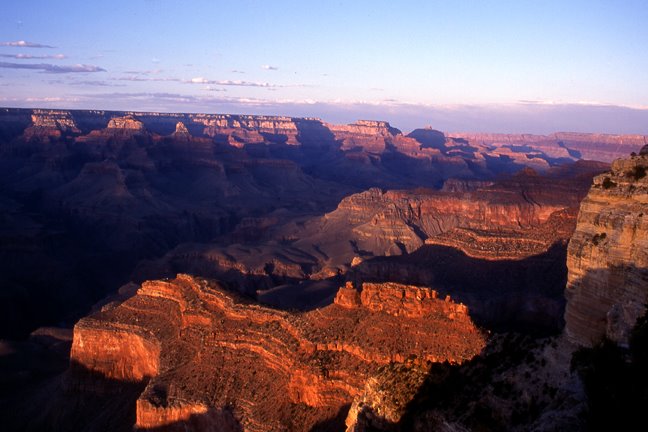
The Cabin

This is a work of fiction. Names, characters, places, and incidents are either the product of my imagination or are used fictitiously. Any resemblance to actual persons, living or dead, businesses, companies, events or locales is entirely coincidental.

All rights reserved. No part of this story may be used or reproduced in any manner without written permission except in the case of brief quotations embodied in critical articles and reviews.

It was on a lake. A beautiful lake in a northeastern state. Deep in some places, shallow and rocky in others. No one knew how it came to be. Some scientists said it was created by retreating glaciers at the end of the Ice Age. Others said it was created by underground springs and erosion combining to fill the ends of the valley and then subsequent flooding. Others said God created the valleys, the mountains, and the lakes. The lake ran north to south, about nine miles long and no more than two miles wide. The water was cold and usually calm. It was often covered by ice eight or nine months each year. There is a small town at the southern end and cabins were spread along each shore. Depending on your perspective, the cabins are close or far apart. If you judge distance from the line of the crow, each may be only a few hundred yards apart but by road this distance may change to a mile or two. And if travelling by boat the distance may be a bit less or even more. So while you have neighbors, each cabin can be a place solitude, privacy, or celebration with others.

One of these cabins is the heart of our story. A cabin that dated from the early 1800’s. Originally built by a person unknown, it was no more than a one room log shack with a sleeping loft. In the 1820’s the cabin and the surrounding land were purchased by Bart’s great-great-grandfather, Bartholomew, a bachelor from a nearby large city. He used it only for fishing in the summer, hunting in the autumn, and an occasional visit at other times of the year. After his marriage, visits to the cabin became fewer although he tried to bring his son, Bradford, at least once each year.

Bradford inherited the cabin around 1870 and made a few improvements hoping to make it move comfortable for his future family.  While visits were not often, it became a place to call their second home. A kitchen and bedroom had been added and a well installed along with a shed to store a small sleigh and a rowboat. Bradford married a local girl around 1880. Their son, Barkley, loved the cabin. He swore that he would one day call it his home and would never leave the cabin by the lake.

True to his word, Barkley found work in a small town growing at the southern shore of the lake. After a few years, he was able to purchase a small general store and later became postmaster for the town and the cabins around the lake. This wasn’t that difficult thing since the town still had few residents and most of the cabins were occupied only a few days each year. But not Barkley’s cabin which became the family home. But like the small town, the cabin expanded. Electric service was added along with indoor plumbing, something seen in only a few local homes and cabins. With each new child, a room was added. The two oldest children were very attractive young girls. While they loved their family and the cabin by the lake, they would marry young men and someday move away.

But the third child, Benjamin, much like his father, loved the cabin and its place by the lake. It suited quite well his ambitions as a writer and photographer. He wrote books about life growing up by the lake and took great photos of families and friends. As his work expanded, he incorporated both into books about the local scenery with pictures and more. He became very successful but still helped with his father’ store. A marriage came early, and his family grew with three strong sons and daughters two. But times had changed, and the cabin grew old. It no longer met the family needs. So, with some regret Ben decided that a new cabin was needed where his family could live. But the location would not change. This was the new family home. Logs were retained and often reused, and a new home arose where the old home had been. It was a great change from the original cabin, but the old shack remained, attached as a room in back. Most of the children are now grown and gone. But young Bart, named for his great-great-grandfather, remains in the home. Like his ancestors before him he has pledged to make the cabin, much as it has changed, a home for his family from this day on.

Future posts will look at life at the cabin and what it means to family and friends.

“A Walk in the Park” By Kevin Fedarko (A Book Review)

Previously published on Facebook.

The third of three books my wife bought for me on Father’s Day 2024, Kevin Fedarko’s “A Walk in the Park” is by far the longest and the most complex. Kevin’s friend, Pete McBride, suggests that the pair hike the Grand Canyon. Not the rim-to-rim hike that many find challenging, but instead a hike from one end of the Canyon, Lee’s Ferry, to the other, Grand Wash Cliffs, beginning in 2015. Although the distance between these two places is about 277 miles, the walk is closer to 750 miles because of the need to trek through side canyons and grounds with no trails.  If the hike is taken in sections, the method used by Fedarko and McBride, the distance is closer to 800 miles because of added distance to take-out and drop-in points.
While this hike has been completed by others, they were typically seasoned back country hikers. On the other hand, Kevin was an award winning writer and Pete an award winning photographer. While both had some outdoor experiences, neither was in any way prepared for the challenges and experiences awaiting them. Looking at some of their past experiences – getting caught in an avalanche near Mount Everest, a trip to take photos of the world’s largest caribou herds and seeing no caribou, and others – you have to wonder what would make them believe this trip would go well.

It is difficult to categorize this book. It could be considered an adventure or maybe a history book looking at the Grand Canyon’s past. It could be thought of as a hiking book or a nature book. It also includes portions that reflect love – love of the outdoors, of family, and of geography – or a book on conservation. There are probably many other ways that one can view the book based on personal experiences.

Both Fedarko and McBride have published books based on their experience.  “A Walk in the Park” is Fedarko’s while McBride published a photo book from the trek. They have worked together on a video of the trip. All of these are done from the standpoint of participants, not onlookers. Little is hidden away because it makes the reader or viewer uncomfortable. Instead they want to make others part of the journey. They do not preach to the reader or viewer. Instead they offer thoughts, ideas, and experiences designed to make us all think.

Many thought that the trek was poorly planned – probably so – by unqualified individuals and was followed up with poor execution. One comment I saw was that it was harebrained – also probably true. Had it not been for other, more qualified, hikers and individuals with far more experience who helped them we might have read of two more hikers losing their lives in the Grand Canyon.

It took far longer to read this book than I originally expected. It is so well written that it makes you feel that you were along with Fedarko, McBride, and their friends. You can learn from their experiences and from those they met along the way. And also from those who attempted the same trek without success sometimes leading to their death. In addition to the portion of the book dedicated to the hike, you also learn something about the boat and raft trips down the Colorado River from Lees Ferry and the difficulties involved from those who guide these trips based on Fedarko’s attempts to work in that realm. You also learn about his family from the mining areas of Pennsylvania and his father’s battle with cancer. All of these things bring you into his life.

I highly recommend this book to anyone with interest in the outdoors, our national parks, the Grand Canyon, and the indigenous people who inhabited the land prior to the park’s existence. It also offers a view of the mistakes we have made in our attempt to preserve the land for some, allow others to profit from our mistakes, and often our inability to make things right again.

Again, read the book. I’m sure almost everyone will find things of interest to them and will enjoy those things around them.

“You Are Here” by David Nicholls (A Book Review)

Previously posted on Facebook.

My beautiful and loving wife gave me three books for Father’s Day this year. Those of you who have seen my previous posts may remember that I have loved reading since my early days and I suspect I have read hundreds, if not thousands, of books since then. Any time I receive books as a gift it is wonderful.

In a recent post, I wrote a short review of the first of these books, Nick Offerman’s “Where the Deer and the Antelope Play …” I’m going to try to do the same for another here, David Nicholls’ “You Are Here.” Nicholls, much like Offerman, has had a varied career as an actor (for which he said he had no talent), a writer, and a screenwriter.

“You Are Here” has been described in many ways by others – an outdoor story, a journey, a love story, by Nicholls himself as funny, and more. I could agree with any of these. The book presented a bit of challenge at the beginning because of differences between the typical American novels I read and the British style of Nicholls. But this disappeared after only a few pages.

While trying to not spoil your enjoyment of the book, it centers on a hiking trip primarily involving a man, Michael, and a woman, Marnie, with seemingly little in common.  He was a geography teacher; she a book editor. Both were coming out of unsuccessful relationships. Both were somewhat isolated, by choice, as a result. They did have one friend in common, one who kept pushing them to get out of their isolation. The friend was finally successful by organizing three day hiking trip with several other people.

“You Are Here” follows the trek and the decision by Marnie to extend her hike to accompany Michael for several additional days of his planned, longer trip. Up and down hills, through the countryside, the trip continues until an evening when Michael meets with his former wife. Unfortunately, Michael had not told Marnie about this meeting until the day it was to occur Obviously Marnie’s feelings were hurt. While the meeting occurred, many surprises and unexpected results ensued.

What would happen next? Would Michel and Marnie reconcile and live happily ever after? Would they never meet again? What really happened when Michael met his ex-wife?

A few months later, when the man, the woman, and the friend who started the whole adventure met again, the meeting will be a surprise to all who read the book.

This book was a Barnes & Noble Book Club Selection and it is easy to see why. It can be enjoyed by anyone who reads it no matter how they categorize it. While my initial reason for reading it was as an outdoor book, the other views came through as well.  I would strongly recommend it to all.

Good reading.