Novels by Toshikazu Kawaguchi (Book Reviews), March 4, 2025

I had a bit of a challenge naming this post. It is a bit of a review of two novels by Toshikazu Kawaguchi, “Before the coffee gets cold” and “Before we forget kindness”. These novels are part of a five (at last count) book set originally written and published in Japan then translated for reading in the United States. I have a bit of concern about calling them novels because, at least in my mind, each book is a small set of short stories. In either case, I found them enjoyable and look forward to reading the other three books in the set in the future.

Rather than review them in detail and spoil the ending for other readers, I instead decided to pose a question to others. A question that is core to the reading of these books. Would you, if given the chance, return to a time or place in the past?

Of course, there are certain rules that you must follow.

  • While you are in the past, you can do nothing that would change the present. In other words, you cannot change events. Everything that happened then and since then will still occur.
  • You can only depart from a specific place and return to that same place within the time limits described below.
  • You will be given a hot cup of coffee before your departure to the past and you must return to the present before the coffee gets cold. If not, you will be cursed from there forward.

There may be other rules, but they will be explained to you before you travel to the past.

If you say you will return to the past your place of departure will be a specific chair in a small coffee shop, or perhaps a tearoom, off the main streets in a city in Japan. You must be sitting in a specific chair and return to the same chair.

It sounds so simple but there is a problem. The chair you must use is constantly occupied by a cursed woman all day, every day. The only time it is empty is when she must get up to use the restroom. So, there is limited opportunity for your travel and others may also be waiting to depart.

If you can be seated in the chair while it is vacant, you will be given a hot cup of coffee. This is the measure of the length of your visit. Remember, you must return before the coffee gets cold.

And then, the travel can begin.

Each of the short stories in the books is centered around someone who has chosen to travel back in time and the results of this travel. If you have the opportunity, they are short reads which you will enjoy.
“My Three Dogs, Love will find a way home” By W. Bruce Cameron (A Book Review)

If you are an animal lover, no matter what type, this is a book that will find a way into your heart. It is extremely difficult to assign a genre – it could be an adventure, a pet story, a love story, or any of several other types. It could even be reclassified from a novel to a non-fiction book with a few minor changes and a disclaimer or two. After much thought, I think it best falls into the realm of a love story or, actually, several love stories in one.

There are many types of love included, sometimes only briefly while others throughout the book. There is brotherly love. There is also the more common love between a man and a woman. We see love between people and animals. And we see love between the animal members of the pack as well as the human members. There is also love from Teme at the animal shelter, Georgia, a police officer, and Ron, a man who seems to love and feed homeless dogs on the street. Each of type of love is faced with challenges. Can love survive or will the challenges be too great?

The story focuses on the dog pack of Riggs, Luna, and the newest member, Archie along with their human pack members, Liam and Sabrina. While Liam and Sabrina seem to be in love, their relationship is challenged because Liam seems to sometimes forget to include Sabrina in life changing decisions. As a result, Sabrina decides to take a break, move in with her sister and decide if their relationship can continue. When she moves, she must leave the dogs with Liam because her sister is a “cat person”.

Liam is unhappy but struggles to keep going and take care of the dogs. This works well until an unfortunate accident makes it impossible for Liam to continue. Brad, Liam’s brother, steps in to help which he has done since they were both teens and lost their parents. Since Brad does not like Sabrina, his only solution is to take the dogs to an animal shelter, not a no-kill shelter. The ideal solution would be for all to have a new home together, but this does not happen.

The book follows the adoption of all three dogs and the efforts of Riggs to bring the pack, both animal and human, back together. Along the way Riggs and the other dogs meet new friends, and enemies.

Read the book to find the answers. But be prepared to shed a few tears along the way and question whether we, the two-legged members of many packs, have done the best we can for our non-human family members. Have we earned the unconditional love that they give us and do we do all we can to protect them, especially if something unexpected happens?

“The Cat Who Saved Books” By Sosuke Natsukawa (A Book Review)

I read for enjoyment. Sometimes I start a book and then stop because I am not enjoying the read although this does not happen often. More commonly I tend to take the time to savor what I am reading. This may include reading a short passage, a page or two or even a chapter, then taking a break to ponder what I have read. Occasionally I start a book and read it quickly then return to read selected passages that I found more interesting than others. But rarely do I find a book that it is very difficult to put down.

“The Cat Who Saved Books” was one of those rare treasures. The story was captivating. The translation by Louise Heal Kawai was excellent. The cover artwork by Yuko Shimizu was beautiful. I find it hard to say anything bad about this novel other than it was far too short.

I was visiting our local Barnes & Noble a few days ago browsing for a new book. Something that could be read for pure pleasure. I slowly cruised the “new releases” aisles in this quest. Initially I was having difficulty finding what I desired. During my first pass, I couldn’t seem to find what I wanted although Shimizu’s cover caught my eye. Even during a second trip around this area, there was no strong draw other than the same cover. As a cat lover, my thought was that the draw was the cat on the cover. But as I started a third trip through the “new arrivals,” I decided to pick up the book and read the synopsis. When I did, I found something there that told me I had to read this book. I am so glad that I did.

Back at home, I put the book on my nightstand for later reading. There it sat for a few hours. Then I began reading. Little did I expect that I would not put the book down, except for a few very short breaks, until it was finished.

The book opens with a young man, Rintaro, standing sadly at the funeral of his grandfather. The grandfather owned a used bookstore. A store with only a single aisle where books were shelved floor to ceiling, seemingly in no order at all. Yet his grandfather seemed to have known every book there and where it could be found. He had passed much of this knowledge to his grandson. Now, the grandson was expected to give up the bookstore to live with his aunt until he became an adult.

Little did anyone know that this was not to happen nor why. And they probably would not have believed it had they been told.

After the funeral, the boy returned to the bookstore to contemplate what had happened and what his future would be. As he sat, the bell outside the door rang. When he answered, no one was there, nor had anyone entered. Then he heard a deep voice talking to him. He looked for a person but instead saw only a cat. Could it be? A talking cat? Surely not, yet it was. The cat told the young man that it needed his help. There were books to be saved and only the young man and the cat could do it.

Once the cat convinced the young man to join him, the solid wood wall at the back of the bookstore opened and the adventure began. Through the book, the cat, Rintaro, and at least one other go to four labyrinths to save books. Each labyrinth is more challenging than the previous.

Will Rintaro and the cat succeed? How will this affect Rintaro’s future? Will the bookstore survive? Is this really a prediction of the end of books? To answer all these questions, you must read this book. As you read, be sure to watch for the words of wisdom, sometimes offered by the late grandfather and at others offered by Rintaro as his knowledge grows. I think you, too, will find the story enchanting and hard to put down. And you may find it exceptional as I did.

“Chiefs” By Stuart Woods (A Book Review)

I have long wanted to write a review of one of the works of a favorite author, Stuart Woods. I found this particularly difficult because of Woods’ long writing career including both novels and nonfiction works. Finally, I decided not to delay longer and try to capture the essence of his first novel, “Chiefs”. I would note that while “Chiefs” is his first novel, originally published in 1981, it is not his first book. Before “Chiefs” he wrote a book describing his experiences sailing, including a trans-Atlantic trip from the United Kingdom to the United States, and a guidebook to locations throughout the U.K.

“Chiefs” is loosely based on a childhood experience in Woods’ life when he found an old badge in a relatives’ attic. The badge appeared to be blood stained and damage from some type of firearm. Woods found that this was true, and the badge had been worn by one of his ancestors.

According to Woods, it took many years for the story he was told to transition into a novel and then took about eight years to be written and published. Most of the writing occurred in Ireland where Woods lived, almost as a hermit. Like several of Woods’ early novels the story is not part of any series although it does introduce several characters and locations that appear in his later works. The novel focuses on four individuals who lived in the rural south beginning in the 1920’s and continuing until after the end of World War II. A time when the country, particularly the south, was in transition.  Three of these individuals were law enforcement officers in a small Georgia town. The other seemed to believe that he was more qualified than any to hold the position.

The first officer, Will Henry Lee, was a former cotton farmer. Like many other small farmers, he could no longer support his family by farming. Since the town was looking for its first police chief, Will Henry asked for the position and was accepted. He was successful in the position until his untimely, and some would say accidental, death while on duty. His badge, much like that of Woods’ ancestor, suffered the same fate.

The second chief, Sonny Butts, came on the scene years later. He might have been considered a thug had the circumstances been different. He was a motorcycle riding hot head, not afraid to treat the town’s elite in the same manner as it’s poor. He had proven himself a reasonably good police officer and was appointed chief after the death of his predecessor. After becoming chief, simply disappeared, not immediately but after some time.

The final chief in the story was a black man, something extremely unusual in that timeframe not just in the rural south but anywhere in the country.  He had experience in the military and was fair to all the residents of the town. Because of his experience and a recent event, he began looking at the history of related crimes in the town’s past.  His findings seemed to point to someone in or near the town being guilty of or at least knowledgeable of the crimes. Yet when he tried to report these things to the long-term county sheriff, they were laughed off. Could this be because of the chief’s race or was there some other underlying reason?

The fourth principal character in the book was an odd individual who lived a short distance outside the town. Someone who wanted to be the chief but was never selected. Someone who often appeared dressed as a hero from WW I, although his service was questionable. Someone who lived as a hermit but was known to have a large collection of weapons. A person who, if nothing else, was looked on as odd, quirky, or even crazy. What was his role?

Did any of these characters have a relationship? What role did each play in the growth of the town? Or were all just passing ships in the night? This is for the reader to find out.

I was able to find this novel in paperback form from a 2005 printing. It is unlikely that an copies of the original hardcopy version can be found since there were only about 20,00 copies printed. It is worth the hunt to read the book. Captivating, yes. Hard to put down, yes. And a challenge to try to solve the mysteries before reaching the conclusion. Search for it. Read it. And enjoy.

“A Walk in the Park” By Kevin Fedarko (A Book Review)

Previously published on Facebook.

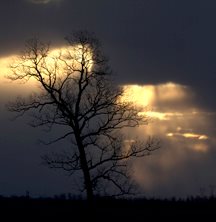
The third of three books my wife bought for me on Father’s Day 2024, Kevin Fedarko’s “A Walk in the Park” is by far the longest and the most complex. Kevin’s friend, Pete McBride, suggests that the pair hike the Grand Canyon. Not the rim-to-rim hike that many find challenging, but instead a hike from one end of the Canyon, Lee’s Ferry, to the other, Grand Wash Cliffs, beginning in 2015. Although the distance between these two places is about 277 miles, the walk is closer to 750 miles because of the need to trek through side canyons and grounds with no trails.  If the hike is taken in sections, the method used by Fedarko and McBride, the distance is closer to 800 miles because of added distance to take-out and drop-in points.
While this hike has been completed by others, they were typically seasoned back country hikers. On the other hand, Kevin was an award winning writer and Pete an award winning photographer. While both had some outdoor experiences, neither was in any way prepared for the challenges and experiences awaiting them. Looking at some of their past experiences – getting caught in an avalanche near Mount Everest, a trip to take photos of the world’s largest caribou herds and seeing no caribou, and others – you have to wonder what would make them believe this trip would go well.

It is difficult to categorize this book. It could be considered an adventure or maybe a history book looking at the Grand Canyon’s past. It could be thought of as a hiking book or a nature book. It also includes portions that reflect love – love of the outdoors, of family, and of geography – or a book on conservation. There are probably many other ways that one can view the book based on personal experiences.

Both Fedarko and McBride have published books based on their experience.  “A Walk in the Park” is Fedarko’s while McBride published a photo book from the trek. They have worked together on a video of the trip. All of these are done from the standpoint of participants, not onlookers. Little is hidden away because it makes the reader or viewer uncomfortable. Instead they want to make others part of the journey. They do not preach to the reader or viewer. Instead they offer thoughts, ideas, and experiences designed to make us all think.

Many thought that the trek was poorly planned – probably so – by unqualified individuals and was followed up with poor execution. One comment I saw was that it was harebrained – also probably true. Had it not been for other, more qualified, hikers and individuals with far more experience who helped them we might have read of two more hikers losing their lives in the Grand Canyon.

It took far longer to read this book than I originally expected. It is so well written that it makes you feel that you were along with Fedarko, McBride, and their friends. You can learn from their experiences and from those they met along the way. And also from those who attempted the same trek without success sometimes leading to their death. In addition to the portion of the book dedicated to the hike, you also learn something about the boat and raft trips down the Colorado River from Lees Ferry and the difficulties involved from those who guide these trips based on Fedarko’s attempts to work in that realm. You also learn about his family from the mining areas of Pennsylvania and his father’s battle with cancer. All of these things bring you into his life.

I highly recommend this book to anyone with interest in the outdoors, our national parks, the Grand Canyon, and the indigenous people who inhabited the land prior to the park’s existence. It also offers a view of the mistakes we have made in our attempt to preserve the land for some, allow others to profit from our mistakes, and often our inability to make things right again.

Again, read the book. I’m sure almost everyone will find things of interest to them and will enjoy those things around them.

“You Are Here” by David Nicholls (A Book Review)

Previously posted on Facebook.

My beautiful and loving wife gave me three books for Father’s Day this year. Those of you who have seen my previous posts may remember that I have loved reading since my early days and I suspect I have read hundreds, if not thousands, of books since then. Any time I receive books as a gift it is wonderful.

In a recent post, I wrote a short review of the first of these books, Nick Offerman’s “Where the Deer and the Antelope Play …” I’m going to try to do the same for another here, David Nicholls’ “You Are Here.” Nicholls, much like Offerman, has had a varied career as an actor (for which he said he had no talent), a writer, and a screenwriter.

“You Are Here” has been described in many ways by others – an outdoor story, a journey, a love story, by Nicholls himself as funny, and more. I could agree with any of these. The book presented a bit of challenge at the beginning because of differences between the typical American novels I read and the British style of Nicholls. But this disappeared after only a few pages.

While trying to not spoil your enjoyment of the book, it centers on a hiking trip primarily involving a man, Michael, and a woman, Marnie, with seemingly little in common.  He was a geography teacher; she a book editor. Both were coming out of unsuccessful relationships. Both were somewhat isolated, by choice, as a result. They did have one friend in common, one who kept pushing them to get out of their isolation. The friend was finally successful by organizing three day hiking trip with several other people.

“You Are Here” follows the trek and the decision by Marnie to extend her hike to accompany Michael for several additional days of his planned, longer trip. Up and down hills, through the countryside, the trip continues until an evening when Michael meets with his former wife. Unfortunately, Michael had not told Marnie about this meeting until the day it was to occur Obviously Marnie’s feelings were hurt. While the meeting occurred, many surprises and unexpected results ensued.

What would happen next? Would Michel and Marnie reconcile and live happily ever after? Would they never meet again? What really happened when Michael met his ex-wife?

A few months later, when the man, the woman, and the friend who started the whole adventure met again, the meeting will be a surprise to all who read the book.

This book was a Barnes & Noble Book Club Selection and it is easy to see why. It can be enjoyed by anyone who reads it no matter how they categorize it. While my initial reason for reading it was as an outdoor book, the other views came through as well.  I would strongly recommend it to all.

Good reading.

“Where the Deer and the Antelope Play, The Pastoral Observations of One Ignorant American Who Loves to Walk Outside” by Nick Offerman (A Book Review)

Previously posted on Facebook.

A rather wordy title for what I found to be a surprisingly interesting read.

Offerman described himself at different points in his book as a writer (with several books in print), a television actor (both in prime time and in movies), a producer and behind the scenes worker in theater, a boat builder (wood canoes), a craft furniture builder (check his website), a husband, and without really saying so, a traveler. A lot of things in, when compared to mine, a relatively short timeframe.

The book is officially divided into three parts:

A weeklong trip with two friends to Glacier National Park where they took several day hikes throughout the Park along with one day of river rafting.

An extended visit with another friend, a sheep farmer in the rural United Kingdom.

And, a road trip across half of the United States with his wife, actress Megan Mullaly in their travel trailer, Nutmeg, visiting friends and family across the country.

Some might also say there is a fourth, unofficial part of the book which focuses on Offerman’s political and environmental viewpoints or observations. While some may find these views a bit overbearing, they are scattered throughout the book and can be skipped over without losing the value of his writings.

Glacier National Park

The book opens in Montana where Nick and his friends are meeting with their guide to enjoy several days of hiking different trails, both in length and difficulty.  I found this part of the book very enjoyable.  While I often read fast, this section of the book made me want to take a break – read a few pages and the take the time to think about what I had read. Then sit back and ask myself why things happened in the way they did along with how things might have been different.

This section was an excellent way to open the book and to welcome the reader into a part of the world that some may never see in person. In addition to some serious thinking one can open their imagination and feel like they are there.

The United Kingdom

The second part of the book is was spread over a much longer period.  It describes how Nick was able to visit a local countryman, a fellow writer and a sheep farmer, while working in the United Kingdom. While not specifically mentioned, it also seemed to open Nick’s eyes to how someone not living and working in the entertainment field lived and spent their daily lives.

Early in this part, Nick participated, probably to his surprise, in the rebuilding of old, possibly ancient stone fences used to manage sheep on the farm. Definitely hard physical work which gives lots of time for thinking and reflecting on life but also a good deal of mental work since these stone walls are not held together by concrete. Instead they are constructed by selecting stones and fitting them together piece by piece, and creating a fence that will last a lifetime or longer.

While Nick was raised in a relatively rural area of Illinois I am fairly certain that he had never done anything like this, or purchasing livestock or participating in every day farm life.

Across the United States

Nick was back in the United States for Part III. He and his wife were planning a trip across the country during the pandemic. After seeing some small recreational vehicles, they began looking at recreational vehicles and ultimately purchasing an Airstream trailer (named Nutmeg – LOL) for their trip.  After the purchase, they experienced many of the same challenges seen by other beginning campers – learning how to connect the trailer to the tow vehicle, finding that parking a trailer was not the same as parking a car, and discovering that not all campgrounds worked in the same way.

But after a few false starts, their travels seemed to go well. Once they reached his childhood home after leaving Nutmeg in Oklahoma Nick found some strained relationships with family members. This ultimately led to something he called “Bubbles”; a recognition that if people live in different environments they may not share views or opinions. This can often lead to disagreements, hurt feelings, and sometimes even separation.

After a short family visit, the trip back to their California home began with additional information on their travels along with the fun, and challenges, of travelling in a recreational vehicle.

All in all, a very enjoyable book.  A book that makes one think. Not everyone will agree with everything in the book nor is that expected. I would highly recommend this book to all readers and strongly encourage to take time for thinking and imagining. And remember that even if there are chapters or parts that you disagree with, the book is still enjoyable.

“The God of the Woods” by Liz Moore (A Book Review)

Previously shared in Facebook.

For me, this was an interesting book from many aspects. It was extremely difficult to read. Each chapter was told from the viewpoint of differing characters. Some appearing only once or twice while some appearing multiple times. This differs greatly from the fiction I normally read which tends to flow from one chapter to another. On the other hand, I never wanted to put the book down. I wished for enough quiet time to read the book from cover to cover without interruption. There was always something that made me want to continue reading although I was never able to figure out why. Perhaps by writing down my thoughts I will be able to identify the lure.

The story itself had many things typically seen in smaller numbers in other mysteries I have read – a castle, or maybe more accurately, a mansion on the hill; a highly dysfunctional family; the disappearance of a main character; the disappearance of her older brother some fourteen years earlier; a wrongly identified defendant in the earlier disappearance; an escaped prisoner returning to his home for a final visit; two investigators – one new and one who has been a part of both investigations. Who could ask for more? Or, does this make things too complex?

The Van Laar estate is divided into two areas. The first being the family mansion which is far more luxurious than any home in the surrounding area. The estate is the employer most residents of the surrounding countryside. It has existed through several generations of the family since its construction. The second is a series of old farmstead buildings along with several cabins which host a youth camp each summer. The camp is divided into two areas, one for boys and one for girls but the staff works with both groups.

In 1975, Barbara Van Laar is one of the campers. Not just any camper but the 13-year-old daughter of the owners. From her description, she seems a bit rebellious not a troublemaker but instead doing things simply to irritate, or assert her independence from, her parents. Things like repainting her room with a mural, somewhat punk or perhaps Goth, on the walls and in a color that one would not expect in the mansion and padlocking her door when she goes to camp. Another camper is a shy girl who is there only to mollify her parents. Surprisingly the two become close friends at least until Barbara disappears.

The police are called in an effort to locate the missing girl and the real mystery begins. Before the camp is closed for the rest of the summer a variety of stories arise – staff parties with drinking and possible drug use. Mysterious nighttime departures from the cabin by Barbara. The background of some members of the camp staff and their families. Investigations by newer investigators seemingly stifled by the senior investigator, the same investigator who has been involved in both the disappearance of the daughter and the son some fourteen years earlier.

As readers follow these sometimes conflicting themes the only person who is able to put it all together is a junior investigator on her first big case. After much research and talking to the main camp counselor she develops a theory which she alone can investigate. What she finds will surprise most readers and leaves the story with an ending that could provide an excellent opportunity for a sequel.

I strongly recommend this book to all readers but especially those who love mysteries. To those who may initially find the plot difficult to follow as I did, I can only suggest that they stay with the story to see where it may lead them.

“Starter Villain” By John Scalzi (A Book Review)

Originally posted November 3, 2024

This is a “must read”. Whether you are a fan of science fiction, humor, fantasy, or mystery you will find something here for you. From the cover of the hardback book to its end cat lovers will also find it fascinating. I found this book easy to read but difficult to put down.

Poor Charlie. A young man with no real job, no career hopes, barely enough money to live day to day. Charlie’s only dream is to purchase a local pub and have a future in the community.  But Charlie has no assets other than his share of a trust. Then, out of the blue, an uncle who has only contacted him once since he was five years old dies and leaves Charlie an unbelievable fortune. But it comes with strings attached.

This is the story of Charlie’s move from outside the poorhouse door to wealth so great one cannot imagine it. Along the way he meets thugs and killers, typing cats, talking dolphins, death, either real or faked, and whales that are spies. Charlie also sees his home explode and burn to the ground, is nearly the victim of a huge explosion, and sees The real question is can, or will, Charlie become a villain? Or will the other villains outsmart, outthink, or even kill Charlie?

While much of the book focuses on things that we may find unbelievable today, it also makes you wonder whether these things are either real today but hidden from us or if they are predictions of the future. Interspersed with this are occasional glimpses of reality such as a discussion of why war exists that is included in Chapter 15.

Do villains exist? Or could the name “villain” be misused? Each of these questions must be explored as you read Scalzi’s 2023 novel. And, at the end of the book, will Charlie become a “villain” or will he, instead, somehow become the owner of his local pub?