As the first cold snap of 2025 approaches, it reminds me of the days of my youth. My hometown was in the middle of farmlands where the summers saw rice and soybeans growing if fields large and small. In the autumn was harvest leaving bare fields behind. In the winter, it was a stop along the Mississippi Flyway, a traditional migration route for waterfowl and other birds from breeding grounds in Canada to wintering grounds along the Gulf Coast.
Depending on the weather, both in the north and along the Flyway, waterfowl became abundant in our area from mid-October until sometime shortly after the start of the new year. The waterfowl, mostly ducks, could be seen could be seen in huge V-shaped flocks passing high over in the sky or in smaller feeding groups in the recently harvested fields. Perching ducks could be found along bayous and rivers while puddle ducks were more often seen in lakes and ponds.
Our town had a moment of fame just before Christmas in 1956 when ducks on Claypool Reservoir were highlighted on the Wide World of Sports. A clip of this show can be found on the web along with images of a picture and poster showing thousands of ducks taking to the air.
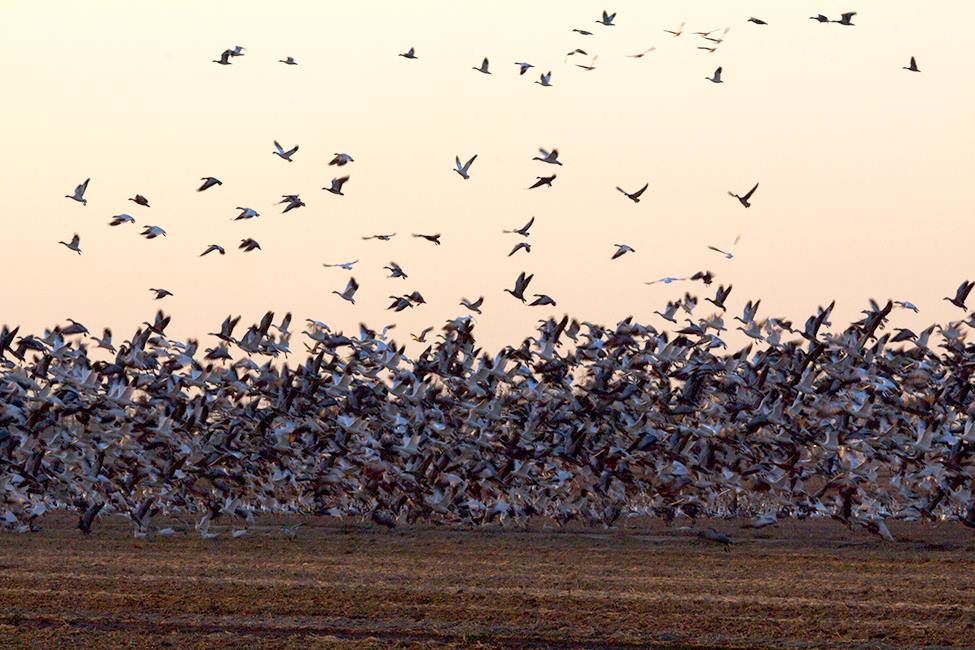
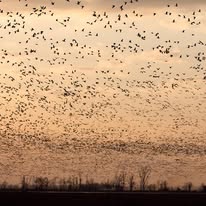 While geese were sometimes seen, ducks were far more common. This has changed over time as has the number of waterfowl seen passing through each year. If you compare the Claypool photo from 1956 and it to these from 2013, you can still see large numbers of waterfowl on the Flyway, just different types.
When I read of “advances” in farming today, I often wonder if we learn from the past. In the early 1900’s waterfowl were much more abundant. Over hunting and habitat destruction reduced populations to dangerous levels. Only through wildlife management and conservation efforts were waterfowl and other wildlife protected and even restored. But then man stepped back on the scene. There were rains and storms that cause short term flooding, so we drained and cleared bayous and woods replacing them with straight ditches. Again, habitat was lost. Habitat that could not be replaced. But even today, the flooding still occurs. Now I read of how farm equipment is so much more “efficient”. There is no “waste”, no residue left behind. But if this is true, what will our waterfowl do for food?
I wonder who the advances and efficiency have benefited. The costs of farming today are unbelievable, so it would seem there has been little gain for farmers. Food prices continue to climb so I don’t see much benefit for the consumer. So, the advances appear to only serve the manufacturers and their investors who care only for the dollar.
I live in a semi-rural area today. Not in the city yet not in a farm community. I wonder how many of those around me appreciate what life hear offers. We share our community with deer, squirrels, and rabbits. In winter we see ducks on our lake, not lifetime residents but those passing through. I’ve even taken photos of wild turkey in my backyard. Yet there are those who complain about wildlife eating their flowers. If it is so bad I want to ask, “Why did you move here? The wildlife was here first. If it is so bad, why do you stay?” But, perhaps, my thoughts are straying.
My memories are of enjoying seeing the waterfowl and appreciating their beauty. Mornings in freezing cold duck blinds sharing great time with others. Contributing to conservation groups like Ducks Unlimited or the Rocky Mountain Elk Foundation who protect waterfowl and wildlife for future generations to enjoy. I hope that you have enjoyed similar times and that we humans can learn to share with our wildlife neighbors who were here before us.
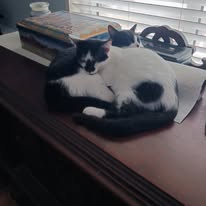 When I visit other sites across the web, I often see links to humorous pages. They often say in a joking manner that this is the cat’s home where they allow us to stay and others to visit. This, at first, draws a laugh but when you really think it may be true.
 An Old Man's Thoughts, Memories, & Opinions