The Special Place

We all have special places in our lives. Places where we love to go or want to be. Memories of good times, some old and some new. Things that stand out in our minds. Some of these places are real and others are imagined. Some of them were things that we possessed and some that belonged to others. For most of us, we could name many of these special places. But do you have one that you identify as The Special Place?

The Special Place is one that is constantly in your mind. Nothing that interferes with your daily life or replaces other special places but instead one that stands out. The Special Place may be one that you have visited often, rarely, or not at all. It may be possessed or forbidden. It might be a home, a building, a location, or even an imaginary location. You may have only seen it in passing but The Special Place is always there in some form.

The Special Place is sometimes very specific, like a house at a certain address, or it may be more general, sitting in the mist at the bottom of a waterfall or on the top of a mountain. Sometimes it is a place where you can relax or think about the meaning of life. Other times it is a place of wonder. And at other times the wonder is why you consider it to be The Special Place in your life. While a place may be The Special Place for more than one individual, the things that make it special for them are probably different.

In the movie “Under the Tuscan Sun” there is a bit character. I don’t believe the character was ever identified and may not have even been given credit. The character was an older gentleman who was shown several times walking down a road in front of Diane Lane’s home. Each time he appeared; he stopped at the same location along the road and approached a stone wall where he paused for a few minutes. Why he paused was never told. Perhaps, there was a Madonna in a niche in the wall and he was visiting her. Perhaps there was something else there. It was never visible to the viewer. Was it something sad, or something celebrated? Diane’s character watched him and tried to connect to him, this did not occur until near the end of the movie. Was this simple location The Special Place for him?

For some, The Special Place may be a place they visit often while for others it may be a place that they have only glimpsed in passing. This does not make it less special. Perhaps, we will one day visit The Special Place or it may always be there, just out of reach. Sometimes, The Special Place disappears, at least physically, yet it remains in our minds. Other times, The Special Place does not exist other than in our minds, or maybe it exists, and we have yet to find it. In either case, it is still special to us.

Does The Special Place exist for all? Maybe or maybe not. Is it something we share or is it very private? Again, is this important, and does it change how special it is? Does The Special Place exist for you?

No Such Thing as Illegal Protest

Last week I had the opportunity to read a short article by a legal professor whose area of expertise is Constitutional Law. It was titled, “There is no such thing as ‘illegal protest’”. I would note that this was presented as “News” and not an “Op-Ed”. While I have no legal expertise, especially in the Constitution, this article raised more questions in my mind than answers. The article was focused on some statements by our current President and was clearly written from the point of view that these statements should not have been made. My questions, however, were more related to how bad things might become were the ideas presented taken to the extreme.

The article started with the definition of a protest and of an agitator and how any limitation on these was a violation of the First Amendments protection of peaceable assembly. A protest was defined as a public assembly, presumably presenting a point of view. Although not specifically included was what constitutes an assembly but one could assume it consists of more than one individual. It was stated that an agitator was not a legal term but was colloquially defined as one who makes noise, disrupts the status quo, and calls attention to a cause. The writer stated that this is also a form of free speech.

Following the article title, then just as there are no illegal protests, there is also no illegal agitation. On the surface, this seems to be reasonable.

In my mind, the questions about this view start with the term “peaceable assembly”. What was not defined is the word “peaceable”. For example, is the brandishing of weapons peaceable? Is occupying a building or the property of another, without permission, peaceable? Is destruction of or damage to property, for example, public vehicles or buildings, peaceable?

Another question that arises is, if we assume that all protests, or assembly are legal, does the same apply to all agitation? Things become more difficult to define here. Looking at recent events, is driving a vehicle through a roadblock because one is unhappy because o inconvenience caused by the closed road the work of an agitator?  If so, are the agitators actions a form of free speech and therefore legal? Does this then excuse the agitator for any subsequent damage or death that may occur? If not, then what actions of an agitator, and one must assume a protest, not legal. But by taking the article and its title as absolute protests and agitation cannot be illegal.

Put more simply, with no clear definition of “peaceable” is anything resulting from a protest or the actions of an agitator excused? Given that the Constitution is the ultimate authority on legality, then one might use this as a defense.

Again, I do not claim expertise in the law or the Constitution. I am simply asking what I consider common sense questions. I believe that we have the right to enact laws and to enforce them. We have systems for challenging these laws and determining when they are not Constitutional. But I do not believe that we should take short articles like the one I read last week as an absolute. They are generally the opinion of someone named as an expert, or a limited group of experts, that are published by or in the media as factual. And, that we are expected to accept them without question.

What happens when a different expert or different media source offers a different opinion? Who should we accept and why?  Just more food for thought, especially in a more and more divided country.

Novels by Toshikazu Kawaguchi (Book Reviews), March 4, 2025

I had a bit of a challenge naming this post. It is a bit of a review of two novels by Toshikazu Kawaguchi, “Before the coffee gets cold” and “Before we forget kindness”. These novels are part of a five (at last count) book set originally written and published in Japan then translated for reading in the United States. I have a bit of concern about calling them novels because, at least in my mind, each book is a small set of short stories. In either case, I found them enjoyable and look forward to reading the other three books in the set in the future.

Rather than review them in detail and spoil the ending for other readers, I instead decided to pose a question to others. A question that is core to the reading of these books. Would you, if given the chance, return to a time or place in the past?

Of course, there are certain rules that you must follow.

  • While you are in the past, you can do nothing that would change the present. In other words, you cannot change events. Everything that happened then and since then will still occur.
  • You can only depart from a specific place and return to that same place within the time limits described below.
  • You will be given a hot cup of coffee before your departure to the past and you must return to the present before the coffee gets cold. If not, you will be cursed from there forward.

There may be other rules, but they will be explained to you before you travel to the past.

If you say you will return to the past your place of departure will be a specific chair in a small coffee shop, or perhaps a tearoom, off the main streets in a city in Japan. You must be sitting in a specific chair and return to the same chair.

It sounds so simple but there is a problem. The chair you must use is constantly occupied by a cursed woman all day, every day. The only time it is empty is when she must get up to use the restroom. So, there is limited opportunity for your travel and others may also be waiting to depart.

If you can be seated in the chair while it is vacant, you will be given a hot cup of coffee. This is the measure of the length of your visit. Remember, you must return before the coffee gets cold.

And then, the travel can begin.

Each of the short stories in the books is centered around someone who has chosen to travel back in time and the results of this travel. If you have the opportunity, they are short reads which you will enjoy.

Yellowstone

When I was a child and heard “Yellowstone” I thought of Yellowstone National Park or even more specifically its more famous feature, Old Faithful geyser. I found the idea of a geyser unbelievable and sometimes wondered what it would be like to have a geyser like Old Faithful in our local park. A humorous thought given that our park was less than a city block in size. I read about Yellowstone in books and magazines, sometimes saw television shows featuring it, and even associated it with a Hanna-Barbera cartoon series from the early 1960’s, The Yogi Bear Show with Yogi Bear, Boo-Boo Bear, and Ranger Smith who lived in Jellystone Park. While the cartoons were fun to watch, they are not my focus here. Instead, I want to write about the national park

I remember wishing to visit Yellowstone when I was young but that wasn’t practical for our family. So, I could only learn about it in other ways and imagine what it would be like to be there. I finally had the opportunity to visit Yellowstone when I was in my late thirties. Surprisingly, it was much as I had imagined and even more.

Yellowstone National Park is a huge place, over 3,400 square miles, mostly in Wyoming but also in Montana and Idaho. As one might expect in a park of this size, Yellowstone offers many different things for the visitor. Starting with the simple, it offers rivers, lakes, canyons, meadows, and hydrothermal features like the many geysers. According to scientists, the park sits atop the Yellowstone Caldera or dormant volcano. If you visit, you will see some of the most pristine and colorful water features that can be found anywhere.  You may also see dynamic waterfalls in steep-sided canyons, mud pots in other locations, and a variety of rock formations.

Yellowstone is also the home of a great variety of wildlife, with an emphasis on “wild”. You can see bison, elk, deer, moose, and a variety of waterfowl and other birds. Where you see them and in what numbers can vary by the time of the year and the weather. You can also see, if you are lucky, cougars, wolf packs, and bears, both black bears and their larger relatives, the grizzly bears. But remember to keep your distance and follow any instructions from the park staff for both your safety and that of the wildlife.

The water features are beautiful. Old Faithful still erupts regularly, although maybe not every hour but even if you cannot get to Old Faithful there are many other geysers with roads or trails leading to them. There are also many pools or other water features to see, just remember the water is extremely hot. And you should resist the urge to throw pennies into the water features. Pennies and other foreign objects can destroy these beautiful works of nature and spoil the future for other visitors.

But all this beauty does come at a price. Like other wild locations throughout the world, there is hidden danger in Yellowstone. Some of the danger is courtesy of Mother Nature and some is the fault of man. As I said earlier, there are rules and warnings at various locations in the park and given by rangers and volunteers in person. Probably one of the biggest things to know is that the trails and boardwalks in the park are there to keep you and the environment safe. It can be tempting to just step off a short way, but you don’t know what dangers may be there or what harm you can cause to the environment. Another big thing is to remember you are visiting the wildlife in their home. Keep your distance from the wildlife. They will protect their young. They will protect themselves. They are faster than you believe, and their horns, hooves, and teeth are far more dangerous than you may expect. This is even more true in the breeding season. While a photo with a bison may look cute on your wall, is it worth your life? If a trail is blocked by a herd of elk, choose another trail and come back later. Stay safe and enjoy your visit.

Remember that the water features in Yellowstone are hot. That means you can get burned by touching it in many locations. Even where you least expect it there can be small, yet hot water features. There have been many fires at Yellowstone. These fires are both beneficial allowing for reforestation, but they can also be dangerous. If an area or a road is closed because of fire danger, then don’t go there.

The winter can also present danger. A large portion of the park is closed in the winter or open only to snow vehicles. Again, this is to protect you, the wildlife, and the park itself. Obey the rules and come back to the park again.

I hope that each of you has the opportunity to visit Yellowstone and can enjoy some of the best nature has to offer. If you do, have a good trip and take a photo for me.

AI or ACS?

I want to start today’s post with a disclaimer. I am not a Luddite! (Some younger readers may need to look for that word in your online dictionary.) I have worked in the technology field for most of my adult life. I have seen many great things come from technological advances and have also seen times where there were flops or total failures. I do not dislike technology, but I do not love technology that has been created just for the sake of technology or technologists. Having said that, let us move along.

As I have mentioned in previous posts, I grew up in a small farming community. While my family did not own a farm, but like many other teenagers in my hometown, I worked on a farm during summers. I drove tractors, combines, trucks, etc. Some years I worked from planting season until harvest. When equipment broke or failed, I helped do repairs to get things working again.

I am amazed when I read about farming today. Tractors with six or eight drive wheels. Tractors with more onboard computers than we have in our offices. Tractors that drive themselves. Tractors that can’t be repaired without a service call by the dealer in a truck with even more computers but few actual tools and no mechanics. The world has left people like me behind in the dust.

But these advances come at a price. Farmers pay six figure prices for equipment that is used one or two weeks a year and for the other fifty weeks or so sits at the dealer awaiting repairs or sitting in an expensive storage shed on the farm. And then we, those who have no understanding of farming, complain about the high cost of food which we often waste.

You may wonder how this ties into the title of this post. I used abbreviations for the title because that seems to be a trend today. AI is artificial intelligence, the latest and greatest trend in information technology today. A method for us to have all knowledge at our fingertips without any understanding of this knowledge. ACS is a term I coined for the post. It is artificial common sense. It seems to me that intelligence is of little importance without the common sense related to the use of that knowledge and an understanding of the source of this knowledge.

A rather simplistic example of AI versus ACS can be found in these two statements. AI – “Fire is hot. You can get warm near fire.” ACS would add – “While fire is hot and you can get warm near fire, if you get too close you will get burned (or may be consumed by the fire).” Pretty simple, right?

A few days ago, I was rearranging one of my bookshelves and came across a book that I purchased and read in the 1980’s. It was a collection of some humorous articles by an outdoor writer, Patrick F. McManus, between 1968 and 1978. I decided to browse these articles to compare them to what we might see today. One especially stood out and I wanted to quote a short selection here.

McManus wrote, “One of these days they’ll probably come out with a mechanical bird dog that locates pheasants with a special scent detector and radar. A small on-dog computer will record and analyze all available information and give the hunter a report: two roosters and five hens in stubble field – 253 feet. A pointer on the dog’s back would indicate the exact direction…Since no self-respecting hunter would want to be seen carrying his dog around by a handle, all but the cheapest models would be designed to look like nifty attaché cases…”

While this was humorous when originally written, it almost seems like a credible concept today. The question is, “Do we really need something like this?” I suspect that if you ask a pheasant hunter, initially they would laugh but after thinking more they might ask, “Why would you want something like that? Some days when you find no pheasants provide as much enjoyment as the days when they are plentiful.”

When I consider all the AI tools that have burst onto the scene in the recent past, I wonder if having a tool that does all our research (or other work) for us doesn’t present the same dilemma. For example, when doing research in person, “Do I always stay on a single subject? Or do I see something that appears only slightly related that leads me in a new direction?”

Have we, in our haste to make and market a new tool failed by omitting the more difficult, common sense, component? I see articles about how AI tools are being used improperly. I also see articles about how AI tools present security problems or concerns. I wonder if AI tools are really needed or are they like the self-driving tractor that, while a neat (dating myself here) idea has only the benefit of driving up costs?

I have no answers to these questions. I only pose them as food for thought. If we don’t use CS (common sense) or ACS (artificial common sense), is AI (artificial intelligence) really beneficial?

Let’s Communicate

From the time of our birth, we have always tried to communicate. Sometimes we do it well. At others we need to improve. And, unfortunately, at times we fail, either by choice or by chance.

As babies, we were often able to communicate very effectively with our parents. We could tell them when we were hungry, when we were sad, when we were happy, and when our diaper needed to be changed. We did this by nature. We did not need to use words. Our voices, our expressions, our actions communicated our needs.

As we grew older, we learned how to use simple syllables and words to communicate our needs. We sometimes didn’t understand what we were communicating but by imitation of others or achieving results, our communication skills grew.

In a few years, we learned our alphabet and how to put these letters together to create ever more complex words and to use these words to communicate the same things we expressed more simply as babies. Sometimes we learned words or phrases that caused us to “have our mouths washed out with soap” (not really, but another form of communication).

For those of us who are defined as “baby boomers”, our communication skills were further enhanced by family gatherings, often for dinners on weekends or overnight stays. This seemed to be common since families often lived nearby. This is, perhaps, more difficult today with families spread far and wide.

While the physical separation of families has presented challenges, it has also provided opportunities to introduce new technologies for communicating. One of the early methods for communicating was the telegraph. Using a combination of “dots and dashes” we discovered we could send electrical signals over long distances making written communication possible – something much faster than sending a letter.

This was followed by the introduction and then widespread use of the telephone. With this new technology, we could send our voice across the country over wire. It was truly a miracle. One that could not be easily understood but was appreciated by all.

These two technologies opened many doors for communication. Things like television with a wide selection of channels – the baby boomers probably remember having only three or four channels that were only on air for a limited number of hours each day. Things like today’s cell phones, email, and text messaging. Things that are not limited by borders. Who knows what the future may hold.

But as I said earlier, we are unfortunate that communication also faces some of its biggest challenges today. We could possibly blame this on chance. Technology is changing so rapidly that not all are able to keep abreast of the new ways to communicate. This may be because it is so difficult for us “old folks” to learn how to use new technology. Perhaps it is because it is too costly to own the “latest and greatest” things or even to see the need for these things. It might be something else that holds us back. But I find this difficult to accept because I know of many people of my generation that are just as likely to use the latest technology as are those of today’s generation.

Instead, I look at the world around us and wonder if we no longer communicate well because we do not want to communicate. Perhaps we see communication as a way for others to demand our help in solving their problems. Or maybe we see our time as “too valuable” to waste on sharing with others. Maybe politics is the cause, with communication forcing us to see that others may have valid or valuable opinions that may not match our own.

I see a world where parents are not communicating with their children because one group is more liberal or more conservative than the other. A world where life experiences seem to have no value or where “woke” viewpoints are discounted out-of-hand. A world where so-called media stars and other elites somehow see themselves as smarter than others in our country. A world where the opinions of the majority are lumped into a single, disagreeable group that can be blamed for everyone’s problems. A world where it has been suggested that family holiday gatherings, a prime location for communication, be cancelled because of political differences.

One hopes that we can begin communicating with others again; that we can have a world where families come together and resolve differences; maybe even a world where we can return to the simpler time when communication is a way to achieve our needs while recognizing those of others.

Let’s start to communicate and use our communications to resolve our important differences. If there is one thing that we all should have learned early in our lives is that no one is perfect but that does not prevent our living together. Communication is the key.

Sometimes I’d Like to Write a Book or Maybe Just a Short Story

Several years ago, although it seems like only yesterday, I was travelling along the interstate and saw something that I believed could be the basis for an interesting story or even a new book. In the middle of nowhere there was a small cluster of adobe buildings. Buildings that looked uninhabited. Buildings with no access from the interstate and no other roads leading to them. Adobe walls that looked in good condition but no glass apparent in the windows. Perhaps it was a ghost town or maybe the buildings were used by a ranch. Still, they seemed to just sit there, awaiting erosion or destruction by the hands of man. Even then, it was not the past, present, or future that provided an inspiration. It was simply the small cluster of buildings sitting in the hot sun.

Since that time, I have often thought of how these buildings, or similar buildings elsewhere, could provide the foundation for a book. But for some reason, I don’t know if I could write something, even a short story or a blog post that would do justice to them. I have had some ideas but when trying to move forward with them it always seems like the process becomes so difficult that I give up.

I still believe a story is there. Is it simply bringing an idea to a successful conclusion that is so difficult? Does one start with the buildings or simply incorporate them into a story as it develops? Or is there another approach that eludes me today? I have no answers but will continue to attempt to find a solution. And maybe I will at sometime find the book or short story that is worthy of sharing with others.

How to Train a Cat

This is a work of fiction, with maybe a little humor thrown in. Any mention of people, places, or things other than my cats and me is purely coincidental and means nothing. It is based on personal experiences and has not been veterinarian approved. As far as I know, it hasn’t even been seen by a vet (Oh, wait. I’m a vet, just not an animal doctor.). Feel free to share, with credit given.

Our friends, household cats, are descendants of great beasts. Beasts like the guy above who is sticking out his tongue and telling you he is called the king for a reason.  Predators by nature. But they have many other traits, both in common and different. Their day-to-day life can really be divided into a few simple things. They eat (“I can see the bottom of my food bowl. I’m starving!”). They sleep (“What do you mean. I need at least sixteen hours of sleep a day!”). They visit the litter box (“It hasn’t been cleaned in the last two hours. Clean it!). They stare out the window (“The world is beautiful. I want to be out there!”). They zoom (“Just try to catch me. I’m faster than a speeding bullet!”). And they are mischievous (“It’s three AM. Let’s see what we can do now!”).

Most of these things come naturally and require no training so let’s concentrate on the last. Mischief is good. We’ve all heard the term, “Curiosity kills …”. We really don’t wan that to happen. So maybe we can do something to control it, or at least control when it happens. Let’s talk about a typical night and what we need to do. It is 2:00 AM. We hear a crashing noise. Who was it? Where was it? What was it? The spouse is still in bed with us, so it must be the cat (first question answered). To answer the others:

  1. Uncover ourselves and sit up (can’t answer the other questions from the bed).
  2. Turn on the lamp (flashlights just don’t work for this.).
  3. Try to find the source of the noise (by the bed, in another room, etc.)
  4. Is anything broken? (No=Good; Yes=Bad, especially if glass. Must be cleaned up now – before the spouse steps on something and gets mad at me)
  5. Is the floor or furniture wet? (No=Good; Yes=Bad. Must dry things immediately. Paper towels, mop, towel – any or all. Just get things dried and fast.
  6. Find what made the noise (put it back where it belongs or in a safe place).
  7. Now, find and catch the culprit (the cat thinks hide-and-seek is the game for now).
  8. Put the culprit in his kennel (both cats if they were both guilty).
  9. Turn off the lamp (the light woke up the spouse).
  10. (Optional) Have a glass of wine (or maybe something stronger) and put the glass away.
  11. Get back into bed.
  12. (Optional) Go back to sleep.
  13. IMPORTANT If the cats are in the kennel remember to get them out the next morning.

After all of this is complete, you may have trained a cat (or maybe you are the one who has been trained) and it won’t happen again (at least until the next night).

So, from my spouse, our cats – both past and present, and me, “Have a great day and try to see how you can train a cat!”

Photography

Those who have followed me on my blog, or earlier on my Facebook site, may be aware that one of my favorite hobbies is photography. I don’t consider myself a professional or even a highly advanced photographer, but I enjoy taking photos and occasionally have a photo that I enjoy sharing with others. My two favorite subjects are landscapes and wildlife, whether found in the wild or in a controlled environment.

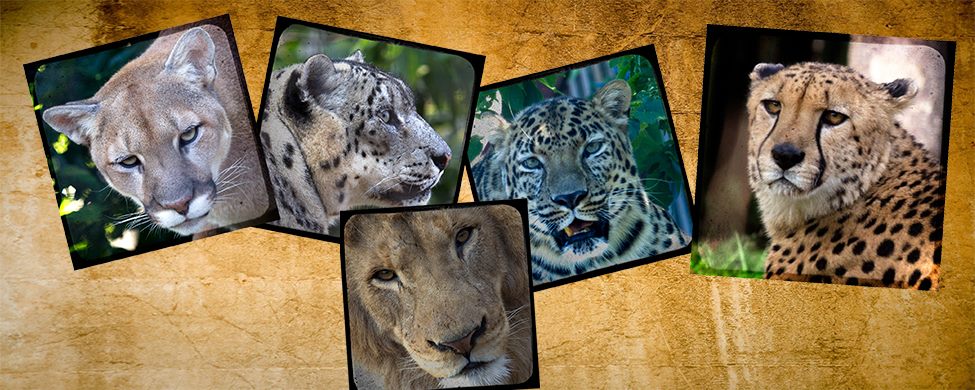
I thought I would take a few moments to share a few images here, along with short descriptions or background information, and hope that you might enjoy them too. The first image is a collage of “big cats”. These cat photos were all taken at the St. Louis Zoo then resized and placed on a single background using Adobe’s PhotoShop, one of my favorite tools, along with one or two plug-ins. I enjoy showing the beauty of these animals along with the differences between the various species.
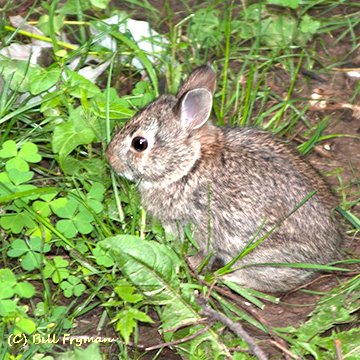
The next photo was taken in my backyard a few years ago. While the backyard was not the “great outdoors”, the bunny was definitely wild, and I felt privileged for it to stay long enough for me to take this photo. The year after this image was made, I used it with a top and bottom border to wish every one a “Happy Easter” online.
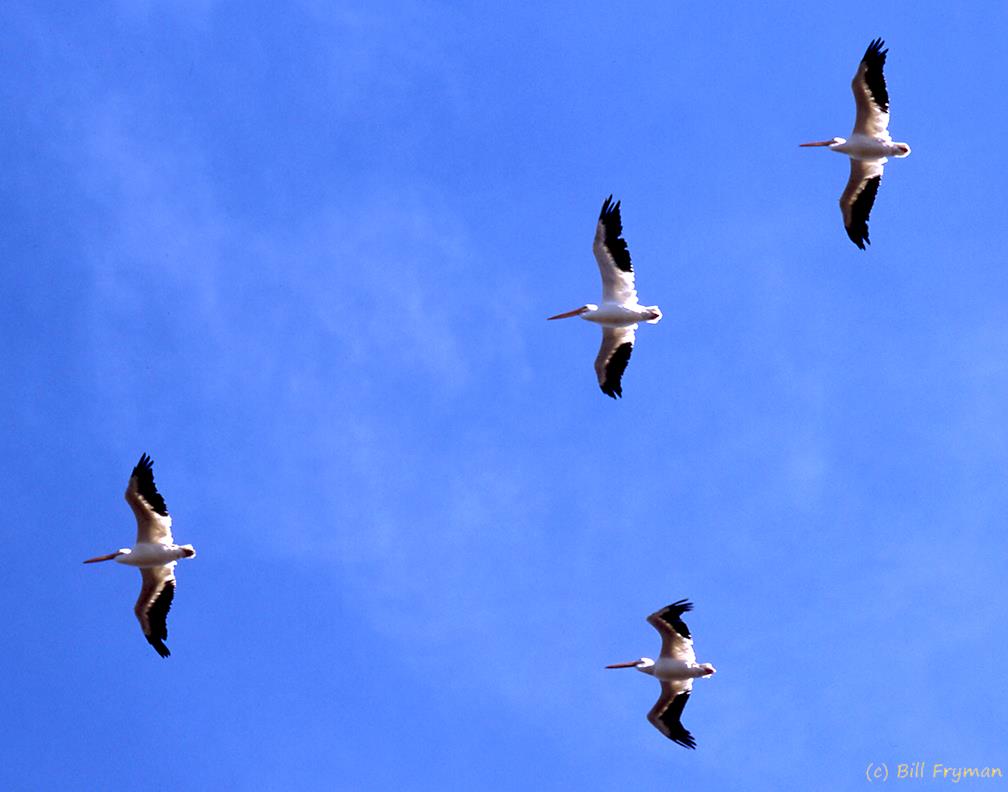
We are privileged to live near the confluences of the Missouri River and the Illinois River with the Mississippi River. This area is a great place to see bald eagles in the winter, but I selected this image of American White Pelicans flying in formation. This was a winter photo and later that day I saw a hug number of both Brown and White Pelicans at rest along the Illinois River. I didn’t know that pelicans flew in v-formations, much like geese and ducks, until that day. The clear, blue sky provided a great background for this photo.

It was back to the Zoo for this image of Black Necked Swans. If you look closely, you may see what I was trying to capture – the heart shaped image created when two swans pass closely to each other going opposite directions. While the timing of my photo was a few seconds off, it was the best of several taken in rapid succession.
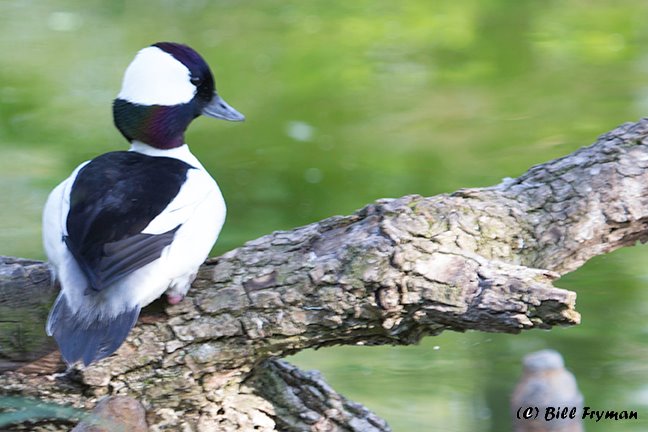
The Bufflehead is a small, nesting duck. I captured this image near The National Elk Refuge in Jackson, Wyoming during a visit to Yellowstone National Park. There is a visitor’s center there where migrating waterfowl sometimes visit which allowed be to take this photo. Like the pelicans, this is a wild bird, not a bird in a cage or similar environment. It is not something we see in the Central U.S., but it is almost as beautiful as the male Wood duck.

This raccoon had taken over a log near New Orleans. I was able to capture this image while on a swamp tour several years ago. This was before a major hurricane in the area, so I am almost positive that neither the animal nor the log survived. Even so, the almost hidden raccoon made for a nice shot.

For those who may be interested, I rarely use my phone to take photographs. These were all taken using 35 mm, Canon digital cameras of different vintages. They were taken using zoom lenses up to 400 mm in length. I seldom use flash for any of my outdoor images and try, as much as possible, to use a high shutter speed to freeze my wildlife images. Most were taken using a tripod although the pelicans and the raccoon were taken hand holding the camera. I treat landscape images differently and may share some of those images in the future.