Lighthouses and Other Things

Before writing this, I had a long discussion with my wife, a woman who I have loved deeply for the last 10+ years. She asked why I had never written anything about our lives together but had written a great deal about my past. I really didn’t have a good answer for this. After much introspection, I think it may because I was doing what was simple rather than what was important. She has had some recent health issues which creates a lot of stress for both of us and she seems to believe that she is burden for me which could not be further from the truth. So here is something that shares both the good times and a little about how life can change.

Early in our relationship we took a trip to Florida. Part of the trip was a visit to Pensacola Naval Air Station. While there we visited a lighthouse on the base. It was a traditional lighthouse, a tower with a spiral stairway leading to the top and a walkway around the outside at the same level as the light. If I remember right, the lighthouse was white with black stripes. It was fun although walking around the outside at the top was a bit scary. Little did I know that lighthouses would come back into our lives later.

A few years down the road, we travelled to the north where our first stop was in Door County along Green Bay. There are several lighthouses of different sizes and shapes there. Most are at least accessible to tourists although you may or may not be able to actually go inside. It was fun looking at them and, at least for landlubbers like me, to see the differences between the buildings. I would not have enjoyed this trip as much had it not been for my travelling companion who is now a big part of my life and my true love.

From there we travelled along the shore of Lake Superior where we were able to actually stay in a lighthouse for several days. Yes, actually stay there. The lighthouse had been converted to a bed and breakfast. My wife and I loved the place and hoped that we would get to visit again. The light was still working although it was controlled automatically meaning we didn’t get to meet an actual lighthouse keeper. I, and I hope she as well, will always cherish those days and can only wish they had lasted longer.

A few years later, we faced a major challenge when she was diagnosed with atrial fibrillation, or AFIB. While she did receive treatment for the problem, there have been lasting effects which she fights daily. Most of this has to do with strength. We cannot do all the things we enjoyed or spend time out and about. She tries to fight this daily but has largely been limited to time in bed. This has not been easy for either of us to deal with but it has not diminished my love for my wife. I try to do everything I can for her to let her know my love remains but I often feel my efforts are not enough. Still, I will continue to care for her and do all that is possible.

There is nothing more important to me than my wife and her love. No one will ever replace her and if something were to take us apart I would not even try. I hope she feels the same about me.

While I have enjoyed writing my blog posts, I think they have missed the most important things. So, I’m going to back away from this for a while. Please do not comment or respond to this post. It is really a private thing. I wish each of you the best but please allow us to share our time and stories together. For those of you who may also be experiencing rough times, know that our thoughts will be with you.

Again, please, no comments or likes. Thank you.
Summer

Summer seems to be rapidly approaching. While one expects showers in April, it seems that this year they are interspersed with days nearing the 90’s. This seems a bit unusual to me but maybe that is only because of childhood memories.

Growing up in a small grain-farming community, I remember summer always beginning in mid-May. This wasn’t because of a date on the calendar or because of a meteorological event but instead because it was the end of the school year. For a few weeks, we no longer needed to worry about lessons or exams but could instead spend our days playing with friends and neighbors. Important things were whether our bicycles had flat tires, or which sandbox we would use, or who we would visit.

In the evenings we might sit on the porch with our parents or grandparents listening to a baseball game on the radio or play in the yard while the “old folks” did that. We also helped in the garden since fresh produce was a part of life. On really special evenings we might have a treat like homemade ice cream over a fresh baked pie. Because our town was so small we didn’t have some of the things that “city kids” could enjoy, like swimming pools or large parks and playgrounds, but summer was still a fun time.

That changed a bit when I was about eleven or twelve and started mowing yards to earn a bit of “spending” money. The time for “kids” play was a bit less but it was still summer, and school was still not important, at least for those few weeks between the school years.

Things changed even more by my mid-teens when summers meant getting a job. In a small town like my home there were few opportunities and most summer work was on the local farms. The two busiest times were right after the school year ended and, unfortunately, a few weeks after the next school year began. Like others, I spent parts of many summers working on the farms – preparing fields for planting, helping plant crops, and other tasks. There were many long days in the hot sun (no air-conditioned tractors in those days) or doing other work. This even continued through my college years.

Even though the summer days seem much hotter now, summer is still a nice season, but I enjoy spring and fall, or autumn, much more. I hope you have good memories of the summers of your youth and enjoy them now and in the future.

Spring

I’m almost afraid to post this because if I do there may be one of those rare, but possible, late season snowstorms that will drop a few inches of snow and ice on mid-America. But rather than plan on the unexpected, I will trust Mother Nature to help us through this season of change with the many challenges and the beauty it brings.

When I look outside this morning, it appears that Spring has sprung. The trees are starting to discard the last few remaining brown leaves from last year and replace them with bright green foliage. The blossoms from the early bloomers have come and gone, replaced by colors of new flowers and trees becoming more abundant. Tulips and daffodils seem to be everywhere with their bright hues covering gardens and lawns where they grow whether tended by homeowners or in wild spaces where planted by gardeners in the past.

The rains and storms that come along with the changing seasons are here in force. Flooding, high winds, and hail seem to be highlighted daily by the weather forecasters. Farmers are challenged to plant this year’s crops to feed the nation. River levees can sometimes handle the extra water and at other times lose the battle against Mother Nature.

Some see Spring as a wonderful time of the year as cold weather departs, either for days or weeks at a time. Others see Spring as a sad time as cool days and nights give way to the heat of the coming Summer. For all, it is a time of change. In many cases it is a time of birth for our wild friends. For others it is a time of breeding with young to enter our world in a few weeks or months. We see migrating birds in their bright colors. We welcome the return of other colors as we are visited by butterflies and hummingbirds.

Alas, it is also the time that brings more work. Things like lawns that must be tended after lying dormant through the colder months. Potholes that must be filled to repair the damage caused by both colder weather and the storms of spring. We must prepare our gardens to grow both vegetables for our enjoyment or flowers needing replanting each year.

It is a time to share with those who are still with us and hope that they will see many more Springs and a time to remember those who are not with us to welcome the new season or year.

I hope you will join me in welcoming the Spring. And for those who dislike the heat of the coming season, remember that the softer days of Autumn and the colder days of Winter are not too far away.

Have We Lost Our Way?

I try to avoid political discussion in any of my posts, whether blog posts, email, or even responses to things on Facebook or elsewhere. Why? Because our country was founded on freedom. We all have a right to make choices, to have positions that may sometimes be in conflict, to express views with only reasonable limitation. Yet, things seem to have changed. And maybe there is a need to sometimes look at how politics affect our daily lives. I can still be friends with those who hold opposing views. When I look at our country today, I ask myself if, as a country, “Have we lost our way?”

As a baby boomer, I suspect my parents, and their generation, asked the same question in the late 60’s and early 70’s. Things were certainly in were far different at that time than they were in the 40’s when all healthy adults were willing to make great sacrifices in the safety and security of our country and the world. As the baby boomers grew into adulthood, dodging the draft became acceptable, the use of drugs became common, and the hippie fashion became the trend. It was far different from what was acceptable as our parents moved into the world of adults.

The questions today are, in large part, not the result of young people rebelling against the past but instead seem centered around so-called adults who have not grown up. People who seem to believe that the things we have learned as a country over the past two hundred years plus are no longer important.

Differences are no longer acceptable. The ability to work and live together no longer have value. Instead of focusing on why our country has been viewed as a model for much of the world, little is of no value other than wealth or riches. Opposing views are not respected and systems which have served us well only exist to be destroyed.

While the downward spin has been slowly creeping into our lives for many years, possibly beginning in the 60’s, the beginning of the media named pandemic. During those years, much information was spread with limited research or analysis. We saw jobs lost, families broken apart, friendships destroyed, and nameless other things that were the result of individual choices – get a test or don’t get a test, take an injection, rushed to the market, or trust your personal resistance to disease, wear a mask or don’t wear a mask. These things and many more drove wedges between individuals, families, even medical professionals. Yes, there were deaths during the pandemic but the simple was to classify any death was to say it was the result of the disease in question.

Today things have spiraled even further. During our last presidential election, we had one candidate who refused, and still refuses, to accept the results of any election where he is not the winner. The opponent was a candidate who had never received a single vote in a primary election. Many chose not to vote or voted on the lesser of two evils rather than a candidate’s qualifications.

The result – much the same as the end of the pandemic. No one seems to accept that there is nothing wrong with differing opinions; that negotiation can provide better results than permanent lines drawn in the sand can never be crossed; that loyalty to a political party is far more important than representing the average person in our country. We have leadership, and I use the term very loosely here, that believes the only way to lead is through dictation, not working with others to achieve success. Leaders who are willing, and have voiced, that disagreement with them should result in censorship, loss of rights, and even banishment or jailing in foreign countries. Leaders who search for ways to ignore our Constitution, our laws, and the courts which were created to resolve differences in interpretation and enforcement of these laws.

So, we now have a leader who uses things like executive orders, bullying, and even threats to achieve his desires and ignore the legislative branch of our government. A billionaire who has been given largely uncontrolled power as a so-called advisor even though there are clearly conflicts of interest in the advice he gives (and someone who was neither elected nor did his role receive any review). All the members of one party have decided they will line up and accept this leader’s actions and decisions regardless of how stupid they may look or how their constituents feel. The other party does just the opposite opposing everything with no real justification.

When I step back and look at things today, it seems that we do not have leaders. Instead, we have people in high positions who are acting like three-year-old children playing in an expensive sandbox who will pick up their toys and run home if they don’t get their way. So, I return to my original question, “Have we lost our way?”

Do You Haiku?

At work a few days ago a manager challenged staff members to write and share a haiku. These would be shared in a common space used as a lunch/break room. Submissions could be left in the room or could be shared online. They could be submitted anonymously. I have only seen those submitted online and, while limited in number, have been interesting and are fun to read.

What is a haiku, you may ask? I will admit that I would have needed to ask the same question had I not been introduced to haiku in a college English class. While I did not remember the details, after seeing the first haiku shared online, I remembered some of the details.

A haiku is a short poem. In English, a haiku usually has just three lines and only seventeen syllables. There is no need for the three lines to rhyme. This form of poetry originated in Japan but is now common in many countries and languages. The structure may vary slightly but typically consists of five syllables in line 1, seven syllables in line 2, and a final five syllables in line 3. Haiku usually focus on a subject in nature.

An example of a haiku from Wikipedia is:

the first cold shower
even the monkey seems to want
a little coat of straw

There are also some rules that apply to haiku such as words you should not use and other things. Some haiku groups have even suggested that rhyming must occur although this seems rare.

My personal response to our office collection was:

look up to the sky
bright blue, white clouds, golden sun
comes soon summer’s heat

Haiku is not that difficult so if you have some free time perhaps you should try. Or if you have family maybe you could do it together. Even the children could try it. If you do, have fun.

The Comet

No, not the bright light in the sky with a tail; instead, my first car.

I turned sixteen that year. I had my new driver’s license. I no longer needed to mow yards in the summer to earn money. I had a job working on a local farm.

My father decided it was not safe for me to ride my motorcycle the seven or eight miles from my home to the farm. So, the motorcycle was sold. But the money was put into the bank along with left over money from several years of mowing yards in the spring, summer, and fall. It was to be used to buy a car.

Mowing yards in those days paid from two dollars to eight dollars per yard depending on their size. There was not much money in the bank even with the money from the motorcycle. This was not going to be a new car. Nor was it going to be a hot rod or even a sporty car, not even a pickup with a gun rack in the back window like some of my farm friends had. Think instead of a reliable, greatly used four door sedan. Still, it was going to be my car.

Shopping for the car took several weeks which seemed like years. First, my father talked to auto dealers he had purchased from previously. No luck there – they either had nothing suitable or the price was too high. Then came trips to other dealers, only on Saturdays when Dad was not working.

Finally, as a last result, we went to a nearby Mercury dealer and found the car that met Dad’s standards. A used Mercury Comet. I think it was four or five years old. It was not my first choice, but it was a car. There were at least three models of the Comet. The top of the line was the Caliente – not mine. Then there was the Cyclone, the sports car version – again, not mine. And, at last, there was the basic Comet – yes, mine.

Nothing fancy, no deluxe features, it had four doors, an AM radio, cloth bench seats, and an automatic transmission with the shifter on the column. It also had a six-cylinder inline engine, or a straight six. I probably could not have gotten in trouble with that car even if I tried.

The paint job was good, but describing the color is a bit difficult. It wasn’t blue nor was it green. Nor was it turquoise. Looking back, I suppose it could be best described as a dark aqua with some sort of frosted look.

The car did, however, get me back and forth to the farm where I worked and the six or seven blocks to school during the school year. The car was reliable with one exception. At times, unexpectedly and with no prior warning, the engine would simply quit. The poor thing must have simply been tired. After sitting for an hour or two, the engine could be restarted and would run like there had been no problem. I was lucky. When it did this, I was usually near home and could pull off the road to avoid accidents.

My cousin was not quite as lucky. He was about fourteen years older than me and came for a visit one winter. He borrowed my car to visit another relative for the day. As he was returning the engine decided it needed a rest about five miles from home. He managed to get the car out of the road but could not get it to restart. He also could not get a ride, so he had to walk the last few miles. After my mother arrived home from work, we drove to the Comet and, as expected, it started without problem and drove home with no other issues. He did not ask to borrow the Comet again.

 Even with the occasional engine problems and the strange color, the Comet served me well until I graduated from high school. It was traded for a new car for me to attend college on the other side of the state and held its value, bringing a trade value almost equal to its cost to me. It was not a show car nor a sports car but I will always remember it as my first car – The Comet.

Pursue the Impossible

I recently saw a tee-shirt with the organization name on the front and an organizational goal printed on the back. The goal was, “Pursue what’s possible”. On first reading I thought this was a good goal for any organization. But as I reflected on it, the more uncomfortable I became with the goal. Why? Because by pursuing only “what’s possible” today we are accepting that the status quo cannot be improved.

Jules Verne’s writing is often associated with science-fiction, but some sources say that it was based on carefully researched material which existed at the time. If we accept this, then a trip around the world in eighty days was not possible at the time. Similarly, travel from the earth to the moon was not considered. Verne’s works were considered fictional in nature. Comparatively, Hanna-Barbera’s cartoon series “The Jetsons” which aired in the early 1960’ s seemed to be purely fictional and written for entertainment with little relation to things that were available in that era.

So, looking at these two different views of the world, approximately one hundred years apart, if we accepted “pursue what’s possible”, we would not consider either worth pursuit because they presented the impossible, not the possible.

Yet when we look around us today, we see many of the concepts presented as not just possible but common in day-to-day life. We have had airplanes that could travel around the world at the Equator in about eleven hours. We have robots that can clean our homes with minimal human intervention. We have not only travelled to the moon and back safely but are now considering travel to Mars. We have all of this because some have pursued the impossible and not limited themselves to pursuing only what’s possible.

We could apply the same to many other advances we have had over time, not just recently but since Verne’s time and even earlier. If Henry Ford had accepted that making an automobile available to the masses was impossible, would we still be travelling by horse and buggy? Or, if communicating via wire or wirelessly had been accepted as impossible, how would our lives today be without our cell phones? Even something as seemingly simple as cooling food without the physical presence of ice would make today’s food choices impossible.

So, as I look at that shirt today with its simple goal statement, I wonder who would consider it a worth goal. Are they saying that today’s world is acceptable and there is no room for improvement? Or are they saying that pursuing the impossible is of little value?

While my views may not be shared by others, I think the organization which shared this goal is lucky. Those who wrote or approved the goal are no longer there. Perhaps the new leaders view the world and valuable pursuits differently. And perhaps the organization is now trying to make things better, not just accept things as they are.

Which Do You Prefer?

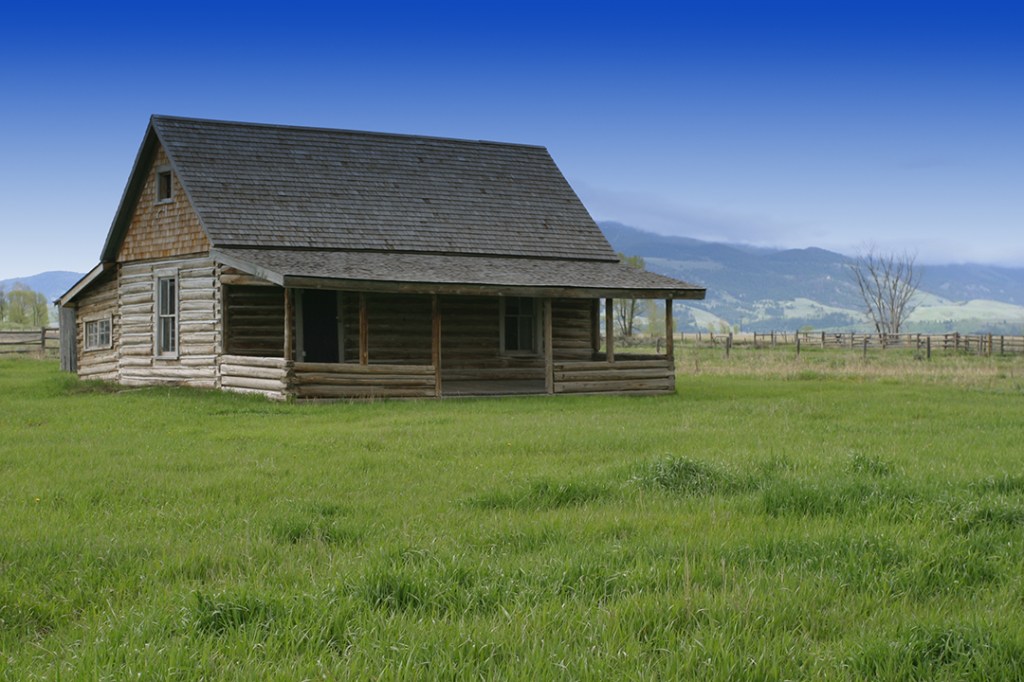
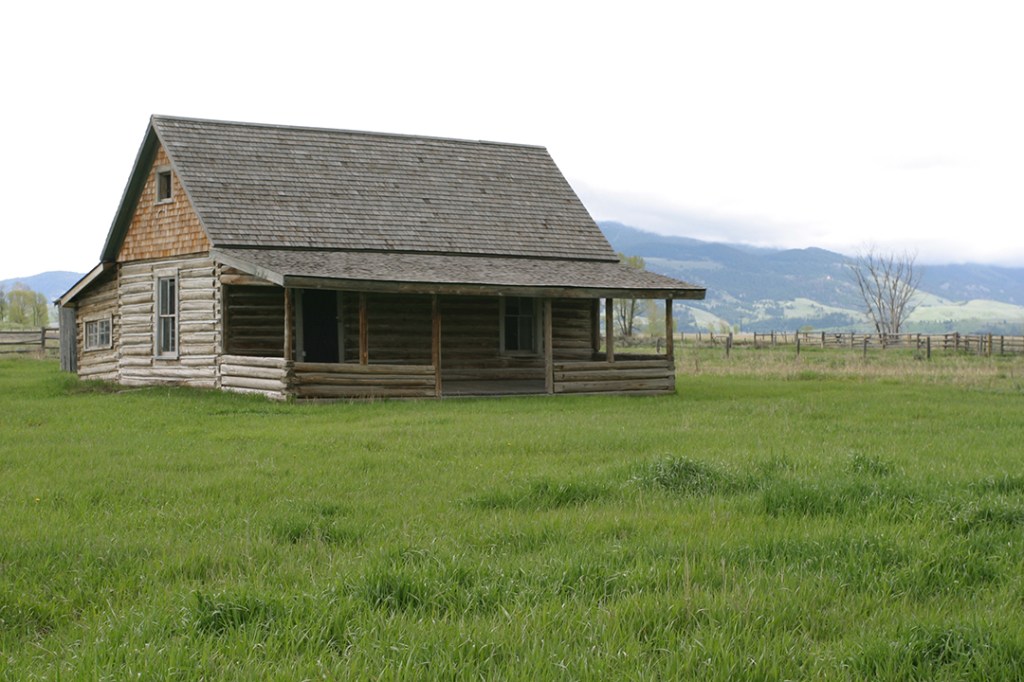
Several years ago I spent a few days visiting Yellowstone and Grand Teton National Parks. Many who have visited these parks have spent some time along the Mormon Row area of Grand Teton where several older homes, barns, and other buildings are located. Most of the days of this visit were cloudy and gray, not ideal conditions for photography but one should never pass on the opportunity. This is the original image of one of the cabins taken during that visit.

I use Adobe’s PhotoShop and LightRoom to process most of my photos but try to go lightly with my editing. Usually this means some cropping, maybe some minor adjustment to saturation, and possibly some adjustment to brightness and contrast. At that time I was also using a plugin called NIK Silver Effects. This photo seemed like a good candidate for some editing. I decided to apply a blue filter along with my normal processing and arrived at this view.

When I asked several friends for their preference the choices were balanced. Some liked the original while others liked the filtered image because of the blue skies and some added clarity of the cabin details. Others preferred the original image.

A few months later I decided to make a tabletop book with some of my photos, focusing on older objects like cabins, barns, steam trains, and other similar things. Rather than using the photos in their original form I decided to use sepia toning along with some borders. My goal was to create something like a stack of old images that you might find hidden away in an attic or closet. Images that were in fairly good shape but with some possible fading and borders or edges that were not neatly cut. I though this image would fit the book well and the result is shown here.

So, you now have three treatments of the same photo. Which do you prefer? And, if you are willing to share, why?

I hope you enjoy looking,